The majority of the objects of gas station equipment in the world are made in China. However, it is many times more challenging when attending trade fairs, going on Alibaba and searching for necessary equipment. Many factories from China invite everyone as a leading manufacturer. The cost of materials varies largely. There is one mistake in choosing a particular supplier and what you think will be a cost effective venture ends up being a customs issue.
You already know that buying gas station equipment made in China allows you to save 30% to 60% you would have spent on supplies imported from the West. The objective now is to get information on the major suppliers and products and also learn how to handle the step-by-step procurement procedures starting from the receipt of materials the manufacturer to the retail sector mounting the dispensers at gas station forecourts.
In this guide, you will learn:
- How to match equipment types to your project needs
- When turnkey sourcing beats piecemeal purchasing
- Which certifications your target market actually requires
- Practical steps to vet suppliers, negotiate terms, and control total cost
In 2022, Ade was looking to erect a filling station with six dispensers in Lagos and he focused mostly on the price of acquiring of the facility. On that fateful day, he breathed and summoned an unwavering courage to make a purchase online and this time, he broke up the quantities into three lower-rate suppliers in random places.
The fuel dispensers had infield compatibility issues. The fuel tanks did not have a SONCAP certification. The hardware’s pipe fittings were metric when the contractors that he had in his country were used to the imperial system. It was for this born out of the hands kernel that his “savings,” in fact, caused six more weeks of work and revision.
Adebola then decided to open his second gas station. He decided to work with all-inclusive China suppliers for gas station equipment. They immediately helped in adapting the technology and equipment as soon as the project began, enjoying an accelerated completion schedule of two weeks-thirds original time.
Need help evaluating Chinese suppliers for your specific market? Request a free procurement assessment from our team.
Why China Dominates Global Gas Station Equipment

The global gas station and equipment market size is forecasted to be worth over USD 7.8 billion by the year 2025, whereas the analysis shows an expected growth into a significant USD 12.3 billion by 2035 with a CAGR of about 4.7%. Gasoline pump nozzles account for close to half of the industry.
Even within such enormous growth, China is the center. As the biggest and most predominant supplier of fuel dispensers – both commercial and underground storage tanks – and comprehensive station design structure, the Chinese suppliers are the market leaders and they will continue to stay in the front. In Africa, Southeast Asia, the Middle East, Latin America and Eastern Europe, Chinese factories distribute products over quality retail stations, fleet depots, mining sites with alternative power systems and mobile fueling installations.
Three factors drive this dominance:
- Scale: Massive domestic demand and export volume create deep manufacturing expertise
- Integration: Many Chinese suppliers offer complete equipment suites rather than single components
- Adaptability: Rapid development of smart dispensers, multi-energy systems, and modular stations keeps Chinese firms ahead of infrastructure trends
Export Reach and Regional Strengths
Chinese manufacturers are not simply pumped-up exporters. Companies within the country have concentrated and specialized in certain geographic areas.
Some are experts on Africa, the Middle East and the need to comply with SONCAP and SASO certification rules. Others have their focus on Southeast Asia and developing retail fuel networks. As the usage of fuel changes, replacing gas with LPG, CNG and other fuel applications in the fuel cycle, the number of such endeavors is also increasing in Latin America.
Types of Chinese Gas Station Equipment

When you are aware of the product categories, you are able to select the accurate description based on the operational requirements. Here are the advertised products provided by a Chinese gas station equipment supplier.
Fuel Dispensers and Pumps
Chinese fuel dispensers are available in an array of options, ranging from basic single-nozzle mechanical units to advanced multi-product systems with 43-inch touch screens, contactless payment, and IoT connectivity. In a system where fuel is supplied from underground tanks, submersible turbine pumps are deployed to quietly dispense fuel while suction pumps are usually inside the dispenser’s enclosure in the absence of such pumps.
Smart dispenser trends from leading China fuel dispenser manufacturers include:
- Cloud-based remote monitoring and predictive maintenance alerts
- Mobile payment and loyalty program integration
- Biofuel and ethanol-blend compatibility
- High-precision flow meters with OIML and MID certification
Storage Tanks and Containment
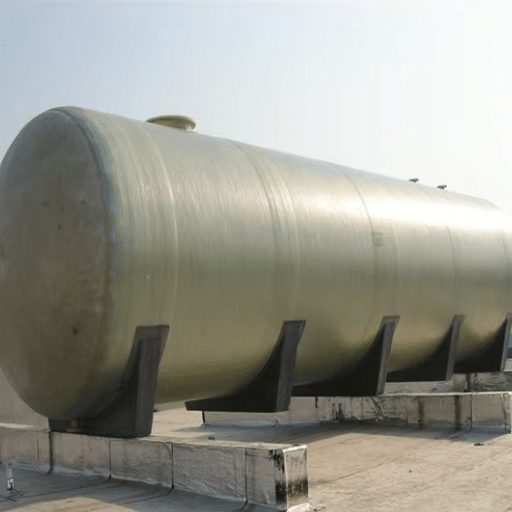
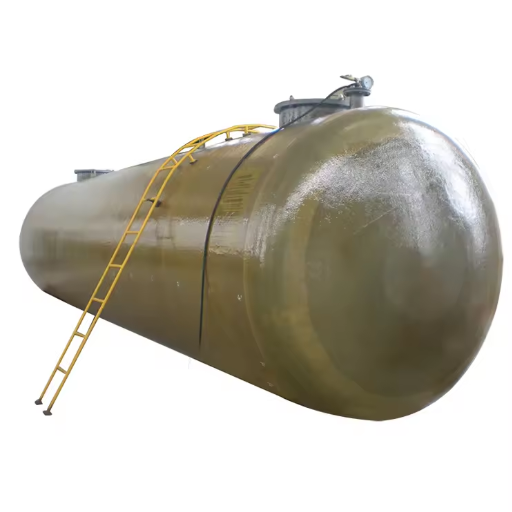
Their sanctions are also the very advanced offers among their manufacturing industry like FRP underground tanks, also called SF double wall tanks. For example, an SF tank uses a 6-8mm Q235-B carbon steel primary tank enclosed within a fiberglass reinforced plastic layer and this allows for a void between the two tanks for leak detection within 24 hours. Their continuous production features capacities between 5m³ and 100m³ and between 20 and 50 years of operational life.
Alternative Fuel and Multi-Energy Systems
Chinese suppliers are aggressively expanding beyond gasoline and diesel into:
- CNG and LNG dispensers, compressors, and skid-mounted refueling stations
- LPG dispensing systems and storage skids
- Hydrogen refueling infrastructure
- EV charging piles and integrated multi-energy forecourts
Differentiation is also particularly advantageous when one’s station will cater to mixed motor vehicle fleets or has to be designed with the possibility of fuel changeover during the product lifecycle.
Station Management and Safety Equipment
Beyond fueling hardware, Chinese suppliers offer:
- Automatic tank gauging (ATG) systems for inventory and leak monitoring
- Vapor recovery systems for emission control
- Point-of-sale and forecourt management integration
- Explosion-proof LED lighting and hazardous-area electrical components
Turnkey vs. Piecemeal: Which Approach Saves More?

One of the most critical assumptions to be made when buying something from your country is the decision of whether to find a source that will provide everything or more sources that will specialize in different parts of gas machinery.
Turnkey Advantages
A turnkey approach means one supplier delivers the dispensers, tanks, piping, canopy, and safety systems as an integrated package. The benefits include:
- Single accountability: One point of contact for warranties, spare parts, and technical support
- Faster commissioning: Pre-engineered compatibility reduces on-site integration time
- Integrated compliance: Documentation and certifications come from one source
- Lower coordination overhead: Fewer contractors, fewer scheduling conflicts, fewer surprises
Piecemeal Advantages
Sourcing components separately can make sense when:
- You have strong local suppliers for critical items like dispensers or tanks
- You want to mix premium Western-brand components with Chinese cost savings
- Your project team has deep experience managing multi-vendor integration
When Turnkey Wins
Turnkey sourcing is usually the better choice for:
- Remote sites with limited local technical expertise
- First-time station operators who need end-to-end guidance
- Tight schedules where delays are costly
- Developing markets where customs clearance and documentation complexity are high
In 2023, after building a fleet refueling ground in Kenya’s hinterland region, Raj Patel asked a company with expertise in creating skid-mounted gas stations in China. As provided for in the management control contract on the fleet fueling ground, the company delivered a complete 20,000-liter containerized station fully pre-wired, pre-piped, and pre-tested. All local contractors were expected to do was level the pad and power connections. In ten days, what would have normally taken a good three months in civil works and preparation was up and running.
Certifications and Compliance for Export Markets

International Standards
Reputable Chinese manufacturers should hold at minimum:
- ISO 9001 — quality management system certification
- CE — European conformity for health, safety, and environmental protection
- ATEX — European certification for explosion-proof equipment in hazardous areas
- OIML / MID — international metrology standards for fuel measurement accuracy
- UL 142 / UL 1746 — U.S. safety standards for aboveground and underground tanks
Regional Market Requirements
Different markets impose specific import and compliance requirements:
| Region | Key Certification | What It Covers |
|---|---|---|
| Nigeria | SONCAP | Standards Organization of Nigeria Conformity Assessment Program for product safety |
| East Africa | COC | Certificate of Conformity required for customs clearance in Kenya, Uganda, Tanzania |
| Saudi Arabia | SASO | Saudi Standards, Metrology and Quality Organization requirements |
| Russia / CIS | EAC / CU-TR | Eurasian Conformity mark for customs union markets |
| USA | UL / EPA | Tank safety, vapor recovery, and environmental compliance |
Why Certifications Matter for Buyers
Missing certifications create three serious problems:
- Customs delays or seizures: Goods without proper documentation can be held at port indefinitely
- Insurance and warranty gaps: Insurers may refuse coverage for uncertified equipment
- Regulatory non-compliance: Operating without locally accepted certifications can trigger fines or forced shutdowns
Certification documents in order will need to be requested and not printed for quality only.
How to Buy Gas Station Equipment from China

Trading with China involves more than acquiring products more cheaply. Here is an operational way of looking at the problem.
Vetting Manufacturers
Start with these four checks:
- Operational history: Prioritize suppliers with 5+ years in business and a track record of export projects
- Factory verification: Request video tours of production lines or hire a third-party inspector
- Certification validation: Ask for scanned copies of certificates and verify them with the issuing bodies when possible
- Reference projects: Request contactable customers in your region or a similar market
Crosses include prices below average market by 50%, rejection of regulation factory audit, claiming ISO 9001 certificate is not available and no export performance for export order where the buyer suggested his experience should be cited in the procedure.
Negotiation and Payment
Standard payment terms with Chinese manufacturers are:
- 30% T/T deposit to start production
- 70% balance paid before shipment
While approaching bulk orders, an irrevocable Letter of Credit (L/C) at sight may be considered by both parties for added security. For everyone else, if this is the first time that you are crossing paths with a supplier, the Alibaba platform can offer some protection and guarantees, precisely in the form of the so called, Trade Assurance services.
Shipping and Total Landed Cost
Your total cost includes more than the factory price. Calculate:
- FOB equipment cost from the manufacturer
- International freight to your destination port
- Customs clearance fees, import duties, and mandatory certificate costs
- Local transport from port to your site
Quality vs. Price: Setting Realistic Expectations

The benefits of Chinese gas station equipment are quite palpable. Consumers expect an average reduction of 30-60% when compared to well-known Western brands like the Gilbarco, Wayne, or Tokheim. Sometimes, however, opting for the lowest price can be more expensive in the long run.
Understanding the Quality Spectrum
At present, the major Chinese manufacturers have started producing products on all levels – on a par with global players, focusing on technical credibility, certificates and quality. Companies like Censtar, Bluesky, and Eaglestar have crossed national borders mostly due to reliable concentrated affordability.
Opposite to them, there are rather small factories which in many cases, are price-based and only branded on the nameplates they helped to design. Such suppliers could have disparate thermodynamics resumes, let go of important pilot structures in the name of cost or even supply without export verification.
Total Cost of Ownership
Factor these long-term costs into your decision:
- Shipping and import fees: From China to East Africa, a container of 40 feet can account around $3,000-8,000 in additional landed costs
- Spare parts availability: When buying from a supplier without local representation, a breakage of a pump head may take weeks to replace.
- After-sales support: Onsite technical assistance from China can be costly; quality remote support can’t be ensured from the majority of service providers.
Red Flags to Avoid
Walk away if a supplier shows any of these warning signs:
- Refuses a factory audit or video verification
- Cannot provide ISO 9001 or relevant product certifications
- Quotes prices dramatically below every competitor
- Has no referenceable customers in your region
- Communicates inconsistently or evades direct technical questions
Frequently Asked Questions
What is an SF double wall tank?
A specific Fiberglass Reinforced Plastic Double Walled FRP Tanks or Vessels consist of an inside steel carbon (Q235-B) Tank ranging in thickness from 6-8 mm covered within an external fire-retardant FRP jacket. The seal in between these two walls allows for the deployment of the leak detection system. In addition, SF Tanks typically have the potential for a 20 to 50 year serviceable lifespan in comparison to the single-walled steel Tanks on the market- that is, with much stronger resistance to its alternate’s corrosion.
How much does a skid-mounted gas station from China cost?
Standard liquid fuel skid mounted gas station China units normally cost between USD 6,000.00 – 20,000, depending on the pricing policy of the manufacturer. Units which have higher capacities have a higher price, for instance, CNG or integrated LNG-USD 20,000-480,000 range.
What certifications do I need to import gas station equipment into Africa?
Attempted and true that most countries impose standards on product imports. For instance in Nigeria, SONCAP certification is a must. In cases of Kenya, Uganda and Tanzania, a Certificate of Conformity (COC) is typically needed. Always inquire with your customs agent or freight forwarder on the documentation that will be needed for import before you consider ordering.
Is it better to buy a turnkey or source components separately from China?
Turnkey sourcing is usually attractive for difficult-to-reach locations, virgin setups, immediate sites, or where there are complex custom issues. On the other hand, modular or piecemeal sourcing can be made use of in case there is a reasonably good office supplier for key equipment and experienced project managers capable of dealing with multi-vendor integration.
Conclusion
The Chinese tank in fueling stations is competitive in all aspects – cost, production organization, and technology-wise. One should not be convinced that the lowest price is the sure fire way to success. What is important is to get who is perfect for any given type of project, within any given marketing setup and sharing expectations.
Whether you plan to buy a single volumetric breakout free stackable SF double wall tank in China, a whole set of gas station in China, or a ready containerized skid mounted gas station in China, delve into the question of relevant certificates delivered by the suppliers, their previous projects, and the potential cost availed. The benefits are tangible, still one has to bear in mind that it is only so long as that they can meet the required quality standards as well as match the paperwork requirements in a language that one understands.
Shandong Shengrui Intelligent Equipment Co., Ltd. is a company that designs comprehensive refueling infrastructure, encompassing confirmed fuel dispensers, tanks, skid-mounted stations, and explosion-proof safety equipment. Also, we provide assistance to buyers, starting from the requirement list to the receipt of necessary shipping, paperwork, and installation instructions.
Ready to source your next station with confidence? Contact our engineering team for a site-specific specification, compliance checklist, and custom quote.