At 9:15 a. m. on a rainy Tuesday in Rotterdam, a maintenance technician named Lars opened an explosion-proof junction box near a fueling island. The gasket had hardened and cracked. Salt air had crept inside, and condensation clung to the terminals.
It was not yet a failure. It was a near miss. If Lars had skipped that quarterly explosion proof inspection, the next humid week could have produced a short circuit in a Zone 1 area.
That is why explosion proof equipment maintenance is not a paperwork exercise. It is the layer of defense that keeps a certificate on the wall from becoming a headline.
If you own, operate, or equip a fueling site, you already know that hazardous area equipment is expensive. The real cost shows up later, in corrosion, gasket fatigue, unauthorized spare parts, and missing records. This guide will show you how to build a maintenance program that keeps your explosion-proof gas station equipment compliant across its full lifecycle.
We will cover the standards that matter, the three inspection grades, equipment-specific checklists, common mistakes that fail audits, and a simple five-step program you can use anywhere in the world.
In this article, we will cover:
- What explosion proof equipment maintenance actually includes
- Why hazardous area equipment needs a different maintenance mindset
- The global standards that govern inspections: IEC 60079-17, NEC, ATEX, and China AQ 3009
- Visual, close, and detailed inspection grades
- Maintenance checklists for enclosures, lighting, motors, glands, and gas detectors
- Failed-inspection mistakes to avoid
- How to build a maintenance program from scratch
- How maintenance connects to a turnkey gas station safety package
What Is Explosion Proof Equipment Maintenance?

Explosion proof equipment maintenance is the planned set of activities that preserve the explosion-protection features of electrical and mechanical equipment installed in hazardous areas. It covers inspection, cleaning, testing, repair, replacement, and documentation.
Unlike ordinary electrical maintenance, hazardous area equipment maintenance must protect every engineered safety feature. A flamepath must remain within the manufacturer’s tolerances. A gasket must still seal against vapor.
A cable gland must still isolate the inside of an enclosure from the surrounding atmosphere. If any of those features degrade, the equipment may no longer contain or prevent an ignition.
The goal is not simply to keep the lights on. The goal is to keep the equipment in the same certified condition it was in when it left the factory. That means using OEM parts, following manufacturer torque values, and recording every action so an auditor or insurer can verify compliance.
If you are selecting new equipment for a project, designing for maintainability is just as important as the initial certification. See our overview of explosion-proof gas station equipment to understand how protection concepts influence long-term maintenance.
Why Explosion Proof Equipment Maintenance Matters More in Hazardous Areas
A fueling site is not a normal commercial building. Gasoline and diesel vapors are heavier than air. They collect in sumps, pits, and low corners. A single spark inside an unsealed enclosure can turn a small leak into a catastrophic event.
The statistics are sobering. Studies of industrial incidents consistently list inadequate maintenance as a leading cause of fires and explosions in hazardous locations. One oil and gas operator reported that a 500,000 investment in explosion-proof equipment and training prevented two potential explosions in a single year and avoided an estimated $2 million in damage and lost production.
Purchase price is only part of the story. Over a typical lifecycle, the initial cost of explosion-proof equipment can represent as little as 20–40% of the total cost of ownership. Installation, training, inspection, spare parts, energy, and downtime make up the rest. Maintenance costs rise sharply in corrosive environments such as coastal regions, deserts, or cold climates, where thermal cycling stresses seals.
Common failure modes include gasket hardening, bolt torque relaxation, corrosion on flamepath surfaces, unauthorized replacement parts, moisture ingress, and missing documentation. Each one is preventable with a disciplined hazardous area equipment maintenance program.
In 2023, a fuel station operator in Lagos received an audit citation because several non-certified cable glands had been installed after a wiring upgrade. The glands looked correct. They were not.
The station had to shut down two dispensers for three days while certified parts were sourced and reinstalled. The lost revenue far exceeded the cost of the original certified glands.
Standards That Govern Maintenance and Inspection
Explosion proof inspection is not optional in most jurisdictions. It is required by codes, standards, and insurance underwriters. The exact rules depend on where you operate.
IEC 60079-17 (International)
IEC 60079-17 is the international standard for inspection and maintenance of electrical installations in explosive atmospheres. It defines three inspection grades, visual, close, and detailed, and requires that the interval between periodic inspections not exceed three years without a documented risk assessment.
The standard is risk-based. Frequency depends on the hazardous zone, equipment protection level, type of protection, environment, and manufacturer recommendations.
NEC Articles 500–516 and NFPA 70B (North America)
In North America, the National Electrical Code (NFPA 70) Articles 500 through 516 define hazardous location classification and installation requirements. NEC Article 500 maintenance is often misunderstood. The NEC itself is primarily an installation code. Ongoing maintenance is guided by NFPA 70B, NETA standards, and NFPA 70E for safe work practices.
The Authority Having Jurisdiction expects records of equipment listings, classifications, and maintenance actions.
ATEX Directive 2014/34/EU and IECEx (Europe and Global)
ATEX applies to equipment placed on the European market. The ATEX Directive 2014/34/EU requires CE marking and a declaration of conformity. IECEx is a global certification scheme that allows accepted test reports to move across borders.
Under ATEX, users must maintain an Explosion Protection Document. ATEX inspection work is typically performed by competent persons, and repairs that could affect explosion protection must follow IEC 60079-19 or be referred to the manufacturer.
China AQ 3009-2007 and GB/T 3836
In China, AQ 3009-2007 requires that in-use explosion-proof electrical equipment be inspected at least every three years by a qualified explosion-proof testing center. Non-conformities must be corrected and records filed with safety supervision.
If you need to understand NFPA 30A Compliance, please read our article about NFPA 30A Compliance.
The Three Inspection Grades Explained

IEC 60079-17 maintenance is built around three cumulative inspection grades. Detailed includes close, and close includes visual. Choosing the right grade for each asset is the foundation of a compliant program.
| Grade | What It Covers | Typical Interval | Equipment State |
|---|---|---|---|
| Visual | External damage, corrosion, missing bolts, unreadable labels, unplugged entries | 1 year, more often in severe environments | Usually done energized |
| Close | Visual items plus cable glands, covers, threaded joints, earthing, IP rating | 1–3 years | Often energized; closer access |
| Detailed | Close items plus internal inspection, flamepath measurement, insulation resistance, seals | 3–5 years for Zone 2, shorter for Zone 1/0 | Generally de-energized with permit-to-work |
Typical industry practice is to perform a visual check annually, a close inspection every one to three years, and a detailed inspection every three to five years. High-risk Zone 0 or Zone 1 equipment usually needs shorter intervals.
Out-of-cycle inspection is required after any repair, modification, replacement, or incident. Sampling is permitted for large numbers of identical items, but the scope must expand if defects are found.
Equipment-Specific Maintenance Checklists
A thorough Ex equipment maintenance checklist should cover flameproof equipment inspection as well as increased safety and intrinsic safety devices. Below are practical checklists for the most common equipment types at fueling sites.
Explosion-Proof Enclosures and Junction Boxes
- Verify nameplate markings match the area classification: Class/Division/Group and T-code, or Zone/Group/EPL/T-code.
- Inspect enclosure for cracks, dents, corrosion, and unauthorized holes.
- Check cover bolts for correct torque using a calibrated wrench.
- Inspect flamepath mating surfaces for paint, grit, corrosion, and debris.
- Replace gaskets only with OEM-approved parts.
- Confirm unused openings are sealed with listed metal close-up plugs.
- Verify grounding and bonding continuity.
If you need to use explosion-proof electrical enclosures, please read our article about Explosion Proof Electrical Enclosures.
Explosion-Proof Lighting
Explosion proof lighting maintenance is one of the most common scheduled tasks because lighting is exposed to weather, vibration, and heat.
- Monthly: 30-second functional test, visual lens and housing check.
- Quarterly: Verify bolt torque, clean lenses, inspect conduit seals.
- Annually: 90-minute full discharge test for emergency fixtures, verify illumination levels, replace degraded gaskets, and re-aim heads if needed.
- Always replace lamps, drivers, and lenses with listed components.
Flameproof Motors
- Listen for abnormal bearing noise or vibration.
- Check terminal box seals and cable entries.
- Inspect fan cover and cooling paths for dust or obstruction.
- Verify drain plugs are installed and functional to prevent condensation buildup.
- Measure insulation resistance when de-energized.
Cable Glands and Conduit Seals
- Match gland type to cable type and hazardous zone.
- Check gland nuts for tightness and thread damage.
- Verify sealing compound integrity in explosion-proof sealing fittings.
- Confirm seals are located within required distances of enclosures, commonly within 18 inches in Division 1 locations.
- Never use ordinary fittings in classified runs.
Gas Detectors and Alarm Devices
Gas detectors are often part of the same safety architecture as explosion-proof enclosures. They need calibration, sensor replacement, and functional testing according to manufacturer’s instructions.
If you want a deeper look at detector selection and placement, see our guide to gas detection systems.
Common Installation and Maintenance Mistakes That Cause Failed Inspections

Even well-designed explosion proof equipment maintenance programs fail when small details are skipped. Here are the most common audit findings.
Using non-certified spare parts. A generic gasket or cable gland may look identical, but it can void ATEX, IECEx, or UL certification. Always use OEM or equivalently certified replacements.
Reusing old gaskets. Gaskets harden, compress, and take a set. Reusing an old gasket almost guarantees a failed seal.
Wrong torque. Cover bolts must be tightened to manufacturer specifications with a calibrated torque wrench. Over-torque damages threads. Under-torque leaves a gap.
Unauthorized modifications. Drilling holes, swapping covers, or painting flamepaths destroys the certified design. Any modification requires reassessment.
Poor documentation. Missing inspection logs, torque values, test records, and nameplate photos are among the fastest ways to fail an audit.
Ignoring the environment. Salt, sand, chemicals, and temperature cycling accelerate degradation. Maintenance intervals must be shortened in harsh conditions.
Inadequate grounding. Bonding jumpers and earthing connections must be checked after any service. Poor continuity creates both shock and ignition risks.
In 2022, a station in Nairobi failed a pre-commissioning inspection because technicians had painted over the flame path of an Ex d junction box to match the site color scheme. The paint had to be removed, the flamepath measured, and the enclosure recertified. A simple communication gap cost two weeks.
Building an Explosion Proof Equipment Maintenance Program
A strong hazardous area equipment maintenance program can be built in five steps.
Step 1: Asset Inventory and Classification
Create a register of every Ex item: location, tag number, manufacturer, model, protection concept, area classification, certificate number, and ambient rating. Attach photos of nameplates.
Step 2: Risk-Based Interval Planning
Use the zone, protection level, environment, and manufacturer recommendations to set inspection intervals. Do not exceed three years without expert justification. Zone 0/1 equipment and equipment in corrosive environments need more frequent checks.
Step 3: Competency and Training
Inspections must be carried out by competent personnel trained in hazardous area equipment. This is not a task for a general electrician without Ex-specific training. Competence records should be maintained.
Step 4: Documentation and Audit Trail
Every inspection, test, repair, and replacement must be recorded. Keep certificates of conformity, declarations of conformity, inspection reports, torque values, and corrective actions. Most jurisdictions require retention for at least the life of the equipment or a defined statutory period.
Step 5: Corrective Action and Repair Protocols
Define who can authorize repairs, where parts come from, and when equipment must be removed from service. Major repairs that affect explosion protection must follow IEC 60079-19 or be performed by the manufacturer.
A Gulf-based EPC contractor applied this five-step model across forty retail fueling sites. Each site received a visual inspection annually, a close inspection every two years, and a detailed inspection on a rotating three-year cycle. Over three years, the program identified twelve latent gasket issues and four corroded glands before they became incidents. The client recorded zero lost-time events related to electrical equipment.
How Maintenance Fits into a Turnkey Gas Station Safety Package

Explosion proof equipment maintenance is one layer of a complete safety architecture. At a fueling site, the full chain looks like this:
- Detection systems identify leaks early.
- Gas station fire suppression and emergency shut-off systems isolate the hazard.
- Explosion-proof barriers and enclosures prevent ignition.
- Maintenance keeps every layer functioning as designed.
If any link weakens, the others must compensate. That is why procurement teams should think beyond the purchase price. Equipment that is hard to inspect, hard to seal, or hard to source parts for will cost more over time.
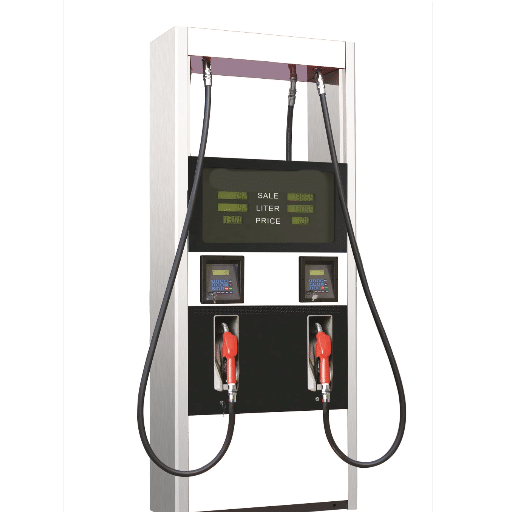
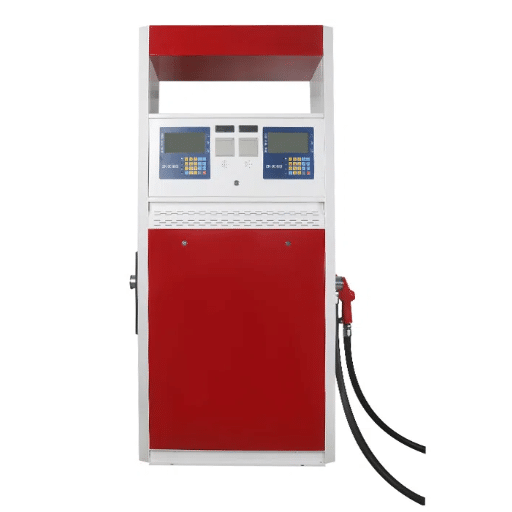
Shandong Shengrui designs explosion-proof gas station equipment with maintenance in mind. From flameproof enclosures to fuel dispensers, every component is selected to match the classified area and supported by documentation that simplifies ongoing inspections.
For specialized environments such as hydrogen stations, maintenance requirements can differ. See our hydrogen refueling safety guide for guidance on Ex equipment in hydrogen service.
Conclusion
Explosion proof equipment maintenance is not a compliance afterthought. It is the discipline that keeps certified equipment certified. A good program covers the right inspection grades, uses OEM parts, follows manufacturer torque values, documents every action, and adjusts intervals for the real environment.
Key takeaways:
IEC 60079-17 defines visual, close, and detailed inspection grades. The interval between periodic inspections should not exceed three years without expert risk assessment. NEC Article 500 maintenance is supported by NFPA 70B and safe work practices, not just the installation code.
Non-certified parts, reused gaskets, and poor documentation are the fastest paths to a failed inspection. A five-step program, including inventory, intervals, competence, documentation, and corrective action, can be applied globally.
Ready to design an explosion proof equipment maintenance program for your gas station? Contact Shandong Shengrui Intelligent Equipment Co., Ltd. for a site-specific assessment, certified equipment selection, and a maintenance program that keeps your fueling operation compliant for years.