At 6:45 a.m. on a Tuesday, Dev watched three trucks idle in line at his highway plaza while a fourth driver gave up and pulled back onto the road. The forecourt had four islands, but the standard dispensers were flowing at roughly 45 liters per minute. For trucks carrying 400-liter tanks, that meant nearly ten minutes of fueling per vehicle. Dev did the math: his plaza was losing peak-hour revenue not because he lacked space, but because his dispensers were too slow.
If you run a truck stop, fleet depot, or logistics yard, you have probably faced the same bottleneck. A high-flow fuel dispenser is built for exactly this problem. This guide explains how high-flow dispensers differ from standard units, which flow rate and nozzle size you need, how accuracy holds up under speed, and how to build an honest ROI case for your site. For detailed information, please refer to our fuel dispensers’ complete guide.
What Is a High-Flow Fuel Dispenser?

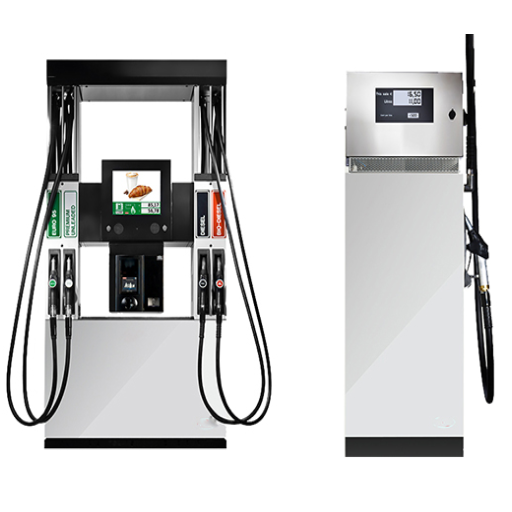
A high-flow fuel dispenser is a dispensing unit engineered to deliver fuel at flow rates well above standard retail speed, typically from 70 liters per minute up to 120 liters per minute or more. It uses larger meters, bigger hoses, and higher-capacity nozzles to fill heavy vehicle tanks in a fraction of the time.
Think of flow in practical tiers:
- Standard retail: 40–50 L/min for cars and light commercial vehicles.
- High-flow: 70–120 L/min for trucks, buses, and fleet vehicles.
- Ultra-high-flow: 150–300 L/min for mining, ports, and large terminals.
- Specialized bulk/terminal: 500+ L/min for dedicated high-volume offloading.
A truck stop or depot rarely needs ultra-high flow, but moving from 45 L/min to 90 L/min can double throughput per island during the morning rush. That is the difference between a queue that clears and one that sends drivers to your competitor.
Standard vs High-Flow Dispenser: Side-by-Side Comparison
The hardware looks similar from a distance, but the internals and sizing are built for different jobs.
| Feature | Standard Dispenser | High-Flow Dispenser |
|---|---|---|
| Flow rate | 40–50 L/min | 70–120 L/min |
| Nozzle size | 3/4″ or 1″ | 1″ to 1.5″ |
| Hose diameter | 19–25 mm | 25–38 mm |
| Typical accuracy | ±0.3% | ±0.25% |
| Best use | Cars, vans, light trucks | Trucks, buses, fleet depots |
| Pump type | Suction or submersible | Usually submersible for steady pressure |
| Power | Standard 220V/380V | Higher-current 380V common |
The larger nozzle and hose are not cosmetic. A 1.5-inch nozzle can pass roughly twice the volume of a 1-inch nozzle under the same pressure, which is why matching nozzle size to flow rate matters. Put a small nozzle on a high-flow meter, and you create turbulence, pressure drop, and premature wear.
Key Specifications of High-Flow Dispensers

Flow Rate Classes
For most truck stops and fleet depots, the 70–120 L/min range is the practical sweet spot. It fills a 400-liter truck tank in roughly four to six minutes instead of nine to eleven. At the upper end, some Chinese manufacturers offer models rated at 150–180 L/min, and specialized heavy-duty units reach 300–500 L/min for ports and mines.
The mistake is to assume more flow is always better. Oversizing the dispenser beyond what your storage, piping, and pump can supply causes cavitation, vapor bubbles, and erratic meter readings. Match the dispenser to the whole fueling system, not just the headline number.
Nozzle and Hose Sizing
High-flow nozzles typically come in 1-inch and 1.5-inch configurations. The 1-inch size handles up to about 120 L/min cleanly for diesel and gasoline. Step up to 1.5 inches when you move beyond 120 L/min or when the fuel is more viscous.
Hoses should be oil-resistant, anti-static, and long enough for the largest vehicle that will use the island. Four-and-a-half to six meters is common at truck stops. A breakaway valve and swivel are essential; a drive-off at high flow generates far more force than at standard speed.
Metering Accuracy Under High Flow
Speed does not have to mean inaccuracy. Well-specified high-flow dispensers commonly achieve ±0.25% repeatability, and some reach ±0.2%. The governing reference is OIML R117, which sets maximum permissible errors for measuring systems. For custody transfer, where fuel is sold to third parties, specify Class 0.2 or 0.3. For internal fleet allocation, Class 0.5 is usually sufficient.
Accuracy depends on the complete system, not just the meter. Undersized hoses, poor piping bends, air pockets, and weak pump pressure all introduce errors that the meter cannot fix. Our fuel dispenser calibration guide covers how to keep those errors in check.
Pump Configuration: Suction vs Submersible
Suction pumps pull fuel from the tank up into the dispenser cabinet. They work for smaller sites, but at high flow, they struggle to maintain steady inlet pressure and are prone to cavitation. Submersible turbine pumps (STPs) sit inside the tank and push fuel upward, delivering more stable pressure and supporting multiple high-flow dispensers from one pump.
For a busy truck stop, a submersible is almost always the better choice. The higher first cost pays back through reliability, quieter operation, and the ability to add more dispensers later without changing the pump.
Power, Safety, and Enclosure Ratings
High-flow motors draw more current than standard units. Expect 380V three-phase supply for most fixed installations, with single-phase 220V options for smaller fleet models. Explosion-proof ratings such as Ex d IIB T4 or Ex db mb IIB T4 Gb are standard for the hazardous area, and components should carry at least IP55 protection against dust and water jets.
Any electrical work in the forecourt must follow local hazardous-area rules. If you are unsure about classifications, our explosion-proof fuel dispensers guide explains what the ratings mean and when each applies.
Applications: Where High-Flow Dispensers Win
High-flow dispensers earn their keep wherever vehicles have large tanks and short dwell times.
- Truck stops and highway plazas: Reduce queues during peak windows and recover drivers who would otherwise bypass a slow site.
- Fleet depots: Cut driver waiting time during pre-shift fueling, especially for logistics, transit, and refuse fleets.
- Mining and construction: Fuel haul trucks and excavators on-site with minimal downtime.
- Ports and rail yards: Serve high-volume yard trucks and drayage fleets that operate on tight schedules.
- Agriculture: Fill tractors and harvesters quickly during planting and harvest windows.
Marta ran a depot for a regional delivery company with 60 vans and 12 heavy trucks. Her two standard dispensers created a morning queue that spilled onto the street. After replacing one island with a 100 L/min high-flow diesel dispenser and adding a second high-flow nozzle, the average wait dropped from 18 minutes to under 6 minutes. Driver overtime claims for queued fueling fell by nearly a third in the first quarter.
Choosing the Right High-Flow Dispenser
Selection should start with traffic data, not a catalog. Follow this sequence:
- Measure peak demand. Count vehicles per hour during your busiest window and note tank sizes.
- Calculate target fill time. A 400-liter truck tank at 100 L/min fills in 4 minutes; at 45 L/min, it takes nearly 9 minutes.
- Match pump and pipe capacity. Confirm the STP, piping, and tank outlet can feed the dispenser at its rated flow.
- Pick nozzle and hose size. Use 1 inch up to about 120 L/min; 1.5 inches above that.
- Specify accuracy class. Choose OIML Class 0.2–0.3 for resale; Class 0.5 for internal use.
- Expansion plan. Leave electrical and piping headroom for additional high-flow islands.
If you are building a new depot, our fuel dispenser installation guide covers the site prep, piping, and commissioning steps that keep high-flow systems reliable. For a general framework, how to choose a fuel dispenser is a useful starting point.
ROI and Throughput: The Business Case

The business case for a high-flow fuel dispenser rests on throughput and labor savings. Faster fills move more vehicles through the same physical space, which matters at truck stops where fuel margin is thin and volume is everything.
A simple labor-savings model from the AOCHENG high-flow ROI analysis uses a 50-truck fleet filling 200 liters per vehicle, 250 days per year, moving from 40 L/min to 120 L/min. The time saved per fill is roughly 3.3 minutes, which adds up to about 694 driver hours per year. At 30 per hour, that is approximately 20,800 in recovered labor annually. If the equipment upgrade costs $10,000, the payback period is under six months on labor savings alone.
At a retail truck stop, the math includes additional fuel sales. A site that serves ten more trucks per peak hour because of faster dispensers captures fuel margin, convenience-store spend, and driver loyalty that a slow competitor loses. If you have your own budget plan, please read our article on Fuel Dispenser Cost and TCO.
Want a site-specific ROI estimate? Send us your peak vehicle count, average tank size, and labor cost. We will model throughput and payback for your layout. Get a tailored high-flow proposal.
Safety, Compliance, and Installation Notes
High-flow diesel is not exotic fuel, but the pressures and flow forces are higher, so safety details matter more.
- Hose management: Use breakaways, swivels, and proper strain relief. A 1.5-inch hose under pressure can injure an operator if it whips.
- Spill containment: High-flow nozzles shut off automatically, but splash guards and drip buckets still reduce slip and contamination risk.
- Static grounding: Ensure every island has a verified grounding path; higher flow increases static generation.
- Metrology compliance: OIML R117 and local weights-and-measures rules apply regardless of flow rate. Keep calibration records and inspection stickers current.
- Maintenance access: High-flow meters and filters need more frequent inspection because they process more fuel volume. Our fuel dispenser maintenance guide has a schedule you can adapt.
Installation and commissioning should be handled by qualified technicians familiar with hazardous-area electrical work. The savings from a fast install disappear quickly if the meter drifts or a leak develops.
Smart and Connected High-Flow Systems
Modern high-flow dispensers increasingly connect to fuel management systems, ATG, and fleet cards. Authorization, volume limits, vehicle IDs, and odometer readings can all flow through one interface. This matters for fleets because it closes the gap between fast fueling and accurate accounting.
At a connected depot, a driver swipes a fleet card, the dispenser recognizes the vehicle, applies a pre-set fill limit, and records the transaction automatically. The same dispenser that saves time at the nozzle also saves time in the back office. Our smart fuel dispensers guide explains the integration options.
Market Trends

The broader fuel dispenser market is projected to grow at roughly 5.7–6.0% CAGR through 2030. High-flow and fleet segments are outpacing standard retail in many regions because logistics operators are bringing fueling in-house to control cost, pilferage, and scheduling.
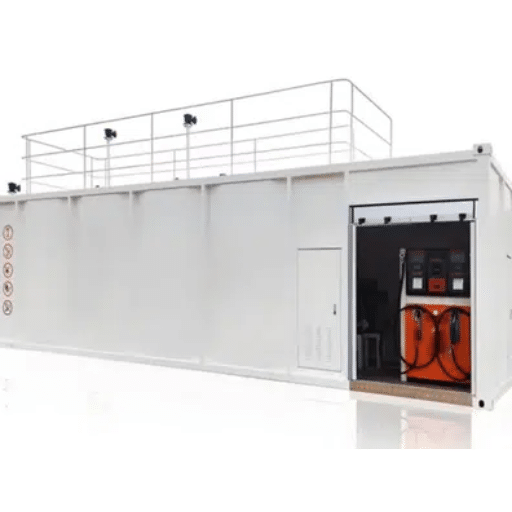
Skid-mounted high-flow stations are also gaining traction for remote industrial sites. A complete fueling island can be delivered pre-piped, pre-wired, and ready to commission, which cuts site construction time dramatically. For remote or temporary deployments, our skid-mounted gas station capacity guide covers the sizing questions.
Frequently Asked Questions
What is a high-flow fuel dispenser?
A high-flow fuel dispenser delivers fuel at 70–120 L/min or more, typically with larger nozzles, hoses, and meters than standard retail dispensers, for trucks, buses, and fleet vehicles.
How fast is a high-flow dispenser?
Common models range from 70 to 120 L/min. Ultra-high-flow units for mining and ports can reach 150–300 L/min or more.
Are high-flow dispensers accurate?
Yes. Well-specified units commonly achieve ±0.25% or better. Accuracy depends on matching the meter, nozzle, hose, and pump correctly and keeping the system calibrated.
Can high-flow dispensers be used for cars?
Technically, yes, but the flow rate and nozzle size are excessive for typical car tanks. High-flow islands are best reserved for heavy vehicles.
What nozzle size do I need for high flow?
Use a 1-inch nozzle for flows up to about 120 L/min. Move to 1.5 inches for higher flow rates or more viscous fuels.
Is a high-flow dispenser worth the investment?
For truck stops and busy fleets, yes. The value comes from higher throughput, reduced driver waiting time, and the ability to serve more vehicles with the same island count.
Conclusion
A high-flow fuel dispenser is not just a faster version of a standard unit. It is a throughput tool that changes how many vehicles you can serve per hour, how long drivers wait, and how efficiently your fueling operation runs.
Keep these takeaways in mind:
- Match the flow rate to your vehicle tanks and peak traffic, not just a catalog number.
- Use the right nozzle and hose size for the rated flow; undersizing creates wear and inaccuracy.
- Prefer submersible turbine pumps for busy multi-dispenser sites.
- Specify the correct OIML accuracy class for resale or internal allocation.
- Build the ROI case on throughput and labor savings, with realistic local numbers.
At Shandong Shengrui Intelligent Equipment Co., Ltd., we manufacture fuel dispensers, skid-mounted stations, and complete forecourt solutions for truck stops, fleets, and industrial sites worldwide. Request a high-flow fuel dispenser quote, and our engineering team will size the right flow rate, nozzle configuration, and pump layout for your project.