The wrong tank material can quietly drain your budget for twenty years. Choose aluminum when you need lightweight, and you may still lose tanks to galvanic corrosion. Choose stainless steel for bragging rights, and you may haul around dead weight you never needed. The real question isn’t which metal is “better.” It’s which metal wins for your fuel, environment, and duty cycle.
In this guide, we compare stainless steel vs aluminum fuel tanks side by side. You’ll learn how each metal resists corrosion, which grades matter, how fuel type changes the decision, and where each material wins across marine, vehicle, industrial, and gas station applications. By the end, you’ll have a clear framework for choosing the right tank and a checklist to share with your supplier.
For a deeper look at stainless steel options, see our complete guide to stainless steel fuel tanks.
Stainless Steel vs Aluminum Fuel Tanks at a Glance

Both metals are widely used for fuel storage, but they solve different problems.
| Factor | Stainless Steel Fuel Tank | Aluminum Fuel Tank |
|---|---|---|
| Density | ~7.9–8.0 g/cm³ | ~2.7 g/cm³ |
| Weight | Heavy | About 30–40% lighter than comparable steel tanks |
| Corrosion resistance | Excellent, especially 316/316L | Good, via natural oxide layer |
| Strength / impact resistance | Very high | High, but dents more easily |
| Upfront cost | Higher | Lower than stainless, higher than carbon steel |
| Lifespan | 20–30+ years with maintenance | 20–30 years if installed correctly |
| Best fuels | Diesel, gasoline, ethanol blends, biodiesel, jet fuel | Diesel, gasoline, low ethanol blends |
| Best for | Harsh environments, biofuels, saltwater, long-life installs | Weight-sensitive mobile and transport use |
Which is better? For mobile fleets and tanker trailers where every pound matters, aluminum often wins. For saltwater, biofuels, or installations where replacement is expensive, stainless steel usually wins.
Material Science: How Each Metal Protects Itself
Stainless Steel — Chromium Oxide Passivation
Stainless steel relies on chromium. When the alloy contains at least 10.5% chromium, a thin, invisible chromium-oxide layer forms on the surface. This passive layer self-heals when exposed to oxygen, so small scratches don’t immediately lead to rust.
Grade 304 and 304L handle most hydrocarbons well. Add molybdenum, as in 316 and 316L, and the alloy resists chlorides far better. That’s why 316L is the default for marine fuel tanks, coastal skid-mounted stations, and biodiesel storage.
The “L” designation matters. 304L and 316L contain less carbon than their standard counterparts. Lower carbon reduces the risk of sensitization, a form of weld decay that can occur near heat-affected zones.
Aluminum — Natural Oxide Layer
Aluminum protects itself with aluminum oxide (Al₂O₃). The layer forms instantly in air and blocks further oxidation. In clean, dry fuel service, this works well.
However, the oxide layer isn’t invincible. Chlorides, acids, galvanic contact with copper or steel, and trapped moisture can break it down. Once the layer is compromised, aluminum corrodes faster than stainless steel in the same environment.
For fuel tanks, fabricators use 5000-series alloys. These alloys contain magnesium, which improves strength and seawater resistance without heat treatment.
Alloy Grades That Matter for Fuel Tanks
Stainless Steel Grades (304, 304L, 316, 316L)
| Grade | Chromium | Nickel | Molybdenum | Best Environment | Relative Cost |
|---|---|---|---|---|---|
| 304 | 18–20% | 8–10.5% | None | General fuel, inland industrial | Lower |
| 304L | 18–20% | 8–12% | None | Welded tanks, reduced sensitization risk | Lower |
| 316 | 16–18% | 10–14% | 2–3% | Marine, chloride exposure, ethanol blends | Higher |
| 316L | 16–18% | 10–14% | 2–3% | Marine, biodiesel, long-life applications | Highest |
For most buyers, the decision narrows to 304L for inland use and 316L for aggressive environments.
Aluminum Grades (5052, 5083, 5086)
| Grade | Tensile Strength | Corrosion Resistance | Formability | Best Tank Use |
|---|---|---|---|---|
| 5052-H32 | ~230 MPa | Good | Excellent | Small, protected internal tanks |
| 5086-H116 | ~290 MPa | Very good | Good | Structural tanks, hull plating |
| 5083-H116/H321 | ~305–317 MPa | Excellent | Moderate | Main marine fuel tanks, class-approved vessels |
For critical marine fuel tanks exposed to bilge water or salt spray, 5083-H116 or 5083-H321 is the safest choice. 5052 works for budget builds where the tank sits in a protected location.
Fuel Compatibility: Diesel, Gasoline, Ethanol & Biodiesel

Not every metal likes every fuel. The table below shows compatibility at a glance.
| Fuel | 304/304L Stainless | 316/316L Stainless | 5052/5083/5086 Aluminum |
|---|---|---|---|
| Diesel | Excellent | Excellent | Excellent |
| Gasoline | Excellent | Excellent | Good |
| E10 / E15 gasoline | Good | Excellent | Good with dry fuel |
| E85 | Use 316L | Excellent | Not recommended for long-term |
| Biodiesel (B20+) | Use 316L | Excellent | Use 316L for long-term |
| Jet fuel / aviation fuel | Excellent with cleanliness controls | Excellent with cleanliness controls | Limited; cleanliness concerns |
Key point: Aluminum handles gasoline and diesel in normal service. When ethanol blends rise above E15, or when biodiesel blends exceed B20, stainless steel, especially 316L, becomes the safer long-term choice. Ethanol attracts water. Water inside an aluminum tank can accelerate internal corrosion.
Weight, Payload & Fuel Efficiency
Stainless steel is roughly three times denser than aluminum. In real tank builds, that translates to 30–40% weight savings when switching from steel or stainless steel to aluminum.
For a fuel tanker trailer, that lighter tare weight means more payload per trip. Over a year, a fleet can move more product without adding trucks. Aluminum tanker trailers also improve fuel economy by an estimated 5–10% compared with carbon steel equivalents.
In marine applications, aluminum tanks reduce top weight and can improve vessel stability. For racing boats, high-performance craft, or weight-sensitive ferries, aluminum is often the only practical choice.
The trade-off is strength. Aluminum is softer. It dents more easily, and fatigue cracks can form around welds under constant vibration.
Example: A regional diesel distributor switched from carbon steel to aluminum alloy tanker trailers. Each trailer shed roughly 2 metric tons of tare weight. Over 100,000 kilometers per year, the fleet cut fuel consumption by roughly 7% and added payload equal to two extra deliveries per week.
Cost & Total Cost of Ownership
Upfront Material & Fabrication Cost
Aluminum tanks typically cost 10–20% less than comparable stainless steel tanks. Both metals cost more than carbon steel, which is why carbon steel still dominates large stationary tanks.
Fabrication costs also differ. Aluminum is easier to cut, form, and weld with common MIG or TIG equipment. Stainless steel requires skilled welders, clean procedures, and often passivation after welding. Those steps add labor costs.
Lifecycle Cost Drivers
Lifecycle cost depends on three things: maintenance, replacement timing, and operating savings.
- Maintenance: Stainless steel usually needs less attention in corrosive environments. Aluminum may need inspection for galvanic corrosion, especially if mounted against dissimilar metals.
- Replacement: Both metals can last 20–30 years. Aluminum may show structural weakening after 10–15 years in harsh marine service if poorly installed. Stainless steel often reaches 25+ years with basic care.
- Operating savings: Aluminum saves fuel and adds payload. On long-haul transport, those savings can offset the higher material cost compared with steel.
Example: A coastal marina installed 316L stainless steel day tanks for a backup generator set. The upfront cost was 18% higher than aluminum. Over 20 years, the owner avoided two tank replacements, reduced internal corrosion inspections, and kept fuel cleanliness within spec. The stainless option proved cheaper on a total-cost basis.
For a detailed cost breakdown, see our stainless steel fuel tank cost and pricing guide.
Strength, Durability & Repairability

Stainless steel wins on raw strength and impact resistance. It resists denting, handles higher pressures, and performs better in fire exposure because it retains strength at higher temperatures.
Aluminum is strong for its weight but softer. It dents more readily, and welded seams can be fatigue-prone under vibration. Repairing aluminum in the field is possible, but it requires the right filler metal. Using the wrong filler, such as ER4043 on 5000-series marine aluminum, can create brittle joints and future cracks.
For 5000-series aluminum marine tanks, fabricators typically use ER5356 filler. For critical 5083-to-5083 joints, ER5183 is preferred. Stainless steel repairs usually use matching 308L or 316L filler, depending on the base grade.
For detailed information, please refer to our marine stainless steel fuel tanks guide.
Corrosion Risks & How to Prevent Them
Aluminum Corrosion Mechanisms
- Galvanic corrosion: Aluminum is more electrochemically active than steel, copper, and stainless steel. If an aluminum tank touches dissimilar metal without insulation, localized corrosion can form.
- Ethanol and water: Ethanol absorbs water. Water settles at the tank bottom and attacks the oxide layer, causing pitting and producing corrosion debris that clogs filters.
- Foam mounting: Bedding an aluminum tank in foam traps moisture. Marine surveys have linked foam mounting to tank failure long before the expected service life.
- Chlorides: Saltwater and salt air accelerate aluminum corrosion, especially in bilge areas.
Stainless Steel Corrosion Mechanisms
- Chloride pitting: 304 stainless can pit in saltwater. 316L resists this far better.
- Sensitization: Welding standard 304 or 316 without low-carbon grades can cause chromium carbide precipitation at grain boundaries, reducing corrosion resistance near welds.
- Crevices and deposits: Fuel residues, water bottoms, and microbial growth can create localized attack if tanks are not drained and inspected.
Installation Best Practices
For both materials, isolate the tank from dissimilar metals, provide drainage, keep vents clear, and allow inspection access. Aluminum tanks also benefit from bedding that lets air circulate. Foam traps moisture and should be avoided.
Standards & Certifications by Application
Marine (ABYC H-24/H-33, 46 CFR 182.440, ISO 21487)
ABYC H-24 covers recreational boat fuel tanks. It recommends aluminum alloys 5052, 5083, or 5086. Minimum thicknesses are 0.090 inch for smaller tanks and 0.125 inch for larger tanks. For 316L stainless marine tanks, fabricators follow similar thickness and pressure-test requirements.
46 CFR 182.440 applies to small passenger vessels. It typically calls for ¼-inch wall thickness, baffles spaced no more than 30 inches apart, and a non-destructive static pressure test.
Road Transport (DOT / PHMSA)
DOT-approved aluminum transfer tanks and tanker trailers are common for gasoline and diesel. They must meet federal material, baffle, vent, and labeling rules. Stainless steel is used when the cargo is corrosive or requires food-grade cleanliness.
Industrial & Gas Station (UL 142, API 650, ASME VIII, GB/T 150)
Aboveground storage tanks fall under standards such as UL 142 in North America and GB/T 150 in China. Pressure vessels and skid-mounted fuel stations may require ASME VIII or equivalent pressure-equipment directives. Skid-mounted stations also need integration with explosion-proof equipment for fueling areas and leak detection systems.
For a broader view of storage options, read our complete guide to fuel storage tank solutions.
Application-by-Application Winner
Marine Fuel Tanks
- Aluminum wins for most recreational boats where weight and cost matter.
- Stainless steel wins for commercial vessels, saltwater routes, and boats that must last decades without tank replacement.
Vehicle, Truck & Tanker Trailers
- Aluminum wins for payload and fuel economy. Most petroleum tanker trailers are aluminum for this reason.
- Stainless steel wins for corrosive cargoes, food-grade transport, or chemical service.
Industrial Backup Power & Generator Day Tanks
- Stainless steel wins for biodiesel-ready, long-life installations and critical facilities such as hospitals or data centers.
- Aluminum wins for portable generator sets and mobile equipment where weight limits apply.
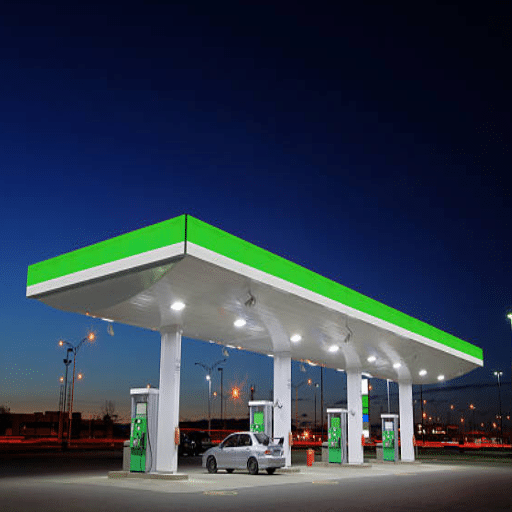
Gas Stations & Skid-Mounted Fuel Stations
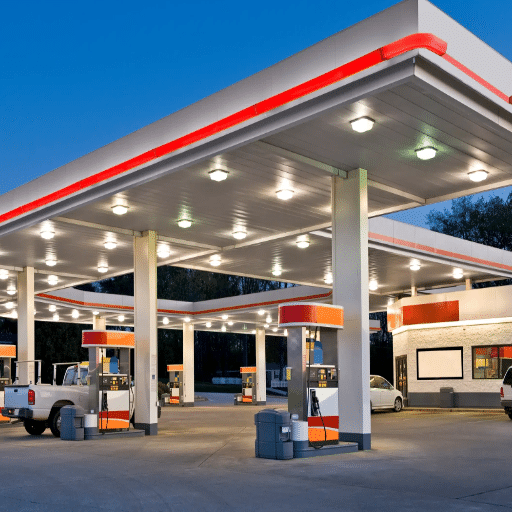
- Stainless steel wins for coastal or high-humidity sites where salt-air corrosion is a concern.
- Aluminum is rarely used for fixed gas station tanks. Carbon steel with secondary containment or fiberglass is more common.
- For mobile or modular deployment, see our overview of skid-mounted fuel stations.
Example: A mining company in a humid coastal region ordered skid-mounted fuel stations for fleet refueling. They specified 316L stainless steel tank modules despite the higher price. After five years, the modules showed no internal corrosion, while a competitor’s carbon steel skid tanks at a nearby site required coating repairs.
Decision Checklist: How to Choose
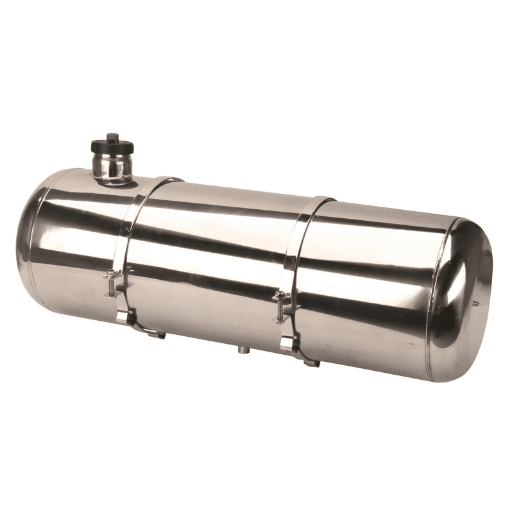
Use this checklist before you request a quote:
- Define the fuel type and blend. Diesel, gasoline, ethanol blends, biodiesel, and jet fuel each favor different grades.
- Assess the environment. Saltwater, humidity, road vibration, and temperature swings all affect material choice.
- Determine weight and payload priorities. If every kilogram matters, aluminum deserves a close look.
- Set your budget and TCO horizon. Compare upfront cost against expected maintenance and replacement over 15–20 years.
- Confirm required standards and certifications. Marine, DOT, UL, ASME, API, and GB standards may apply.
- Match the alloy/grade and supplier capability. Not every fabricator works cleanly with 316L or 5083-H116.
FAQ
Which is better, stainless steel or aluminum fuel tank?
It depends on the application. Aluminum is lighter and costs less upfront, making it ideal for transport and weight-sensitive equipment. Stainless steel, especially 316L, resists corrosion better in saltwater, biofuel, and long-life installations.
Do aluminum fuel tanks corrode?
Yes, aluminum can corrode. Galvanic contact with dissimilar metals, water contamination in ethanol blends, trapped moisture from foam mounting, and chloride exposure can all damage the protective oxide layer.
How long do aluminum fuel tanks last?
High-quality 5052 or 5083 aluminum tanks can last 20–30 years with proper installation. In harsh marine environments with poor mounting or water contamination, structural weakening may begin after 10–15 years.
Is 316 stainless steel better than aluminum for marine fuel tanks?
For saltwater or commercial marine use, 316L stainless steel is usually better because it resists chloride pitting and lasts longer with less maintenance. Aluminum is acceptable for protected, recreational, or weight-sensitive applications.
Can aluminum fuel tanks store ethanol or biodiesel?
Aluminum handles low ethanol blends such as E10 well. For E85 or high biodiesel blends such as B20+, 316L stainless steel is the safer long-term choice because these fuels attract water and increase corrosion risk.
Why are fuel tanker trailers often aluminum?
Aluminum tanker trailers are lighter than steel or stainless steel trailers. The weight savings increase payload and improve fuel economy, which directly improves profitability on long-haul routes.
Is stainless steel worth the extra cost for a fuel tank?
Stainless steel is worth the extra cost when the operating environment is corrosive, when fuel cleanliness is critical, or when replacement access is difficult. For weight-sensitive mobile fleets, aluminum may deliver lower total cost of ownership.
Conclusion
Stainless steel and aluminum both make excellent fuel tanks, but they win in different conditions. Match aluminum to weight-sensitive, mobile, and moderate-corrosion applications. Match stainless steel, particularly 316L, to saltwater, biofuels, ethanol blends, and installations where long life matters more than light weight.
The best choice isn’t a material. It’s a material applied to the right fuel, environment, and duty cycle.
If you need help specifying a stainless steel or aluminum fuel tank for your project, contact Shandong Shengrui Intelligent Equipment Co., Ltd. Our engineering team can recommend the right grade, confirm compliance standards, and deliver a custom quote for marine, transport, industrial, or skid-mounted fuel station applications.