Fuel polishing is the circulating filtration and water separation of diesel inside a storage tank. It cleans the fuel. It doesn’t clean the tank, and that distinction decides whether polishing is a maintenance plan or a subscription to a problem nobody has diagnosed.
Water is the root cause of almost everything polishing gets asked to fix. It arrives through vents and fill points, collects at the low point, and the interface between fuel and water is where microbial growth starts. Remove the water and the growth stops.
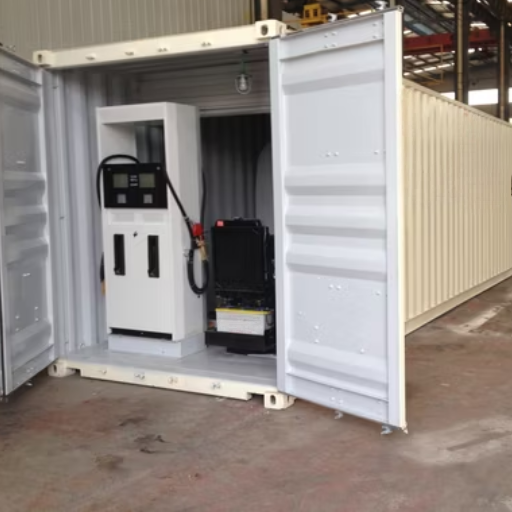
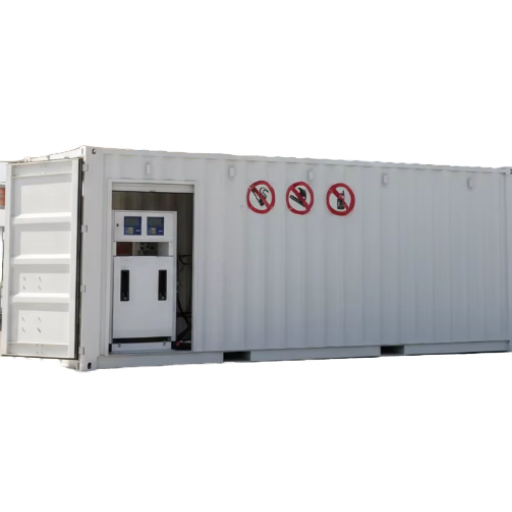
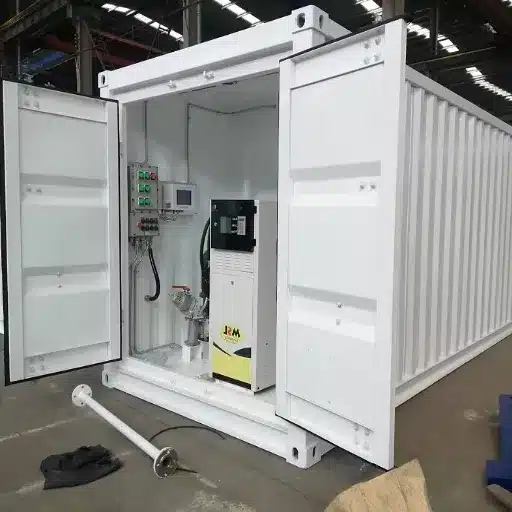
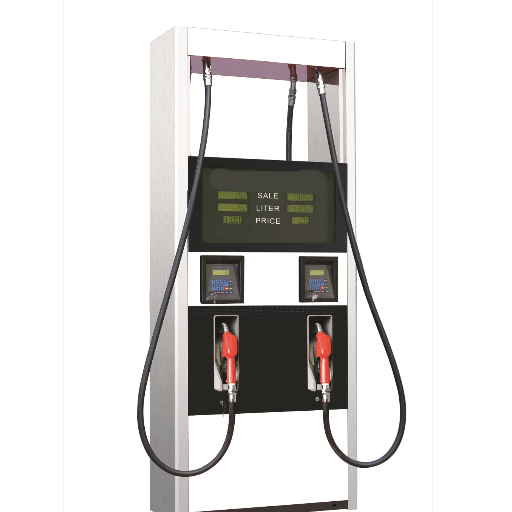
The 20ft skid station is the frame this site builds, and its equipment bay carries the first line of defence: a multi-stage 10-micron filter and water-absorbing element. That’s dispenser protection; polishing protects the inventory behind it.
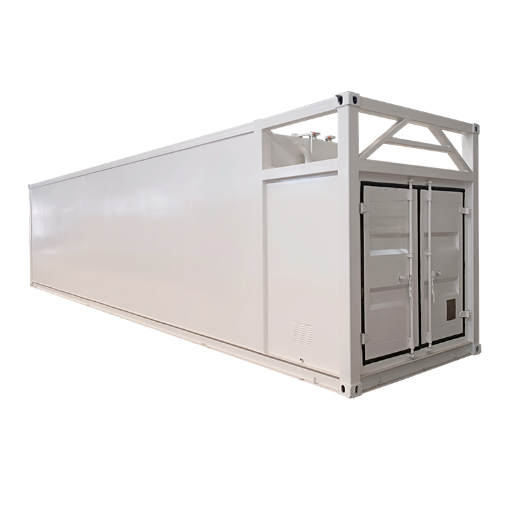
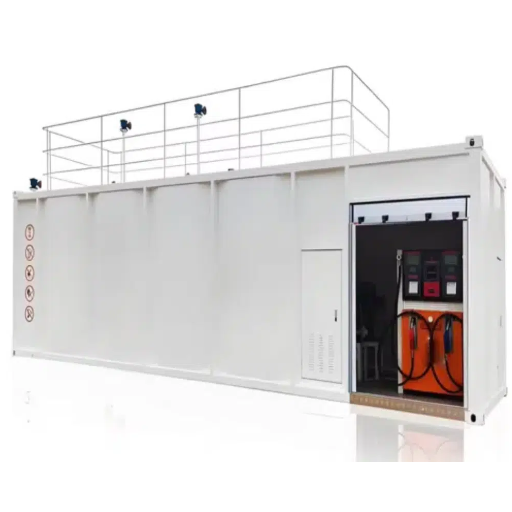
If you need, our full 40ft specification and deployment guide covers configuration, ground loading, and permits.
Key Takeaways
- Fuel polishing circulates and filters the fuel in a tank. It does not clean the tank wall, and biofilm or compacted sludge needs mechanical cleaning.
- Water is the root cause. It arrives by condensation and with delivered fuel, and the fuel-water interface is where microbial growth starts.
- ASTM D975 caps water and sediment at 0.05% by volume. ISO 4406 codes of 18/16/13 are the charter limit, and common-rail systems commonly ask for 12/9/6.
- Polishing pays when turnover is slow or a critical load depends on the fuel. It is poor value on a high-turnover retail tank.
- The cheapest polishing is the one you design out: a sloped floor, a sump drain, a filtered breather and a turnover rate under twelve months.
What fuel polishing is, and what it is not
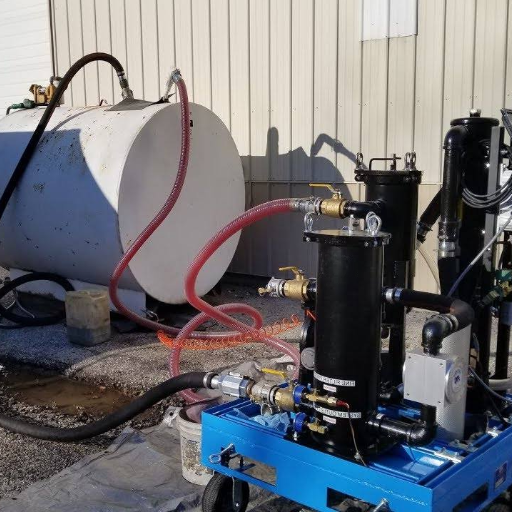
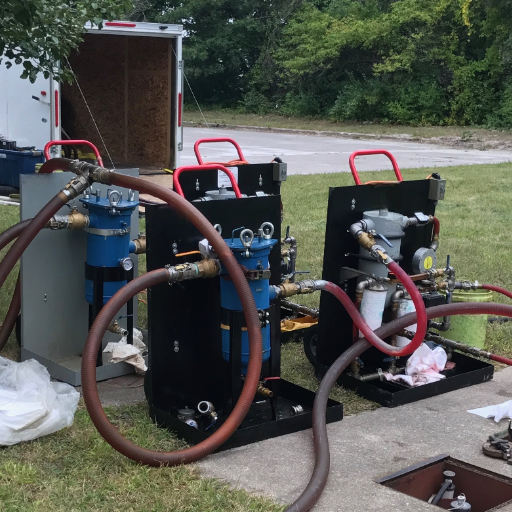
Polishing draws fuel from the low point of a tank and pushes it through staged filtration and a water separator. It returns the fuel until the batch meets a cleanliness target. That’s a maintenance process on the fuel, not a treatment additive, and not a tank clean.
Three things get confused under the same word, and the confusion costs money.
| What it is | What it touches | Typical trigger |
|---|---|---|
| Fuel polishing | The fuel in the tank | Slow turnover, storage past a year, a failed lab test |
| Mechanical tank cleaning | The tank shell, floor and fittings | Adhered sludge, wall biofilm, a known water source |
| Fuel replacement | The whole batch | Fuel beyond recovery, or disposal cheaper than treatment |
| Prevention | The tank design and operating routine | Every new tank and every new site |
Chevron’s diesel fuel technical review is direct about the limit. A biocide may fail if a heavy biofilm has formed, “because it may not be able to penetrate to the organisms living deep within the film.” When that happens, the tank has to be drained and mechanically cleaned.
Polishing buys the batch more time. It cannot reach what has attached itself to steel, and it cannot close the path the water is using to get in.
What actually contaminates stored diesel
Water, and how it gets in
Water enters a tank three ways. It condenses out of the headspace as the tank breathes through the day-night cycle. It comes in at the fill point and through the vent. And it arrives dissolved in delivered fuel, then separates once the fuel sits still.
Diesel is lighter than water, so the water sinks to the lowest point the tank has. That’s why a flat floor with no sump hides its water across the whole floor instead of in one place you can drain.
The fuel-water interface is where the damage starts
Microbial growth needs water. The same Chevron review describes organisms that grow with air and others that grow without it. It notes that “static tanks, where fuel is being stored for an extended period of time, are a much better growth environment when water is present.”
That explains why polishing alone doesn’t end a microbial problem. The organisms live at the boundary between fuel and water. Agitate the tank, and you spread them; remove the water, and you remove their habitat.
The UK and Australian term for this is diesel bug. The symptoms are a dark layer at the interface, a sour smell, slime on filter elements, and filters plugging far earlier than the service interval suggests. Biomass blocks filters, and the organic acids the colony produces accelerate corrosion. ASTM D6469 covers the testing.
Particulate, sediment and storage life
Rust and scale from the tank itself, degradation products from ageing fuel, and debris delivered with new fuel all settle out. The filter catches what reaches it; the rest sits on the floor waiting for a delivery to stir it up.
Ageing matters too. Unstable diesel forms soluble gums and insoluble organic particulates, and Chevron notes this “may occur gradually during long-term storage.” Published figures cluster around six to twelve months for ultra-low-sulphur diesel kept under good housekeeping. Biodiesel blends run shorter, and heat shortens both.
No ASTM clause sets a storage deadline, so treat all of those ranges as trade guidance rather than a specification.
For technical information, see our article on 40ft skid station capacity.
Diesel fuel polishing: when it is worth it
Turnover is the first test
Compare tank volume with annual consumption. That single ratio answers most of the question.
If a site burns its tank volume more than once a year, the fuel never sits long enough to age, and polishing is money spent on a non-issue. If a tank holds more than a year of consumption, the fuel sits past its shelf life, and something has to manage that.
Polishing is one answer; a smaller tank is often a better one. Run the arithmetic before you read a single quote.
The four triggers
| Trigger | What it looks like |
|---|---|
| Slow turnover | A tank that holds more than a year of consumption |
| Long storage | A batch that will sit past twelve months before it’s drawn |
| A critical load | Standby power for a hospital, data centre or emergency service |
| A documented event | A lab result or failed load test that already showed a problem |
The standby-power case, including the testing calendar and class-hour sizing, is covered in the generator fuel skid fuel-quality programme.
The four non-triggers
| Situation | What the problem actually is |
|---|---|
| A high-turnover retail forecourt | Nothing. The fuel never sits long enough to age |
| Clean lab result, filtered breather, no water | Nothing. You already have the outcome polishing sells |
| Contamination adhered to the shell or floor | Tank cleaning, not polishing |
| Fuel that arrived off-spec | A supplier claim, not a loop |
Each of these ends with a different purchase, and selling a loop into any of them is how the industry earns its reputation for treating a symptom.
A worked example: the tank filled twice a year
A depot manager, we will call Daniel, runs a quarry with a 20,000-litre tank and 9,000 litres of annual consumption. That tank holds more than two years of fuel, so contamination isn’t a risk; it’s a schedule, and he polishes quarterly on a service contract.
The arithmetic that would have changed his decision takes one line: two years of inventory in a tank that should hold six months. The sump drain and filtered breather that kept the water out cost less than one service visit.
The fuel polishing system: what it has to contain
The functional list
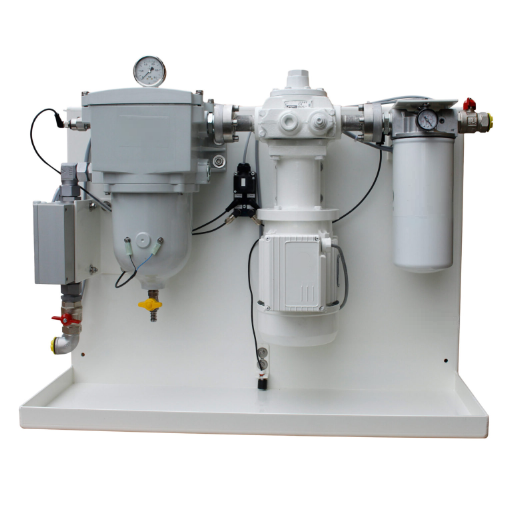
A polishing system is a loop, and a loop needs six things to be useful.
- A pump sized to move a tank volume in a working day, not a weekend.
- Staged filtration, coarse ahead of fine.
- Water separation, usually a coalescer.
- A draw from the tank low point and a return that doesn’t drag separated water back in.
- Differential-pressure indication across the filters.
- A sample point downstream of the last stage.
The sample point is the one buyers forget. A loop that runs and a sample that’s never drawn is a maintenance ritual that proves nothing.
Staging and flow rate
A common sequence runs coarse first, then finer, with a water separator in the line; the standby-power guide on this site uses 30, 10, and 2 microns as its worked example.
Flow rate decides how long a tank takes to turn over, and that’s the number to ask for. Divide tank volume by flow rate for the hours per pass, then multiply by the passes the supplier claims. High flow through a small filter isn’t the same purchase as a slower loop that finishes the job.
Portable, fixed or contracted
| Model | What it is | Suits | Trade-off |
|---|---|---|---|
| Portable cart | A wheeled loop moved between tanks | Several tanks, one site, occasional use | Labour per visit; storage for the cart |
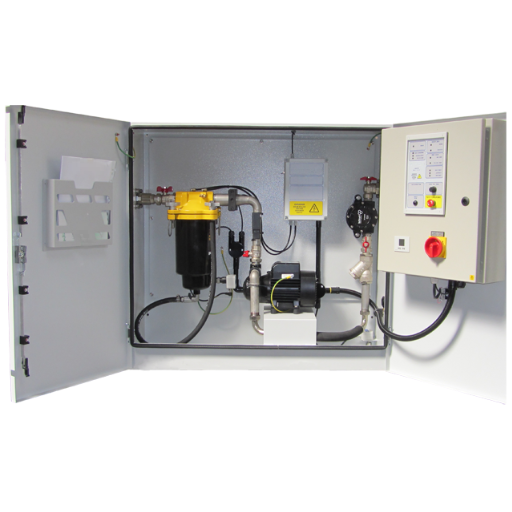
| Fixed loop | Permanently installed on one tank, sometimes automated | A single critical tank, unmanned sites | Capital cost; needs someone to check it |
| Contracted service | A provider brings the loop and the operator | Sites with no maintenance staff | Recurring cost; scheduling; you own the result, not the equipment |
None of the three replaces sampling. A contracted service that polishes and doesn’t leave a test result has done half the job. If you’re specifying tank and loop together, the 20ft skid station specification guide covers the datasheet and submittal register, where the filtration and sampling detail belongs.
What clean actually means: the numbers
The ASTM D975 ceiling
ASTM D975 is the diesel fuel specification, and it caps water and sediment at 0.05% by volume for No. 1-D and No. 2-D, measured by centrifugation under ASTM D2709 (standard listing). Five hundredths of one percent of 20,000 litres is 10 litres, so that’s a ceiling to stay under, not a target to aim at.
ISO 4406 and particle counts
ISO 4406 reports contamination as three numbers, each a cumulative count per millilitre of particles at 4, 6 and 14 microns and larger. Each step in an ISO code doubles the count. So a code of 18 sits at 1,300 to 2,500 particles per millilitre, while a code of 12 sits at 20 to 40.
The fuel-quality charter limit is 18/16/13. High-pressure common-rail systems commonly ask for 12/9/6, far cleaner once the doubling is applied. If a site runs modern common-rail equipment, the target is the equipment maker’s cleanliness requirement, not the fuel specification, and it’s worth asking for that in writing.
| Measure | Figure | What it means in practice |
|---|---|---|
| Water and sediment, ASTM D975 | 0.05% by volume max | 10 litres in a 20,000-litre tank is still “in spec” |
| Fuel cleanliness, charter limit | 18/16/13 (ISO 4406) | Delivered fuel can pass and still be dirty |
| Common-rail target | 12/9/6 (ISO 4406) | Far cleaner: each code step doubles the count |
| Particle sizes reported | 4, 6 and 14 microns | The range that damages pumps and injectors |
| Sample point | Tank low point, after settling | A top sample can read clean over a wet floor |
Sampling discipline
Draw the sample from the low point, not the fill line and not the top of the tank. Water and sediment collect at the bottom, so a top sample can read clean while the floor holds a litre of water.
Take it after a delivery has settled, not during it, and keep the results. The trend across a year tells you more than any single test.
The tank-condition side is a different question, covered in the fuel tank integrity inspection guide. Corrosion inside the shell is what the microbial acids accelerate, and that’s a tank problem polishing can’t fix.
What diesel fuel polishing costs
These are the published rates from Bell Performance, one of the few sources that puts numbers on the table at all.
| Line | Published figure | Notes |
|---|---|---|
| Service polishing | $0.16 to $0.70 per gallon stored | Minimum $500 to $650 per visit |
| Emergency polishing | $2,000 to $5,000 per job | Commercial tanks |
| Disposal and replacement | $5 to $20 per gallon | Removal, hauling, new fuel |
The spread isn’t noise. Tank size, site access, and how much water and sludge has to come out all move the price, and on a 300-gallon day tank, the visit minimum dominates.
That gap against replacement is why polishing exists as a business. When polishing costs a fraction of replacement, it’s the cheaper answer. When the fuel is beyond recovery, it isn’t, and no amount of circulating changes that.
Vendor white papers quote automated permanent systems in the low tens of thousands. The payback depends on whether the site would otherwise buy service visits every year. The skid station total cost of ownership model carries the maintenance and fuel lines alongside everything else.
A project engineer we will call Priya adds a sump drain and a filtered breather to a purchase order. The line items are small against the tank. Two years later, the lab result is clean, and the polishing contract was never signed.
Specifying a tank so you need less polishing
Write the requirement into the purchase order in the supplier’s own language. The table below turns each benefit into the question that gets a usable answer.
| What you want | What to ask for | Why it matters |
|---|---|---|
| Water that can be drained | Floor slope to one low point, and a sump with a draw-off drain | Otherwise water spreads across a flat floor |
| Air that arrives dry | A breather with a hydrophobic or desiccant element | Condensation is the main water source |
| Fuel that isn’t watered down at delivery | A sealed fill point and a clean coupling | Deliveries import water and debris |
| A sample that means something | A mid-level sampling port, not a top draw | A top sample can read clean over a wet floor |
| Debris caught on the way in | Fill-line filtration | Cheaper than catching it in the loop |
| A sizing you can trust | The turnover assumption the tank was sized on | Turns a guess into a spec |
None of these is unusual. All of them are easier to specify than to retrofit, and each one reduces how often the loop has to run.
A tank storing fuel for long periods also benefits from an internal lining rated for continuous immersion. That is a different product from an external paint system, and the tank coating and lining selection guide covers the chemistry and surface preparation.
Storage limits and containment sit in the NFPA 30A and 30 storage rules guide. The federal spill-planning threshold is 1,320 gallons of aggregate aboveground capacity under 40 CFR 112.
Frequently asked questions
Does fuel polishing work?
Yes, on the fuel. It removes water and particulates and can bring a batch back inside a cleanliness target. It doesn’t clean the tank wall or remove adhered sludge, so a tank with a biofilm problem needs mechanical cleaning as well.
How often should diesel fuel be polished?
There’s no single interval, and any source quoting one is describing its own service model. Published recommendations range from annual to every few years, and low-turnover sites often circulate a few hours each week instead. The decision rests on turnover, storage time, whether a critical load depends on the fuel, and what the samples show.
Can polishing remove microbial contamination, also called diesel bug?
It removes the biomass suspended in the fuel and the water it grew in, which is why removing the water matters more than running the loop. It doesn’t remove a biofilm attached to the shell, and the tank then needs draining and mechanical cleaning.
What is the difference between fuel polishing and fuel tank cleaning?
Polishing treats the fuel; tank cleaning treats the shell, floor, fittings, and any adhered deposits. Polishing is a loop with filters; cleaning is a physical intervention with entry, washing, and waste disposal. A tank that needs cleaning won’t be fixed by polishing, however long the loop runs.
What water content is acceptable in diesel fuel?
ASTM D975 allows up to 0.05% water and sediment by volume, measured by ASTM D2709. That’s a ceiling rather than a working target, because it permits several litres of water in a modest tank. Chevron states the practical position directly: keep water in a storage tank as low as possible, preferably at zero.
How long can diesel fuel be stored?
Commonly quoted figures put ultra-low-sulphur diesel at six to twelve months under good housekeeping, with biodiesel blends shorter and hot climates shorter again. No ASTM clause sets a deadline, so treat the range as guidance; a tank holding more than a year of consumption needs a turnover plan or a polishing programme.
Do I need a polishing system on a 20ft skid station?
Not by default. A skid station’s multi-stage filter and water-absorbing element protect the dispenser and the engine, a different job from managing the inventory. Polishing becomes relevant when the station sits on a slow-turnover site, holds fuel more than a year, or serves a critical load. The 20ft skid station equipment bay also offers a coalescer option for finer water separation at the point of dispensing.
What does fuel polishing cost?
Roughly $0.16 to $0.70 per gallon of stored fuel with a $500 to $650 visit minimum, against $5 to $20 per gallon to dispose of and replace the fuel.
The short version
Fuel polishing is worth doing when the fuel has a problem, and the problem is almost always water. It arrives through the vent and the fill point and, with delivered fuel, collects at the low point and creates the interface where microbial growth starts. The growth produces the biomass that plugs filters and the acids that corrode the tank.
Polishing manages that. It doesn’t eliminate it, and it can’t reach a biofilm on the wall. The tank design either helps or it doesn’t. A sloped floor, a sump drain, a filtered breather, a sealed fill, and a sampling port are cheap at build and expensive to retrofit.
Before you buy a fuel polishing loop or sign a contract, do the turnover arithmetic and take a sample from the bottom. Those two steps tell you whether you have a fuel problem, a tank problem, or a design problem. The 20ft skid station range shows what the equipment bay carries as standard, and tells us the tank, the fuel, and the turnover if you want your site worked through.