The inspector arrived unannounced at a family-owned station in New Jersey on a Thursday morning in 2023. The owner, Raj, had operated the site for eleven years without a single violation. But when the EPA auditor asked for the last twelve months of walkthrough inspection records, Raj’s manager could only produce seven. The other five months were missing. Raj later settled for $18,000 in civil penalties, plus the cost of hiring a compliance consultant to rebuild his recordkeeping system. His tank equipment was fine. His paperwork was not.
If you own or operate a gas station, this story should make your stomach turn. UST compliance requirements are not just technical rules buried in federal code. They are the framework that keeps your business open, your soil clean, and your inspectors satisfied. Yet the EPA reports that more than one in three facilities fail to meet them.
In this guide, you will learn exactly what UST compliance requirements cover, how to satisfy each of the six regulatory pillars, what the 2026 enforcement landscape looks like, and how to build a compliance system that protects your license. You will also get a complete walkthrough inspection checklist you can use immediately.
Leakage is a very important safety incident for gas stations, and if you want to learn how to prevent it, please check out our article on Gas Station Leak Prevention.
What Are UST Compliance Requirements and Why Do They Exist?

UST compliance requirements are the federal and state rules that govern how underground storage tanks are installed, monitored, tested, and maintained to prevent releases of petroleum into the environment. The EPA codifies these rules under 40 CFR Part 280, a comprehensive regulation that applies to approximately 533,000 active USTs at roughly 190,000 facilities nationwide. EPA resources for UST owners and operators provide additional state-specific guidance and downloadable forms.
The rules exist because a single leaking UST can contaminate millions of gallons of groundwater. A cleanup can cost anywhere from 50,000 to more than 500,000. The EPA, along with state and territorial agencies, enforces these standards through unannounced inspections, violation notices, and civil penalties that can reach $25,000 per tank per day per violation.
In fiscal year 2025, EPA and state regulators conducted 82,484 on-site inspections. According to EPA FY2025 performance data, the national technical compliance rate was only 62.9%. That means 37.1% of facilities had at least one violation. Non-compliance is not a rare mistake. It is a common and expensive one.
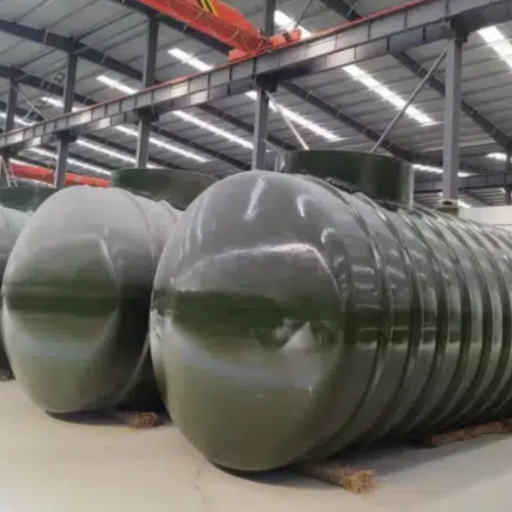
At Shandong Shengrui Intelligent Equipment Co., Ltd., we engineer underground fuel storage systems that help station owners meet UST compliance requirements from day one. Understanding the rules is the first step toward protecting your investment.
The Six Pillars of UST Compliance
Every UST compliance requirement falls into one of six categories. Think of them as the structural beams that hold your compliance program together. Remove one, and the whole system weakens.
1. Release Detection
You cannot prevent what you cannot detect. Release detection is the continuous or periodic monitoring that tells you when fuel is leaving your tank or piping system unexpectedly.
The EPA approves several methods. Automatic tank gauges, or ATGs, use probes inside the tank to measure fuel level and temperature continuously. They can detect leaks as small as 0.2 gallons per hour. Interstitial monitoring checks the space between the inner and outer walls of a double-wall tank or piping. If liquid enters that space, an alarm triggers immediately.
Statistical inventory reconciliation, or SIR, analyzes delivery and sales data to flag discrepancies. Groundwater and vapor monitoring uses wells or sensors around the tank to detect fuel in the soil or air. Each method has specific applicability requirements based on tank age, construction, and local geology.
Daily inventory reconciliation is also mandatory. You must compare measured fuel levels against the book inventory every day the tank operates. A persistent discrepancy often reveals a leak before any electronic sensor does.
To choose the right Gas Station Leak Detection Systems, please refer to our article on Gas Station Leak Detection Systems.
2. Release Prevention: Spill, Overfill, and Corrosion Protection
Stopping a release before it happens is always cheaper than cleaning it up. This pillar covers three physical protection systems.
Spill prevention equipment catches fuel that splashes out during delivery. Spill buckets, installed around fill pipes, must be liquid-tight and routinely cleaned of debris and liquid.
Overfill prevention devices stop deliveries before the tank reaches unsafe capacity. Automatic shutoff valves activate at 95% full. Overfill alarms trigger at 90% full. These devices are mandatory for any tank receiving deliveries of more than 25 gallons.
Corrosion protection prevents steel tanks and piping from rusting underground. Sacrificial anode systems use buried magnesium or zinc bars that corrode instead of the tank. Impressed current systems use a rectifier to force electrical current through the tank, making it the cathode in the circuit. Both require periodic testing to confirm they are still working.
Secondary containment is required for all new or replacement tanks and piping. Double-wall construction creates a built-in backup layer. If the inner wall fails, the outer wall holds the fuel until you can repair or replace the tank.
Interested in corrosion protection specifics? Read our cathodic protection guide for a deep dive into anode systems, testing schedules, and failure prevention.
3. Operator Training (Class A, B, and C)
A tank system is only as reliable as the people operating it. EPA rules require every facility to designate trained operators in three categories.
Class A operators manage overall compliance. They understand the regulatory requirements, know how the system works, and make decisions about repairs, upgrades, and recordkeeping. There must be at least one Class A operator per facility.
Class B operators handle day-to-day operations and maintenance. They supervise release detection, interpret alarms, coordinate deliveries, and arrange testing. A single person can hold both Class A and B designations if they complete both training programs.
Class C operators are the emergency first responders. They are usually the employees on duty during operating hours. Their training focuses on recognizing alarms, activating emergency shutoffs, and calling the right people when something goes wrong.
Training must be completed within thirty days of designation. Retraining is required every few years or whenever regulations change significantly. Records must be kept for the duration of the operator’s designation.
James Chen learned this the hard way at his Phoenix station. His Class B operator took a job at a competitor in March 2025. James assumed he could handle the duties himself while he looked for a replacement. When the state inspector arrived in May, no designated Class B operator was on site. The citation cost him $4,200 and a thirty-day corrective action deadline.
4. Walkthrough Inspections

Walkthrough inspections are the most frequently cited violation in UST compliance requirements. They are also the easiest to complete correctly if you know what to look for.
Under 40 CFR 280.36, owners must conduct a visual inspection of the entire UST system at least once every thirty days. The inspection must cover spill buckets, fill caps, overfill prevention equipment, containment sumps, emergency shutoffs, and the general tank area for odors, stains, or standing liquid.
You must also perform an annual inspection that includes additional items. Function-test line leak detectors and sump sensors. Visually inspect all containment sumps. Check handheld release detection equipment. Review the prior twelve months of monthly records to confirm consistency.
Documentation is the critical piece. Every inspection must be recorded with the date, inspector’s name, facility identification, and findings. Records must be kept for at least one year.
Maria Santos operated a two-pump station outside Austin for eight years. Her equipment was in good shape. She walked the site every week and fixed problems as she found them. But she never filled out the official inspection log. When the auditor asked for records, she had none. The state issued a notice of violation and a $12,000 fine. Maria now keeps a clipboard at the register. It takes her ten minutes a month.
Monthly (30-Day) Walkthrough Checklist
- Inspect spill buckets for debris, cracks, and liquid
- Verify fill caps are tight and gaskets are intact
- Confirm the ATG or monitoring system is operational
- Review alarm logs for unresponded alarms
- Inspect overfill prevention equipment for damage
- Check containment sumps for fuel, water, or structural damage
- Verify emergency shutoffs are accessible and clearly marked
- Check the tank area for fuel odors, stains, or standing liquid
- Document the inspection with date, inspector name, and findings
Annual Additions
- Review the prior twelve months of monthly records
- Function-test line leak detectors and sump sensors
- Test overfill prevention equipment
- Visually inspect all containment sumps
- Check handheld release detection equipment
- Verify all required triennial testing is current
5. Periodic Testing
Some equipment cannot be verified by visual inspection alone. It needs formal testing on a set schedule.
Triennial testing, performed every three years, includes three major items. Containment sumps must be tested for liquid tightness. Cathodic protection systems must be tested to confirm adequate voltage and current. Overfill prevention equipment must be formally inspected to verify activation at the correct level.
Annual testing covers line leak detectors and ATG functionality. These devices are your first line of defense, so they need more frequent verification.
Any equipment that is repaired or replaced must be tested or inspected within thirty days. Do not wait for the next scheduled cycle.
6. Financial Responsibility
Even perfect equipment can fail. Financial responsibility ensures that money exists to clean up a release if one occurs.
Every UST owner must demonstrate the ability to pay for corrective action and third-party liability. The federal minimum is $500,000 per occurrence. If you market more than 10,000 gallons per month, the requirement rises to $1,000,000.
Acceptable mechanisms include pollution liability insurance, surety bonds, guarantees, and state fund programs. You must maintain continuous coverage. If your policy lapses for even one day, you are out of compliance.
Records must be kept for the current coverage period plus one additional year. Keep copies of declarations pages, bond documents, or state fund certificates in a secure location where you can produce them within minutes.
Six Pillars at a Glance
| Category | Frequency | Key Action | Record Retention |
|---|---|---|---|
| Release Detection | Continuous / Periodic | Monitor ATG or sensors | 1 year |
| Release Prevention | Monthly visual | Inspect spill buckets, corrosion protection | Life of system |
| Operator Training | Initial + retraining | Certify Class A, B, and C | Duration of designation |
| Walkthrough Inspections | Every 30 days | Visual site inspection | 1 year |
| Periodic Testing | Every 3 years | Test sumps, cathodic protection, overfill prevention | 3 years |
| Financial Responsibility | Continuous | Maintain insurance or a bond | Current + 1 year |
2026 Compliance Deadlines and Enforcement Surge

Meeting UST compliance requirements in 2026 means paying attention to state deadlines as much as federal rules. Three developments deserve your immediate attention.
California’s single-walled UST ban, which took effect January 1, 2026, is now being enforced. Any single-walled tank still in the ground was supposed to be closed or upgraded by December 31, 2025. Station owners who delayed replacement are now receiving red-tag shutdown orders. The California penalties range from 500 to 5,000 per tank per day.
On the East Coast, the EPA has maintained aggressive enforcement. In 2023, seven firms in New Jersey and New York settled UST violation cases for significant penalties. The violations included missing walkthrough records, untested release detection equipment, and inadequate financial responsibility documentation.
Several other states have tightened their own deadlines. Rhode Island, South Carolina, and New Jersey have all updated state-specific testing and inspection rules in the last eighteen months. If you operate in a state with EPA-approved State Program Approval, your state rules may be stricter than the federal baseline. EPA frequent questions about USTs include a current list of states with approved programs.
Finally, remember the twelve-month temporary closure rule. If you temporarily close a tank for more than twelve months, you must permanently close it according to EPA guidelines. Ignoring this can create liability years after you stop using the tank.
The True Cost of UST Compliance
Compliance costs money. Non-compliance costs far more. Understanding the full scope of UST compliance requirements helps you budget realistically.
Operator training runs 150 to 500 per person, depending on the provider and your state. Insurance and financial responsibility coverage typically costs 2,000 to 8,000 per year for a standard retail station. Triennial testing for sumps, cathodic protection, and overfill prevention ranges from 800 to 2,500.
Monthly inspection labor is cheap if you do it yourself. Expect 100 to 300 per year in staff time. If you contract it out, budget 1,200 to 3,600 annually. Cathodic protection testing adds 300 to 600. Overfill prevention testing adds 200 to 500.
Now compare that to the alternative. EPA civil penalties can hit $25,000 per tank per day per violation. State penalties vary, but can add thousands more. Cleanup liability starts around $50,000 and can exceed $500,000 for major releases. Then there is business interruption. An enforcement shutdown can stop your revenue for days or weeks while you scramble to fix violations.
Spending 5,000 to 10,000 per year on compliance is not an expense. It is insurance against a six-figure disaster.
Common UST Compliance Violations (and How to Avoid Them)
Inspectors see the same problems repeatedly. These are the most common gaps in UST compliance requirements and how to close them.
Missing or incomplete walkthrough inspection records top the list. The inspection itself takes minutes. The paperwork is what saves you. Untrained or improperly designated operators are the next most common issue. If your designated Class B operator leaves, name a replacement immediately.
Failed or untested release detection equipment creates serious exposure. A broken ATG that nobody notices is worse than no ATG at all, because it gives you false confidence. Cracked spill buckets and damaged containment sumps also trigger citations. Water and debris in a spill bucket indicate neglect.
Incompatible fuel and equipment are an emerging problem. Ethanol blends above E10 and biodiesel above B20 can degrade seals, gaskets, and sensors not rated for them. If you change fuel products, verify that your entire system is compatible.
Delayed release reporting is another trap. Most states require you to report a suspected release within twenty-four hours. Waiting to confirm the problem can turn a small repair into a major enforcement action.
Finally, missing financial responsibility documentation is a violation that exists only on paper. But paper is what the inspector reviews. Keep your insurance declarations page, bond certificates, and state fund letters organized and current.
Need details on overfill prevention equipment? Read our complete guide to overfill prevention devices for testing rules, manufacturer comparisons, and 2026 regulatory updates.
How to Choose Compliant UST Equipment

The right equipment makes UST compliance requirements easier to satisfy. Your choices directly affect how difficult compliance becomes. The right tank and piping system can simplify monitoring, reduce testing costs, and satisfy inspectors on the first visit.
Start with the decision between a new installation and a retrofit. New installations must meet the strictest current standards, including secondary containment and compatible materials. Retrofits may qualify for phased compliance depending on your state, but the clock is always ticking.
Single-wall tanks are effectively obsolete in many jurisdictions. Double-wall tanks provide built-in secondary containment and interstitial monitoring. They cost more upfront, but they reduce long-term compliance risk.
Pressurized delivery systems need automatic shutoff devices rated for pressure fill. Gravity systems offer more flexibility, but automatic shutoff is still the safest choice.
Fuel type compatibility matters more than ever. If you store gasoline, diesel, ethanol blends, or biodiesel, confirm that every component from tank to dispenser is rated for that fuel. Modern fuel management systems integrate ATG, overfill prevention, and leak detection into a single platform. That integration simplifies recordkeeping and reduces the chance of a missed alarm.
At Shandong Shengrui Intelligent Equipment Co., Ltd., we supply certified double-wall underground fuel storage tanks and integrated safety systems designed for EPA compliance and international standards. Our engineering team helps you select equipment that matches your fuel types, delivery methods, and regulatory requirements. Contact us for a tailored compliance-ready specification.
Frequently Asked Questions About UST Compliance
How often must UST equipment be tested?
Federal rules require triennial testing for containment sumps, cathodic protection, and overfill prevention. Annual testing is required for line leak detectors and ATG functionality. Any repaired or replaced equipment must be tested within thirty days.
What is the difference between Class A, B, and C operators?
Class A operators manage overall compliance and regulatory knowledge. Class B operators handle daily operations, maintenance, and testing coordination. Class C operators are the on-duty emergency responders who know how to shut down the system and call for help.
Do I need a licensed inspector for monthly walkthroughs?
No. The owner or a designated employee can perform the monthly walkthrough. However, triennial testing must be performed by a qualified service technician following manufacturer requirements or a nationally recognized code of practice.
What happens if my tank fails a compliance inspection?
You will receive a notice of violation with a corrective action deadline. The deadline is usually thirty to ninety days. You must fix the violation, provide documentation, and sometimes pass a follow-up inspection. Penalties may be assessed immediately or after the corrective period.
Conclusion
UST compliance requirements are not a bureaucratic puzzle designed to frustrate you. They are a tested framework for protecting your property, your community, and your ability to stay in business. The six pillars, release detection, prevention, operator training, walkthrough inspections, periodic testing, and financial responsibility, work together to catch problems early and contain them when they happen.
Three principles will keep you out of trouble. Inspect and document every thirty days without exception. Test your equipment on schedule and keep the paperwork. Train your people and update designations the moment someone leaves.
The cost of compliance is predictable. The cost of failure is not. A single missed inspection log or untrained operator can trigger fines that erase years of profit. Build your system right, maintain it religiously, and treat every audit as an opportunity to prove your professionalism.
At Shandong Shengrui Intelligent Equipment Co., Ltd., we engineer fuel storage and gas station infrastructure that meets the strictest international safety standards. From certified underground storage tanks to integrated leak detection and overfill prevention systems, we help station owners worldwide build safer, compliant, and more reliable facilities.
Ready to protect your tanks and simplify compliance? Request a custom quote from our engineering team and get site-specific UST compliance guidance for your project.