Two quotes landed in Emeka Okafor’s inbox on the same morning. One was for a 20ft container fuel station. The other was for a 30,000L skid mounted fuel station. Both stored diesel and dispensed fuel, and cost roughly the same.
He stared at the specifications and could not decide. The container looked secure and weatherproof. The skid looked simpler and easier to move.
His depot in Lagos needed reliable fueling for a fleet of trucks. The wrong choice would mean higher costs, slower maintenance, or security problems he had not anticipated.
Emeka’s confusion is common. Suppliers often use “container fuel station” and “skid mounted fuel station” interchangeably. Some buyers search for containerized fuel station vs skid mounted, while others type skid mounted vs container fuel station. Some suppliers even list the same product under both names.
Yet the two formats differ in structure, shipping, security, maintenance access, and total cost of ownership. This guide compares container fuel station vs skid mounted systems, the two most common mobile fuel station types, side-by-side. By the end, you will know how each format works, where each one wins, and how to choose the right portable fuel station comparison for your project.
For detailed information about Skid Mounted Gas Station, please refer to our article about Skid Mounted Gas Station Solution.
What Is a Container Fuel Station?

A container fuel station is a prefabricated fuel storage and dispensing system built inside a modified ISO shipping container. In other words, an ISO container fuel station converts a certified shipping box into a complete fueling unit. The container is usually 10ft, 20ft, or 40ft long and is converted to house one or more tanks, pumps, dispensers, safety equipment, and control systems. Many buyers specifically request a self-bunded container fuel station because the container walls themselves provide secondary containment around the primary tank.
The container itself becomes the enclosure. Lockable doors protect the equipment. Ventilation, lighting, leak detection, and fire suppression are integrated into the box. Because the outer shell is a standard shipping container, the unit can often be moved using ordinary container handling equipment.
Typical capacities range from about 10,000L to 60,000L for 20ft and 40ft units. Some smaller 10ft versions go as low as 5,000L. Tank configurations include single-product, dual-product, or multi-compartment designs.
Key certifications for container fuel stations include a CSC plate for maritime transport, ISO container standards, and fuel-system approvals such as UL 142, NFPA 30A, ATEX, or IECEx, depending on the market. In the United States, motor fuel dispensing facilities fall under NFPA 30A. For a deeper understanding, please read our Mobile Fuel Station Installation Guide.
What Is a Skid Mounted Fuel Station?
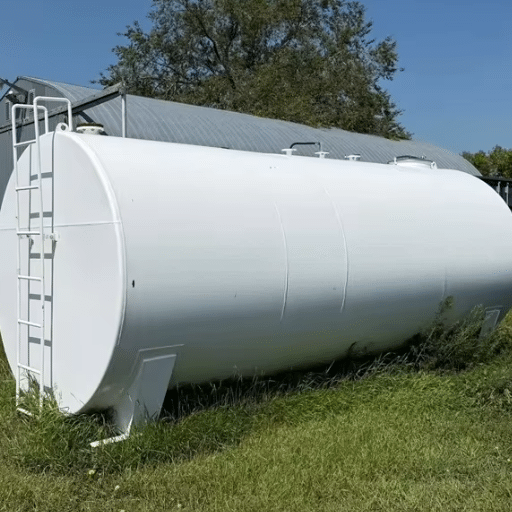
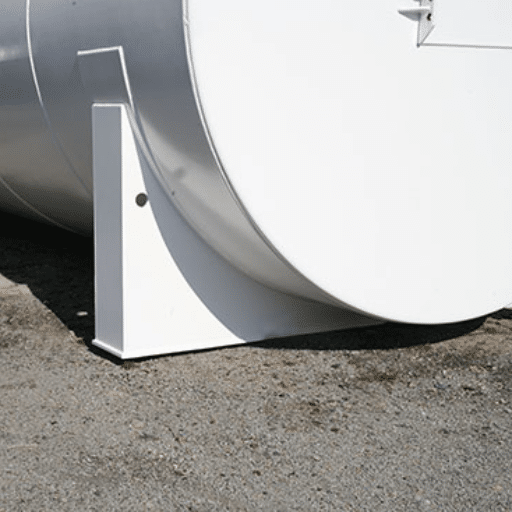
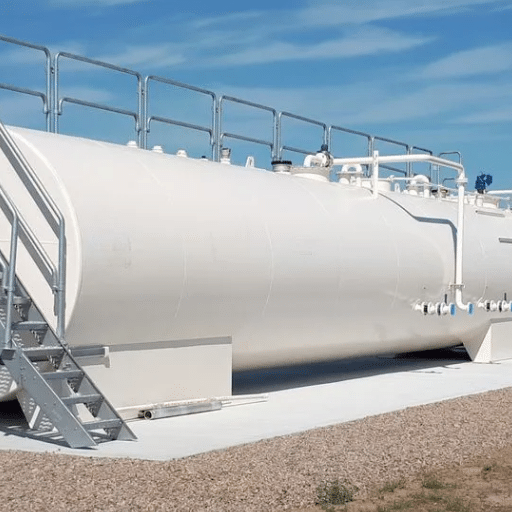
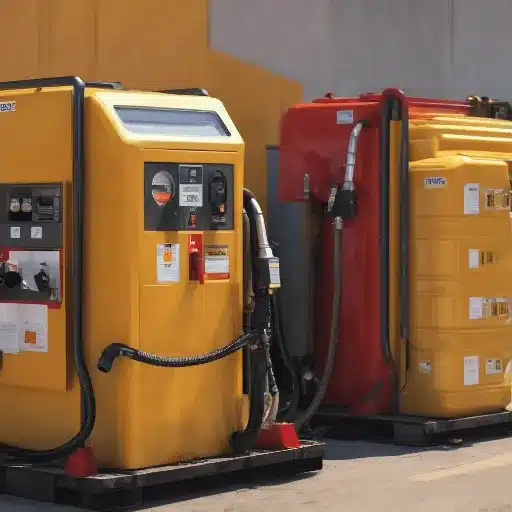
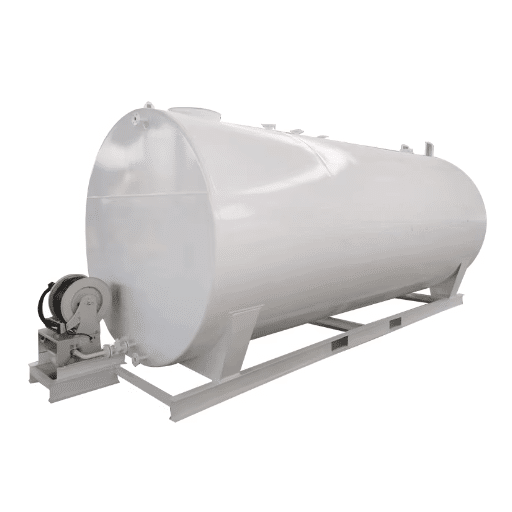
A skid mounted fuel station is a fuel system assembled on a structural steel skid or frame. The tank, pump, dispenser, piping, and safety equipment are mounted on a welded steel base designed for one-piece lifting and relocation.
Unlike a container station, a skid station does not come with a built-in enclosure unless one is added. Many units are open-frame, which makes every component visible and accessible. Others include a partial canopy or weather cover.
Capacities are highly flexible. Compact skids start around 1,000L, while large mining or depot skids can exceed 60,000L. Because the frame is custom-built, tank shape and equipment layout can be optimized for the project rather than constrained by container dimensions.
Certifications focus on the fuel system and frame rather than container shipping rules. Common approvals include UL, ATEX, IECEx, CE, ASME, and Chinese GB standards.
Container Fuel Station vs Skid Mounted: Side-by-Side Comparison
The fastest way to understand the difference is to compare the formats directly.
| Factor | Container Fuel Station | Skid Mounted Fuel Station |
|---|---|---|
| Structure | Modified ISO shipping container enclosure | Welded steel skid/frame, open or partially enclosed |
| Weather protection | Built-in, all-weather | Minimal without canopy or shelter |
| Security | Lockable container, high | Exposed equipment, lower without fencing |
| Transport | Standard ISO logistics (truck, rail, sea) | Flat-rack, break-bulk, RO-RO, or inside container |
| Weight | Heavier due to container walls | Lighter for same capacity |
| Capacity flexibility | Constrained by container dimensions | Highly flexible, custom shapes possible |
| Deployment speed | Plug-and-play, 1–3 days | Very fast, 1–3 days |
| Maintenance access | Tighter, requires service doors | Open and easy |
| Initial cost | 10–30% higher than equivalent open skid | Lower for same capacity |
| Best for | Harsh climates, public retail, maritime, security-sensitive sites | Temporary sites, frequent relocation, private fleets, budget-focused projects |
The container fuel station vs skid mounted decision usually comes down to one question: do you need the equipment protected inside a steel box, or do you need the lightest, most flexible frame?
Advantages and Disadvantages of Each Format

Container Fuel Station Advantages
Container stations excel when the environment or location demands protection.
- All-weather protection: The steel container shields tanks, pumps, and electronics from rain, dust, sand, salt air, and temperature extremes.
- Built-in security: Lockable doors and solid walls reduce theft, vandalism, and unauthorized access.
- Standardized global transport: A CSC-certified unit ships like any ISO container, simplifying multimodal logistics.
- Plug-and-play deployment: Most systems arrive pre-wired and pre-tested, needing only fuel and power connections.
- Professional appearance: The enclosed design looks more like a permanent station, which helps in public or customer-facing locations.
Container Fuel Station Disadvantages
The enclosure adds cost and constraints.
- Higher capital cost: The container shell, insulation, ventilation, and doors add 10–30% to the equipment price.
- Dimension limits: Tank capacity and layout must fit inside a 20ft or 40ft box.
- Heavier weight: The container walls add mass, requiring stronger cranes or lifting gear.
- Tighter maintenance access: Servicing pumps and meters inside a container can be cramped.
- Ventilation engineering: Fuel vapors, heat, and electronics must be managed carefully inside an enclosed space.
Skid Mounted Fuel Station Advantages
Skid stations win on flexibility, cost, and access.
- Lower purchase price: No container enclosure means lower material and labor costs.
- Lighter and more compact: Easier to lift with a crane or forklift and cheaper to transport overland.
- Flexible tank sizing: Not limited to container dimensions, so capacities and shapes can match the site.
- Easy maintenance access: Open layout makes inspection, repair, and component replacement straightforward.
- Faster customization: Frames can be tailored to specific fuel types, pump configurations, and site needs.
Skid Mounted Fuel Station Disadvantages
Open frames leave equipment exposed.
- Minimal weather protection: Pumps, dispensers, and controls need a canopy or shelter in harsh climates.
- Lower security: Exposed equipment is more vulnerable to theft or tampering without fencing.
- Extra site work: Operators may need to add containment, grounding, and weather covers separately.
- Less suited to public retail: An open skid can look industrial and may not meet aesthetic or zoning expectations in urban areas.
Amina Yusuf runs a logistics depot in Kano, Nigeria. She initially considered a skid mounted fuel station because of the lower price. Her site already had a perimeter fence and a canopy, so weather and security were manageable.
The open-frame design lets her technicians reach every valve and meter without crawling through a container. She saved roughly 15% compared with a containerized unit of the same capacity.
Price Comparison: Container Fuel Station vs Skid Mounted
Prices vary by manufacturer, fuel type, safety package, and certification, but the table below shows typical ex-factory ranges for container fuel station price and skid mounted fuel station price by capacity.
| Capacity | Container Fuel Station (USD) | Skid Mounted Fuel Station (USD) |
|---|---|---|
| 1,000L – 5,000L | 15,000–35,000 | 15,000–30,000 |
| 10,000L – 20,000L | 30,000–70,000 | 25,000–60,000 |
| 30,000L – 60,000L | 70,000–150,000+ | 60,000–130,000+ |
These figures are equipment-only estimates. Turnkey installed costs, including shipping, import duties, site preparation, electrical work, and local certification, can be two to four times the ex-factory price.
Both formats still cost far less than a traditional fixed station. In China, a skid-mounted or containerized station typically runs RMB 500,000–2 million, while a conventional station can reach RMB 5–10 million. That gap explains why the global mobile fuel station market is growing quickly. According to Business Research Insights, the mobile fuel delivery system market is projected to reach USD 5.8 billion in 2026.
How to Choose: Decision Matrix by Application

Use this matrix to match the format to your project.
| Scenario | Recommended Format | Reasoning |
|---|---|---|
| Mining or remote construction | Skid mounted | Lower cost, easy relocation, flexible capacity |
| Public retail or urban site | Container | Security, weatherproofing, and professional appearance |
| Maritime, port, or coastal use | Container | CSC/ISO shipping, salt-air protection |
| Frequent relocation between sites | Skid mounted | Lighter, crane and forklift friendly |
| Harsh climate (desert, polar, coastal) | Container | Built-in environmental protection |
| Temporary event or emergency response | Either | Depends on transport and security constraints |
| Fleet depot with existing canopy | Skid mounted | Lower cost, easy access |
| High-security fuel storage | Container | Lockable enclosure deters theft |
Carlos Mendoza manages a copper mine in northern Chile. Dust, salt air, and temperature swings made an open skid risky for electronics and fuel quality. He chose a 40ft container fuel station with ventilation, leak detection, and a lockable equipment room.
The unit arrived CSC-certified, was moved by standard container truck to the site, and began operating within 48 hours. His maintenance team now services the equipment through built-in access doors, and the container shell has held up for three years without corrosion issues.
Shipping and Logistics: Container Fuel Station vs Skid Mounted
How the station travels affects lead time, freight cost, and handling complexity.
Container Fuel Station Shipping
A CSC-certified container fuel station ships as a standard ISO container. That means:
- Lower ocean freight rates because carriers handle it as a normal box.
- Easier port crane handling using container spreaders.
- Multimodal transport by truck, rail, and ship without special permits.
- Simpler customs documentation tied to container numbers and CSC plates.
Skid Mounted Fuel Station Shipping
A skid station offers more transport options but requires more planning:
- Compact skids may fit inside a 40ft container, combining protection with low cost.
- Mid-size and large skids ship flat-rack or break-bulk, which costs more than standard container freight.
- Remote sites can use RO-RO vessels if the skid is trailer-mounted.
- Oversized cargo may need special road permits and heavier cranes.
If your site is near a major port with container handling, the container format can reduce logistics headaches. If your site is remote and accessed by rough roads, a lighter skid may be easier to move the last mile.
If you have shipping needs, please read our article on Skid Mounted Gas Station Shipping Logistics.
Certification and Compliance Considerations
Both formats must meet fuel-system safety standards, but the container adds a layer of transport certification.
Container Fuel Station Certifications
- CSC plate: Required for sea transport as a shipping container.
- ISO container standards: Govern structural integrity and corner castings.
- UL 142 / NFPA 30A: Common for North American aboveground fuel storage and dispensing.
- ATEX / IECEx: Required for hazardous-area equipment in Europe and many international markets.
Skid Mounted Fuel Station Certifications
- Pressure vessel and welding certifications: Verify tank and frame quality.
- UL, ATEX, IECEx, CE: Electrical and hazardous-area approvals.
- ASME / GB standards: Tank design and fabrication codes.
- No CSC required: Because the unit is not shipped as a container.
Both types still need local hazardous-materials permits, environmental approvals, and periodic inspections. Always confirm which certifications your destination country accepts before placing an order.
Maintenance Access and Long-Term Ownership

Over a 10-year life, maintenance access becomes a major cost factor.
Container stations protect components but can make service work cramped. Technicians may need to remove panels, work around the tank, or crawl through narrow doors. Poor ventilation can also accelerate corrosion if vapors condense inside the box.
Skid stations expose components to weather but give technicians open access to every pump, valve, meter, and connection. Leaks are visible immediately. Filter changes, pump overhauls, and dispenser repairs take less time.
The right choice depends on your climate and your maintenance plan. In a mild, fenced site with a service contract, the skid’s open access saves labor hours. In a remote, harsh, or unattended site, the container’s protection reduces weather damage and theft.
Which Format Should You Choose?
Start with four questions:
- What is the climate and security environment? Harsh weather or theft risk favors a container.
- How will the unit be transported? Standard ISO shipping favors a container; rough remote access favors a skid.
- Who will maintain the equipment? Frequent hands-on service favors a skid.
- What is the budget? Tight capital budgets often favor a skid, especially if site shelters already exist.
There is no universal winner in the container fuel station vs skid mounted debate. The best format is the one that matches your site, logistics, and operating plan.
A Peruvian port operator needed three diesel stations that could move between coastal terminals by sea. Container fuel stations with CSC plates were the only practical option. Each unit is loaded onto a container vessel like a standard box, cutting transport coordination time by several weeks compared with arranging flat-rack cargo for open skids. To choose the right skid mounted gas station, please read our article on Skid Mounted Gas Station Capacity Selection.
Conclusion
The container fuel station vs skid mounted decision is not about which technology is better. It is about which format solves your project’s specific constraints.
Container fuel stations offer built-in weather protection, security, and standardized global transport. They suit public retail, harsh climates, maritime use, and high-security sites. Skid mounted fuel stations offer lower cost, lighter weight, flexible sizing, and easy maintenance access. They suit private fleets, temporary projects, mining, construction, and sites with existing shelter.
Use the comparison table, price ranges, and decision matrix in this guide to narrow your choice. Then confirm capacity, fuel type, certifications, and shipping method with your supplier before finalizing the order.
If you are still comparing container fuel station vs skid mounted options, request a project-specific specification from Shandong Shengrui Intelligent Equipment Co., Ltd. We will review your site conditions, transport route, and compliance needs, then recommend the format that delivers the best long-term value.