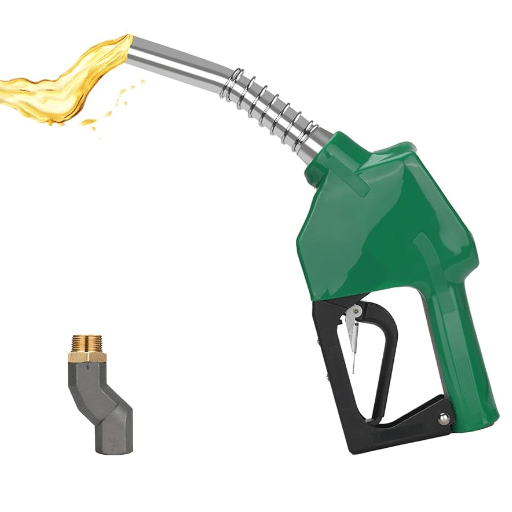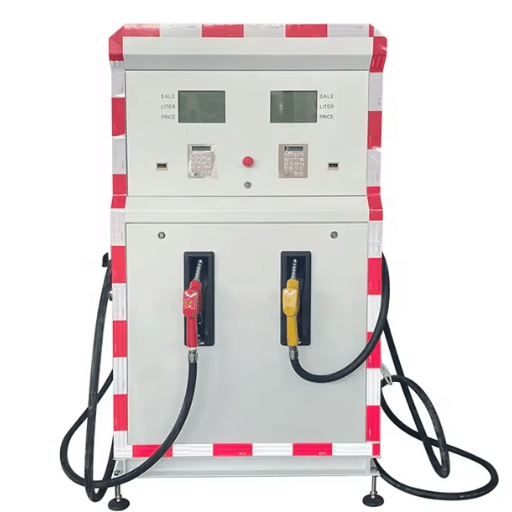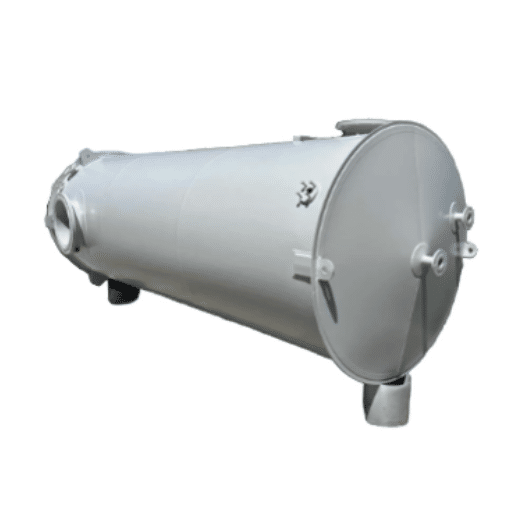
Two buyers ordered what both suppliers described as a “double-walled” diesel tank. One passed its environmental audit without a single note. The other was told to pour a concrete bund it had specifically paid to avoid.
The difference was not quality. It was wording. Only one of those tanks was genuinely self-bunded, and “double-walled” never promised containment in the first place.
If you are specifying a self-bunded fuel tank, that distinction is the whole ballgame. It decides whether your tank satisfies a secondary-containment obligation on its own, whether you need civil works, and whether an inspector signs off.
By the end of this guide, you will know what a self-bunded tank actually is, how it differs from a double-walled or double-skinned tank, which standards govern it in your market, what it costs, and how to keep it compliant for its full service life. We will also cover the configurations, from a 400-litre cube to a 60,000-litre container, and the single maintenance fault that ends more tanks early than any other. If you are still deciding on tank geometry, orientation belongs to our guide to vertical vs horizontal storage tanks.
Here is the path:
- The tank-within-a-tank design and the 110% rule
- The terminology trap that catches experienced buyers
- Standards and certifications by region
- Total cost against a concrete bund
- Installation, inspection, and lifespan
If you want your containment claim checked against your own jurisdiction before you commit, our engineering team can review it with you.
What Is a Self-Bunded Fuel Tank?

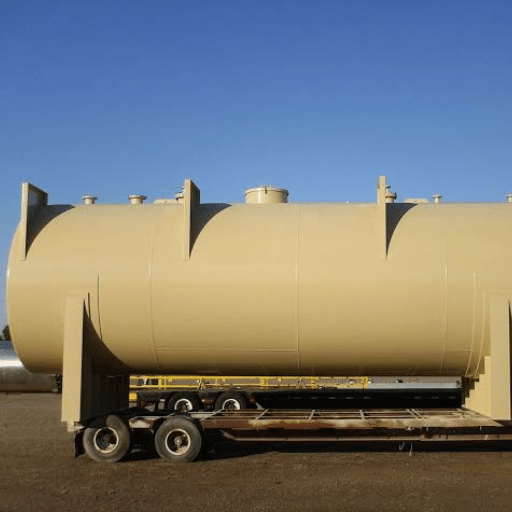
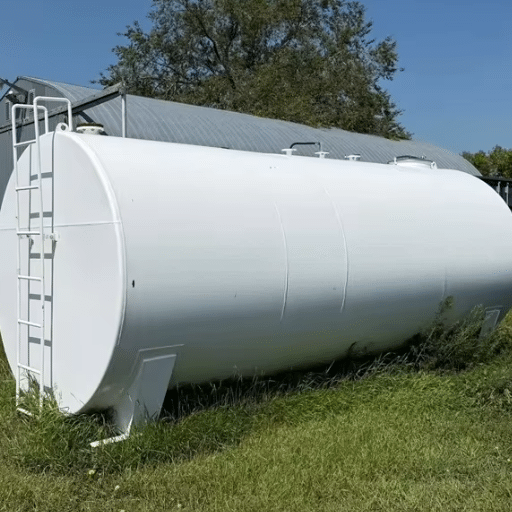
A self-bunded fuel tank is a tank within a tank. An inner primary vessel holds the fuel, and an outer shell is sized to contain the full contents of that inner vessel if it leaks. The outer shell is the bund, and it is built in. No external dike, berm, or concrete compound is required.
The defining number is 110%. A self-bunded tank’s outer shell is sized to hold at least 110% of the inner tank’s capacity. The extra 10% covers rainfall, firefighting water, and foam that may enter the containment during an incident.
Australian Standard AS 1940:2017 handles this format directly in Section 5.9, covering above-ground tanks with integral secondary containment. It is the clause worth naming when you ask a supplier exactly what a tank is built to.
The practical result is a tank that ships with its own containment, installs on a prepared slab, and can be relocated. That is why self-bunded tanks dominate above-ground diesel storage for fleets, mining, telecom, and remote sites, where a poured concrete bund is slow, permanent, and expensive.
Our fuel storage tank range covers the UL 142 and AS-compliant sizes most fuelling projects land on.
Self-Bunded vs Double-Walled vs Double-Skinned
Here is the rule to remember, and it is worth reading twice:
Every self-bunded tank is double-walled, but not every double-walled tank is self-bunded.
“Double-walled” and “double-skinned” describe how a tank is built. They say nothing about what that second wall is rated to hold. In many tanks, the gap is small and exists for leak monitoring or structural strength, not containment.
“Self-bunded” is a compliance claim. It means the outer shell is designed, sized, and documented to hold the full inner contents. That is a different promise entirely.
| Term | What it describes | Outer shell rated to hold | Satisfies secondary containment alone? |
|---|---|---|---|
| Self-bunded / integrally bunded | Compliance claim | 110% of inner tank | Yes, with certification |
| Double-walled / double-skinned | Construction method | Small interstitial gap | No, not by itself |
| Single wall | Construction method | Nothing | No |
Regional regulator guidance is blunt about this. UK guidance from OFTEC treats a double-skinned tank as insufficient for secondary containment on its own, because the interstitial gap is not a bund and pipework, sight tubes, and fill points often sit outside the outer skin.
That is not a technicality. When a tank is advertised loosely as “double-walled,” the question to ask is not how many walls it has. The question is what the outer shell is rated to hold, and what documentation proves it.
Here is how that gap behaves in practice. A mine-site services contractor in Queensland ordered twelve “double-walled” tanks described that way in the quote, expecting to skip concrete bunds on remote pads. On delivery, the datasheet showed the outer shell held only a few hundred litres of interstitial volume, not 110% of the tank. The containment obligation was still open, and the civil works the project had budgeted to avoid came back into the schedule mid-build. The fix was a specification line, not a purchase order.
What “Bunded” Requires: The 110% Rule and Regional Rules
Secondary containment exists to hold a spill long enough to recover it. It must be sized for the full contents of the largest container, plus headroom for rainfall and firefighting water. In most jurisdictions, that lands at 110%.
The percentage is not universal, though, and this is where projects go wrong across borders.
| Jurisdiction | Containment requirement | Source basis |
|---|---|---|
| UK (non-domestic) | 110%; all tanks over 200 L must be bunded | Oil Storage Regulations |
| Australia (general) | 110% integral secondary containment | AS 1940:2017 §5.9 |
| ACT (Australia) | 110% of tank volume | ACT EPA, 2019 |
| EPA Victoria | 100% of largest + 10% + freeboard | Publication 1698 |
| EPA South Australia | 120%, rising to 133% for flammable liquids | EPA SA 080/16 |
| United States | 110% design practice | EPA SPCC, 40 CFR 112 |
Two points matter here. First, “110%” is the floor in most places, not a ceiling. Second, fire-system allowances can add the output of sprinklers or foam over twenty minutes on top of the base figure, which pushes some sites well past 110%.
In the UK, a bunded tank is not optional for business. All non-domestic oil storage over 200 litres must be bunded, and domestic installations generally need a bund above 2,500 litres or where a tank sits near drains, a watercourse, or a borehole.
If your project spans more than one country, confirm the figure before you approve a design. The containment volume is fixed into the steel, and it cannot be adjusted once the tank is fabricated.
Standards and Certifications for Self-Bunded Tanks

A self-bunded tank is only as good as the standard it is built and tested to. These are the ones buyers ask about, by market.
| Standard | Scope | Market |
|---|---|---|
| UL 142 | Steel aboveground tanks, primary and secondary containment | US / global |
| ULC S601 | Shop-fabricated steel aboveground tanks | Canada |
| UL 2085 | Protected aboveground tanks, 2-hour fire rating | US / global |
| AS 1940:2017 | Storage and handling of flammable and combustible liquids | Australia |
| AS 1692 | Steel tanks for flammable and combustible liquids | Australia |
| BS 799-5 | Oil storage tanks | UK |
| STI SP001 | Inspection of shop-fabricated aboveground tanks | US |
| UN31A | Transport of dangerous goods packaging | Global |
| NFPA 30 / 30A | Flammable liquid code and motor fuel dispensing | US |
UL 142 is the reference standard for the double-wall steel tanks used in most fuelling projects, covering design and testing for both the primary tank and the secondary containment.
One distinction stops a costly misreading. A fire-rated self-bunded tank is a separate listing from a containment tank. UL 2085 covers protected aboveground tanks that must withstand a two-hour hydrocarbon pool fire, limiting the primary tank to an average temperature rise of 260°F (144°C) and a single-point rise of 400°F (204°C), plus ballistic and vehicle-impact resistance. UL 2080 covers fire-resistant tanks under NFPA 30A. A tank can be self-bunded and still fail a fire-protection requirement because containment and fire resistance are different tests.
For a full breakdown of how these listings interact, see our explosion-proof tank certifications and standards guide.
Not sure which certification your market actually requires? Our engineers match tank listings to project jurisdictions every week. Send us your destination and fuel type, and we will confirm the certificates you need.
Configurations, Capacities, and Applications
Self-bunded tanks now cover a wider capacity range than most buyers expect, from a few hundred litres to container-scale units.
Portable cubes and IBC-style tanks (240 to 2,500 L). Steel or composite cubes with fork pockets and crane points. Common for generator day tanks, small equipment refuelling, and temporary sites.
Skid and stationary dispensing tanks (1,000 to 70,000 L). The workhorse format. Pump, meter, and hose are integrated, with a lockable containment bay. Used for fleet depots, workshops, and remote fuelling points.
Containerised tanks (20 ft and 40 ft). Built to an ISO footprint, with capacities from roughly 10,000 L in a 20-foot unit to 60,000 to 68,000 L in a 40-foot unit. These ship as standard containers and can include a pump room and dispenser.
Configuration matters as much as size, because the tank usually arrives with equipment attached. Our guide to container and skid-mounted fuel stations covers how the two packaging routes differ.
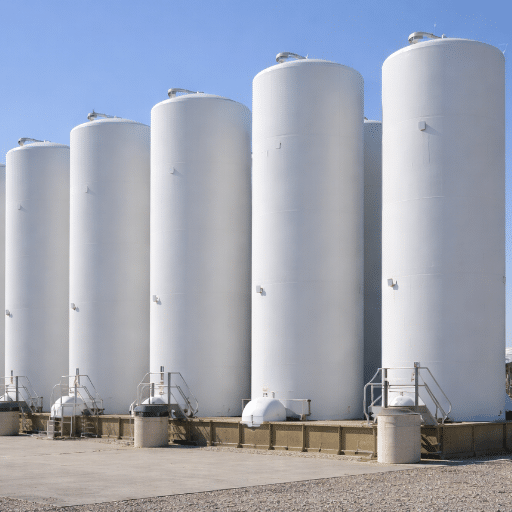
By application, the pattern is consistent: generator base tanks for data centres and hospitals, fleet depots for logistics and transport, and containerised units for mining, agriculture, and emergency response where the tank must move with the job.
Self-Bunded vs Concrete Bund: The Cost Comparison
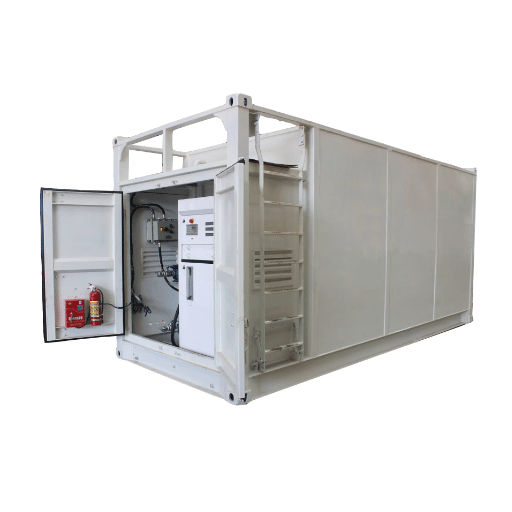
The honest comparison is not tank price against tank price. It is total installed cost, and that is where the self-bunded case is strongest.
Verified 2026 pricing, which varies by region and capacity:
| Format | Capacity | Indicative price | Market |
|---|---|---|---|
| Steel bunded tank | 1,000 L | £3,175 to £3,810 | UK |
| Steel bunded tank | 2,500 L | £3,577 to £4,292 | UK |
| Self-bunded diesel tank | 7,000 L | ~$20,850 | Australia |
| Self-bunded diesel tank | 10,000 L | ~$26,885 | Australia |
| Containerised self-bunded | 10,000 to 30,000 L | ~$9,500 to $16,000 | China OEM |
| Containerised self-bunded | 60,000 L (40 ft) | ~$26,000 | China OEM |
Set against that, a poured concrete bund carries a cost stack that rarely appears in a tank quote: excavation, formwork, steel reinforcement, a poured and cured base and walls, a chemical-resistant coating, and often engineer sign-off. Then come the recurring costs. Concrete cracks, coatings need reapplying, and a bund accumulates rainwater that must be tested and disposed of as contaminated stormwater.
One supplier benchmark puts a self-bunded tank at roughly half the cost of a single-wall tank plus a built bund, once the civil works are counted. Treat that as directional, because the real number depends on your site, but the direction is consistent.
There is a schedule story too. A self-bunded tank can be set on a prepared slab in about a day. A concrete bund needs weeks of curing before anyone loads it with fuel.
Consider a remote operations example. A telecom tower project in the Pacific needed 6,000 litres of diesel on an island with no concrete plant. A self-bunded containerised tank was barged in, set on a compacted pad, and commissioned in two days. Building a cast-in-place bund would have required importing a concrete crew and waiting through a wet season. The tank price was higher than a bare single-wall unit. The installed cost was not close.
For the broader cost picture across tank types, our carbon steel tank cost analysis walks through the line items, and shop-fabricated versus field-erected explains how fabrication route changes the total.
Want the two options priced for your site? Request a side-by-side comparison, and we will lay out the tank and civil costs together.
Installation Requirements
A self-bunded tank is simpler to site than a bunded compound, but it is not a drop-and-go product. Foundation quality decides how long it lasts.
- The foundation must support the tank plus 100% of the weight of its contents when full. Size it for the product, not the empty shell.
- Small tanks can sit on concrete piers. Large tanks need a reinforced concrete pad sized to the footprint.
- The surface must be level and compacted. Uneven support concentrates load and cracks the shell over time.
- Anchor the tank against flotation in flood zones, and check seismic and wind requirements against local codes.
- Drain surface water away from the tank, and protect the base from external corrosion where it meets the foundation.
- Keep the tank clear of underground utilities and overhead power lines.
- Pressure-test the interstitial space before commissioning, typically the primary tank at 3 to 5 psig and the annular space at 1.5 to 3 psig.
- Use qualified installers working to the manufacturer’s instructions and local regulations.
Installation is also where containment documentation gets tested. Inspectors want to see the bund capacity, the certification, overfill protection, and signage, not just a working dispenser. Our aboveground fuel tank installation guide covers the site work in detail, and aboveground storage tank spacing requirements cover separation distances.
Maintenance, Inspection, and Lifespan

A well-built self-bunded tank lasts 15 to 20 years or more, and steel units in mild conditions can exceed 30 years. Warranties range from 10 years on many steel tanks to 20 and 30 years on specialist fire-rated and fibreglass units, and they typically cover the tank only, not labour or installation.
The variable is maintenance, and one fault dominates.
Base corrosion is the number-one killer. Water enters the bund sump through condensation, rain, or minor spills. If it is not drained, it sits against the inner tank base and corrodes it from the outside in. Draining the sump routinely is the highest-value five minutes in any tank maintenance programme.
A practical inspection schedule:
- Weekly to monthly: visual check of the bund, sump, fittings, vents, and foundations. Confirm no fuel odour in the interstitial space.
- Every 12 to 24 months: service pumps, meters, and hoses.
- Annually: professional inspection, and recalibrate or test any electronic interstitial monitoring.
- Each bund alarm test: confirm the float hangs about one inch off the bund floor and moves freely. A float that is stuck or mis-set is a false all-clear.
Leak detection in a self-bunded tank works through the interstitial space, where a leak appears first. Options include level and vapour sensors, remote alarms tied to a dashboard, and dye testing to confirm and locate a suspected leak. Our guide to gas station leak detection systems covers how these integrate with tank gauging.
Other faults worth watching: gasket and manway seal degradation, vent blockage from debris or insect nests, overfilling, and impact or settlement damage. Each has a cheap inspection and an expensive failure.
Common Faults and Misconceptions
Four beliefs cause most of the problems we see in the field.
“Double-walled means self-bunded.” False. The test is what the outer shell is rated to hold, not the wall count.
“A self-bunded tank needs no other containment.” Partly true, and easily overread. The tank contains its own contents, but transfers from delivery vehicles and any connected pipework still need their own spill controls.
“Self-bunded tanks never need maintenance.” They need less, not none. Base corrosion, seals, vents, and alarms all fail on their own schedule.
“A fire-rated tank is automatically AS 1940 or SPCC compliant.” No. Fire rating and containment are separate listings tested to separate standards.
Frequently Asked Questions
What is a self-bunded fuel tank?
A self-bunded fuel tank is a tank within a tank. The inner vessel holds the fuel, and an outer shell sized to at least 110% of the inner capacity contains any leak, providing built-in secondary containment without an external bund.
Is a self-bunded tank the same as a double-walled tank?
No. Every self-bunded tank is double-walled, but not every double-walled tank is self-bunded. Double-walled describes construction. Self-bunded is a compliance claim that the outer shell is rated and documented to hold the full inner contents.
Does a self-bunded tank need an external bund?
No, provided it is certified for integral secondary containment and meets the containment volume your jurisdiction requires. Pipework and fuel transfer areas may still need separate spill controls.
How much does a self-bunded fuel tank cost?
Indicative 2026 prices range from a few thousand dollars for small portable units to around $26,000 for a 40-foot containerised 60,000-litre tank. Total installed cost depends heavily on capacity, certification, and site preparation, and is usually lower than a single-wall tank plus a poured concrete bund.
How long does a self-bunded fuel tank last?
A properly maintained tank typically lasts 15 to 20 years or more, and well-maintained steel units can exceed 30 years. Draining the bund sump regularly is the single biggest factor in reaching that upper range.
Can a self-bunded tank be transported while full of fuel?
With the appropriate certification, yes. That is one practical advantage over a standard double-walled tank, which cannot legally be moved full. Confirm the transport rules for your route and fuel class first.
What size self-bunded tank do I need?
Size follows your fuel consumption, delivery frequency, and the containment percentage your jurisdiction requires. Confirm the outer shell is sized to the correct percentage for your region, since it cannot be changed after fabrication.
The Containment Claim Is the Whole Decision
Four things decide whether a self-bunded fuel tank is right for your project, and only one of them is price:
- “Self-bunded” is a claim, not a description. Verify what the outer shell holds and what document proves it.
- Containment percentages vary by region, from 110% to 133%, and fire-system allowances can add more.
- Standards differ by market. UL 142, UL 2085, AS 1940, and SPCC are not interchangeable, and fire rating is a separate listing from containment.
- Maintenance decides lifespan. Sump draining and bund-alarm testing keep 20-year tanks from becoming 8-year tanks.
Across every project we quote, the pattern repeats: buyers who pin down the containment claim and the governing standard before they order spend less, because the foundation, the civil works, and the inspection regime all follow from those two answers.
Send us your capacity, fuel type, and destination, and our engineers will tell you which standard applies, what containment volume your market requires, and how a self-bunded tank compares against a bunded alternative for your site. Request a self-bunded tank specification review, and we will respond with a project-specific recommendation.