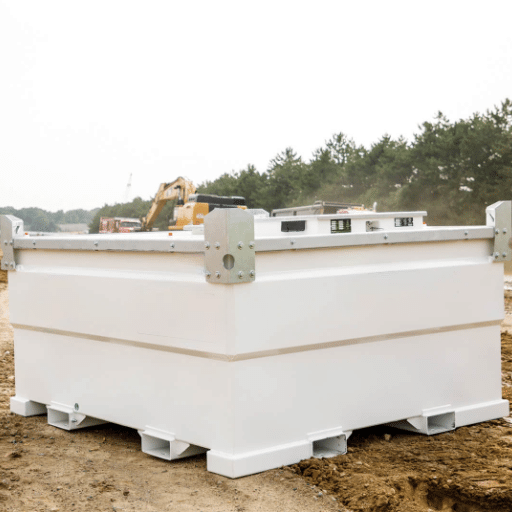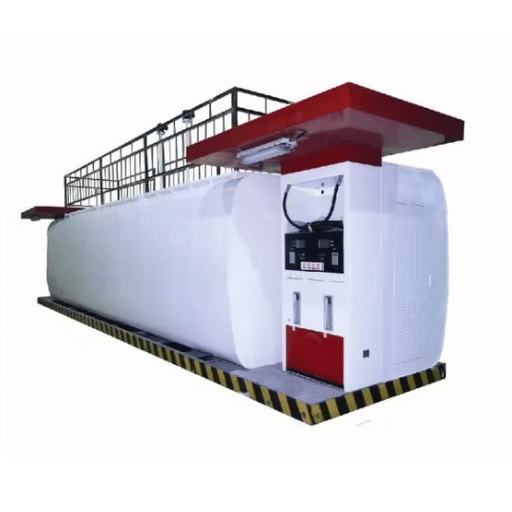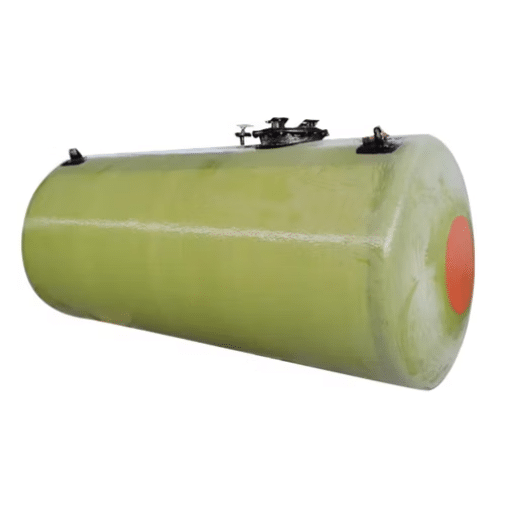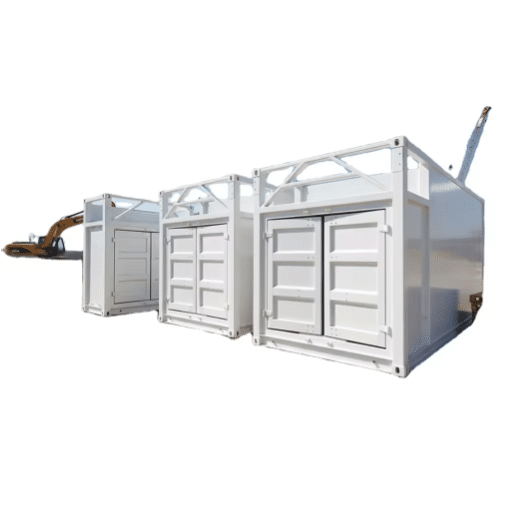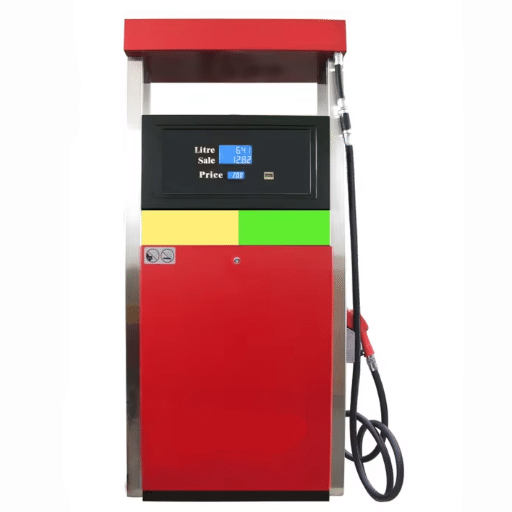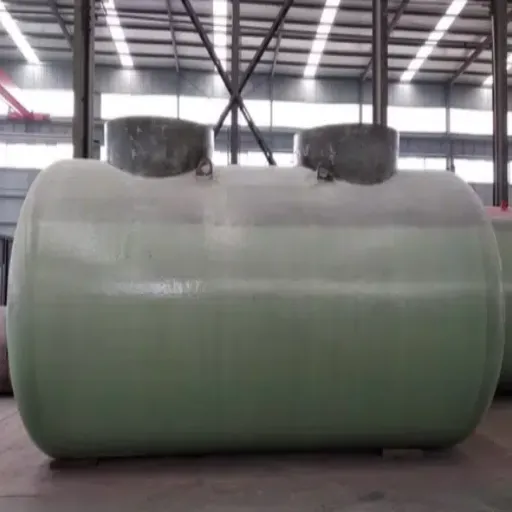
Imagine a barrier fuel tank that has passed every monthly walkdown for two years. The log is complete, the last external inspection is signed, and the certificate hangs in the site office.
Now imagine the flame arrester on its vent has been packed solid with polymerized vapor and insect debris since the first summer. Nothing on the standard checklist requires anyone to lift that element out. The tank still looks certified. It is no longer explosion-proof.
That gap is the whole problem with explosion-proof tank maintenance inspection. Owners inherit a schedule built for ordinary steel tanks, then apply it to a vessel whose explosion protection lives in components the standard schedule never opens.
This guide gives you the full picture: a single inspection calendar running from daily checks to 20-year formal inspections, the thresholds inspectors actually measure, the tasks specific to barrier and explosion-suppression tanks, and the record package that decides whether you pass. Every figure below traces to a standard or a regulator, and we name the ones we can’t verify as claims. If you’re new to the product category, our guide to explosion-proof fuel storage tanks is the wider starting point.
Two Clocks: Why Explosion-Proof Tank Maintenance Is Different

A fuel tank runs on two independent clocks, and almost every maintenance failure we see comes from watching only one of them.
The structural clock covers steel, welds, floor plate, foundation, and coatings. Depending on how the tank was built, that clock is governed by API 653 for field-erected vessels or STI SP001 for shop-fabricated ones. That API 653 vs STI SP001 split is set by construction method, not preference. Either way, the structural intervals are measured in years and decades.
The explosion-protection clock covers the barrier fill, the flame arrester, the vent path, the ground bond, and the tank instrumentation. That clock runs in days, months, and single years.
The two clocks don’t synchronize. Passing a structural inspection tells you nothing about whether the explosion protection is alive, and a fresh arrester element tells you nothing about floor corrosion. Both must be tracked separately.
Barrier tanks add a complication that generic tank content ignores. The internal-inspection step in API 653 assumes a person enters the vessel. A barrier tank is filled with conductive mesh at 28 to 45 kg/m³, so entry is impractical, and disturbing or compressing the fill can damage the very thing that provides the protection. Barrier tanks therefore replace internal inspection with fill sampling plus a manhole or borescope inspection, and that substitution needs to be written into your barrier tank maintenance program.
Here’s the point to carry forward: a tank is certified once. Its explosion protection has to be maintained forever. What each certificate actually covers is a separate question, which our guide to explosion-proof tank certification standards answers.
The Explosion-Proof Tank Maintenance Inspection Calendar
Storage tank inspection frequency is where most owners improvise: three or four separate schedules exist, and they get reconciled by memory. This table merges them into one. Where two sources set different intervals, the shorter one wins.
| Interval | What gets checked | Who may perform it | Governing source |
|---|---|---|---|
| Daily / shift | Dispenser hoses, nozzles and breakaways; emergency stops clear and labeled; spill kit stocked; vapor recovery indicator; fuel odor; sump and spill-bucket condition; ATG alarms | Trained site staff | NFPA 30A inspection practice |
| Every 30 days | Spill prevention equipment: damage, liquid and debris, fill-cap security, drop-tube obstructions. Release detection: no alarms, and records current. ATG product-level monitor test | Owner or trained employee | 40 CFR 280.36; STI SP001 monthly |
| Every 60 days | Impressed-current cathodic protection rectifier: volts and amps, amperage within 20% of the baseline, clock continuity, bonding secure | Owner or trained employee | OAR 340-150-0325; 6 NYCRR 598-2.2 |
| Annually | STI SP001 annual checklist; API 653 external inspection where due; flame-arrester element removed and inspected; grounding and bonding resistance to 10 Ω or less; line-leak-detector and release-detection device tests; containment sumps and hand-held devices; gas-detection calibration; emergency shut-off valve test | Owner for the SP001 annual; certified inspector for API 653; qualified tester for electrical and CP work | STI SP001; API 653; NFPA 77; NFPA 30A |
| Every 3 years | Spill prevention equipment test; overfill prevention inspection; containment sump integrity test, or double-wall interstitial monitoring at walkthrough frequency; cathodic protection system verification | Licensed installer, licensed tester or compliance inspector | 40 CFR 280.35; PEI RP1200 |
| Every 5 years | API 653 formal external inspection at its maximum interval; flame-arrester element replacement at about a 5-year average life; grounding-electrode excavation with 20% opened each year | API 653 certified inspector; qualified electrical tester | API 653; NFPA 77; GOST R 58623-2019 practice |
| Every 5 years or less | Barrier fill periodic inspection; comprehensive service-life assessment on a 3 to 5 year cycle, shortened for older tanks or harsh service | Manufacturer or qualified barrier-material laboratory | AQ/T 3001-2021; barrier-material life-assessment specification |
| Every 10 / 20 years | API 653 internal inspection at 10 years initially, extendable to 20 with effective corrosion protection; STI SP001 certified formal inspection for shop-fabricated tanks above 5,000 gallons | API 653 or STI SP001 certified inspector | API 653; STI SP001 Table 5.5 |
Three rows deserve a second look. The 60-day rectifier reading is the single most commonly skipped item on the list, and it’s the one that catches a dead cathodic protection system before the steel pays for it. The 3-year tests bundle four separate requirements that owners frequently assume are annual. And the barrier fill row has no US equivalent at all, which is why it disappears from most maintenance programs.
One principle settles every conflict on this page: federal rules are a floor, not a ceiling. If your state program, your authority having jurisdiction, your insurer, or the OEM manual is stricter, that governs. The full regulatory calendar by jurisdiction, including operator training and financial responsibility, lives in our UST compliance requirements guide.
Tank Integrity Checks: Structure, Leak Detection and Corrosion

Everything here keeps the fuel inside the tank. The next section keeps the tank from exploding.
Routine walkdowns are owner work. Check shell and shell-to-bottom welds, nozzles, foundation and settlement, anchor bolts, coating condition, vent obstruction, and secondary containment. Look for water or product in the interstitial space and the spill container. Document what you found and what you did about it, because the absence of that column is what inspectors write up.
Formal inspections are certified-inspector work. The quantitative tools are ultrasonic thickness measurement on shell courses, densest at the lower courses, and magnetic flux leakage scanning of the floor. Both exist to calculate a corrosion rate, and that rate sets your next interval. Typical carbon steel corrosion runs 2 to 5 mils per year, and low rates with adequate remaining allowance are what let an owner extend internal inspection from 10 years toward 20.
Linings are where holiday testing belongs. A tank-bottom lining is the coating owners trust most and verify least. Spark testing, also called holiday or pinhole detection, is how you verify it.
Use a low-voltage wet sponge at 67.5 volts for linings under 20 mils thick, and high-voltage pulse-DC spark testing above that, working to ASTM D5162 and NACE RP0188. Two cautions matter: the method is for new coatings on metal, and an unskilled operator can arc straight through a sound liner.
Leak detection splits into monitoring and testing. Double-wall tanks are monitored through the inner wall at least every 30 days, while sump integrity is proven by a separate test on a 3-year cycle. For the method behind the monitoring, our guide to automatic tank gauge leak detection walks through how a 0.1 gph threshold is measured. For leak-path thinking before a release starts, see our fuel storage tank leak prevention guide.
Cathodic protection needs its own line item. Sacrificial anode systems are verified annually and tested on the 3-year cycle. Impressed-current systems add the 60-day rectifier reading. Buried tank owners will find the full picture in our cathodic protection for gas stations guide.
Explosion-Protection Checks: Barrier Fill, Vent Path, Grounding and Instrumentation
This is the section that makes an explosion-proof tank different, and the section no generic checklist covers.
Barrier and explosion-suppression fill
The fill is the asset nobody maintains on paper. Five things get checked: appearance and geometry, meaning corrosion pits, cracks, deformation, and blockage; filling density in kg/m³, the parameter that governs quenching performance; chemical composition and surface corrosion products; accumulated sludge and impurities; and interface bond strength on composite fills.
Sampling position is where owners go wrong. Take in-service samples from the middle of the tank or from sediment-prone dead corners. Avoid high-flow areas near the inlet and outlet, which are not representative. Record the sampling position, service time, stored medium, and temperature history, because those four data points are the inputs to any remaining-life calculation.
Interval: a periodic fill inspection on a cycle not exceeding 5 years, with a comprehensive service-life assessment every 3 to 5 years, shortened for older tanks or harsh service.
Replace the fill if you find obvious corrosion, perforation, or damage; severe deformation or collapse with measurable density loss; heavy sludge loading; failed test results; or the material has reached its design life.
Be careful with service-life claims in this space. A general aluminum-alloy barrier material is usually stated at 10 years or more in normal service, and it’s affected by fuel sulfur, water content, acidity, and impurities. HAN Barrier grades are published at 25 years or more at 28 to 32 kg/m³, 30 years or more at 35 to 38 kg/m³, and 40 years or more at 42 to 45 kg/m³.
Treat those longer figures as vendor claims rather than independent test data. Gasoline is also harder on aluminum than diesel, because aromatics, olefins, and oxygenates drive corrosion faster. Our HAN Barrier technical page covers the material itself.
Flame arrester and vent path
The highest-consequence neglected item on any tank. Remove the element and inspect it for blocked, deformed, corroded, torn or warped ribbon and mesh; burnt or carbonized residue; rust; and perished gaskets.
Flame arrester inspection frequency starts at annually, rises to quarterly as good practice, and to monthly in high-risk or heavily used service. Corrugated stainless elements are often put on a semi-annual schedule. Clean every 3 to 6 months in normal service. Then trigger an inspection immediately after any flame event, or any time pressure drop rises at a known flow rate.
Two rules we won’t soften: replace rather than repair an element that is mechanically damaged, corroded, deformed, perforated, or has seen a flame, and never reuse an arrester gasket. A blocked vent path can deform the tank itself, and a fouled arrester quietly disables both over-pressure and under-pressure protection. For how these devices are specified and sized in the first place, see our guide to tank vent flame arresters and safety accessories.
Static grounding and bonding
The cheapest check with the most frequent omission. The target resistance for a metal-to-metal bonding path is 10 Ω or less, per IEC TS 60079-32-1 and NFPA 77. Copper paths typically read under 10 Ω, and stainless or other metals can run to 25 Ω.
Run a tank grounding resistance test at least annually, and twice yearly on high-risk sites or where soil conductivity swings with the seasons. Disconnect the electrode before measuring to avoid parallel-path readings, and log every result against the previous one, because the trend is the signal. Also verify the bond-before-pump-start interlock, and re-test after any maintenance that breaks a bonding jumper.
Instrumentation
ATG calibration belongs alongside the monthly product-level test: verify the probe to the manufacturer’s instructions, and confirm the system holds valid NWGLDE-reviewed certification. Inspect the overfill prevention device on its own cycle, and calibrate gas detection while tracking sensor end-of-life dates. Device types and their test procedures live in our overfill prevention devices guide.
The Compliance File: Records, Retention and Who May Inspect

The published breakdown of US underground storage tank violations reads like this: release detection accounts for 35% of findings, spill and overfill prevention 25%, corrosion protection 20%, financial responsibility 15%, and recordkeeping 5%. Ask the inspectors and consultants who work these sites, and you get a different emphasis. Most write-ups end up being paperwork problems rather than hardware problems, because a walkdown nobody recorded counts as a walkdown that never happened.
Build the file around these records:
- Tank register and inspection history for every vessel
- Completed monthly, annual, and 3-year checklists, each showing date, inspector, finding, and action taken
- Certified inspector reports for API 653, STI SP001, or API 570 work, with the thickness and flux-leakage data behind them
- Cathodic protection test records, a rectifier reading log, and the baseline those readings are compared against
- Grounding resistance readings with trends, not snapshots
- Barrier fill sampling records showing position, date, medium, and result, plus each service-life assessment
- Flame arrester cleaning and replacement log, including post-flame-event entries
- Corrective action records with closure evidence
- Financial responsibility documentation, kept continuously current
Tank inspection records retention follows the source. Keep 30-day walkthrough records for one year, though state programs often require three to five. Keep testing records for three years, corrosion protection records for the life of the system, and certified inspection and non-destructive examination reports for the life of the container.
Who may do what is another question the search results answer badly. Routine 30-day walkthroughs, STI SP001 periodic inspections, and annual checklists can be done by a knowledgeable owner or employee. Formal external and internal inspections, API 653 work, 20-year SP001 inspections, sump integrity tests, cathodic protection testing, and holiday testing all require certified or licensed personnel. Record who held which qualification and when, because competency evidence is itself a compliance item.
For the electrical and Ex equipment side of competency, including the visual, close, and detailed inspection grades, our explosion-proof equipment maintenance guide covers the hardware this article deliberately leaves alone.
Common Failures and Corrective Actions
| Failure | Usual cause | Action |
|---|---|---|
| Clogged flame arrester element | Condensation, dust, polymerized vapor, insects | Clean; replace if damaged or after a flame event |
| Barrier fill degradation or density loss | Water, sulfur, acidity, microbial corrosion, sludge | Sample, assess, replace the affected fill |
| Broken or corroded ground bond | Loose jumper after service work, corrosion | Re-bond and re-test to 10 Ω or less; log the reading |
| Drifted or uncalibrated ATG | Probe drift, no verification record | Recalibrate per OEM instructions; re-run the monthly test |
| Lining holiday or disbondment | Mechanical damage, poor surface prep, corner thinning | Holiday-test, stripe and repair |
| Non-certified spares, reused gaskets, wrong torque | Procurement shortcut, no OEM procedure on site | Fit certified parts; adopt OEM torque values |
| Unauthorized modification after commissioning | Field changes to venting, wiring, or appurtenances | Re-assess, because the certification may no longer describe the tank |
| Missing baseline records | No first-inspection comparison available | Establish a baseline at the next inspection, then trend it |
One rule ties the table together: if a component that provides explosion protection is replaced, that is a change to the certified configuration. Document it.
Building a Risk-Based Tank Maintenance Program
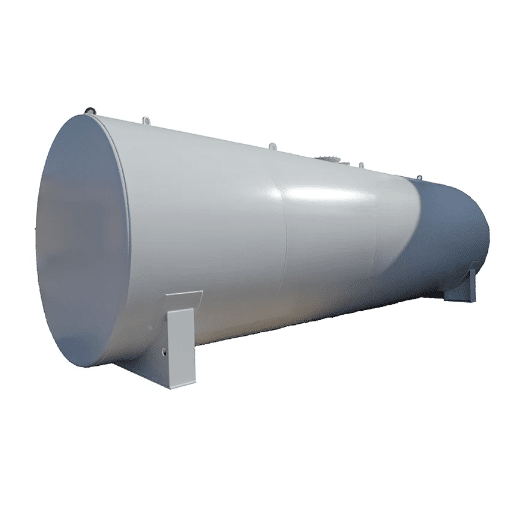
Five steps turn the calendar into something a site can actually run.
1. Register and classify. List every tank with its construction type, capacity, contents, protection features, and the standard that applies. Shop-fabricated tanks generally follow STI SP001, while field-erected vessels over 30 feet in diameter or 50 feet tall follow API 653. That classification sets your formal intervals.
2. Set intervals risk-first. Start from the calendar above, then shorten for age, aggressive fuel, harsh environment, corrosion history, and the consequence of a failure. STI SP001 formal intervals stretch from about 5 years for an unprotected Category 3 tank to 20 years for a protected Category 1 tank, and API 653 internal inspection can move from 10 to 20 years on proven low corrosion.
3. Assign competency. Name who performs each task and hold the certification evidence. Train operators for the 30-day walkthrough, because that’s the task most often done by the least-prepared person.
4. Instrument the record. One file per tank, one log per task, and trends rather than snapshots. Run it as a living fuel storage tank inspection checklist, not a binder on a shelf. The most valuable record you can create today is a baseline.
5. Close the loop. Every finding gets an owner, an action, and a date. Re-test after repair, and escalate anything touching the barrier fill to the manufacturer, because fill sizing, sampling position, and replacement aren’t generic procedures.
For barrier-tank owners, step five is the one that needs outside help. Our engineers support fill assessment, sampling plans, and replacement scheduling alongside the explosion-proof barrier fuel tank range itself.
Frequently Asked Questions
How often should an explosion-proof fuel tank be inspected?
Daily visual checks and a documented 30-day walkthrough cover routine condition. A formal external inspection falls due on an API 653 cycle of 5 years at most, or on the STI SP001 schedule for shop-fabricated tanks. Internal inspection starts at 10 years. The explosion-protection components run on faster clocks: monthly ATG testing, 60-day rectifier readings, annual flame arrester and grounding checks, and a barrier fill assessment every 3 to 5 years.
Can you inspect the inside of a barrier tank?
Not the way API 653 intends. A barrier tank is packed with conductive mesh, so entry is impractical and disturbing the fill risks its performance. The replacement is fill sampling from representative positions plus a manhole or borescope inspection of what remains visible. Document the substitution so an inspector can see why the standard internal-inspection step wasn’t performed.
How often should a flame arrester be cleaned or replaced?
Inspect the element annually at minimum and quarterly as good practice, with monthly checks in high-risk service and semi-annual checks for corrugated stainless elements. Clean every 3 to 6 months in normal conditions, and after any flame event. Average service life runs about 5 years, but replace immediately if the element is damaged, corroded, or perforated, and never reuse a gasket.
How long does barrier explosion-proof material last?
Published figures run from 10 years or more for general aluminum-alloy material to 25, 30, and 40 years or more for HAN Barrier grades at increasing density. Treat the longer numbers as manufacturer claims rather than independent test results. Fuel sulfur, water, acidity, impurities, and humidity all shorten real service life, and gasoline is harder on aluminum than diesel.
Does an explosion-proof tank still need cathodic protection?
Yes, if it’s a buried steel tank. Internal barrier fill suppresses an explosion inside the vapor space; it does nothing to stop external soil-side corrosion. Buried tanks still need coatings and cathodic protection, verified annually with 3-year system testing and 60-day rectifier readings on impressed-current systems.
What records does a tank inspector ask to see?
The tank register, the completed monthly, annual, and 3-year checklists with findings and actions, certified inspection reports with the underlying thickness data, cathodic protection and rectifier logs with baselines, grounding resistance trends, barrier fill sampling records, flame arrester logs, corrective action closures, and current financial responsibility documentation.
What happens if a fuel tank fails inspection?
Consequences scale with the finding and the jurisdiction. EPA civil penalties can reach $25,000 per tank per day per violation, and California’s single-wall underground tank ban, effective 1 January 2026, carries penalties of $500 to $5,000 per tank per day. A delivery prohibition, sometimes called a red tag, stops fuel deliveries until the deficiency is corrected. Remediation liability commonly starts around $50,000 and can pass $500,000.
Keep the Protection Alive, Not Just the Certificate
Five things to carry forward:
- A tank runs on two clocks. Structural integrity follows API 653 or STI SP001 over decades. Explosion protection follows days, months, and single years. Track both.
- The shortest interval wins. Merge your schedules into one calendar and let your state program, AHJ, insurer, or OEM manual override the federal floor.
- The barrier fill is the neglected asset. Sample from the middle and dead corners, avoid the inlet and outlet, assess every 3 to 5 years, and treat long service-life claims as claims.
- The record is the deliverable. Most write-ups are paperwork failures. A walkdown nobody logged is a walkdown that didn’t happen.
- Grounding and the flame arrester are cheap checks with the worst consequences. A 10 Ω bond test and an annual element inspection cost almost nothing next to the failure they prevent.
A certified barrier tank is a starting condition, not a permanent one. The certificate describes the tank on the day it was commissioned; explosion-proof tank maintenance inspection is what keeps that description true. If you’d like a maintenance and inspection schedule built around your tanks, including barrier fill assessment and sampling support, talk to our engineering team or start with our guide to carbon steel tank maintenance and lifespan for the material side of the picture.