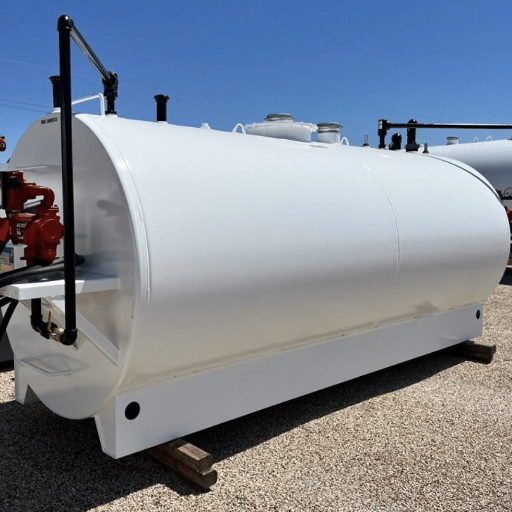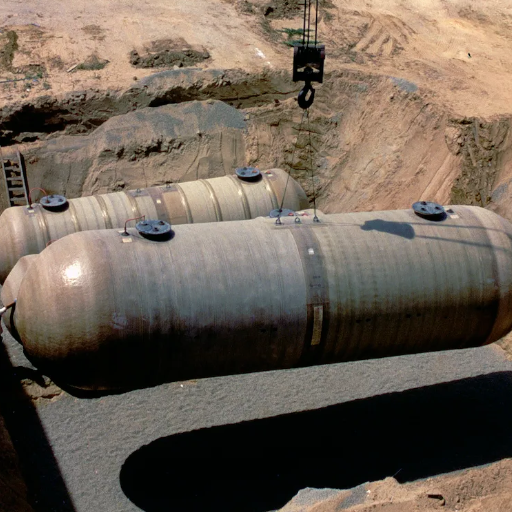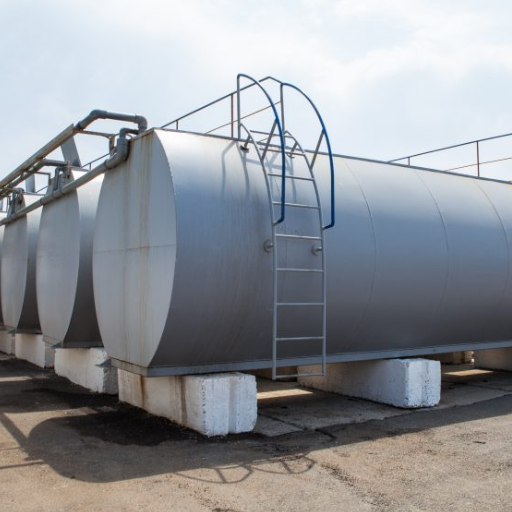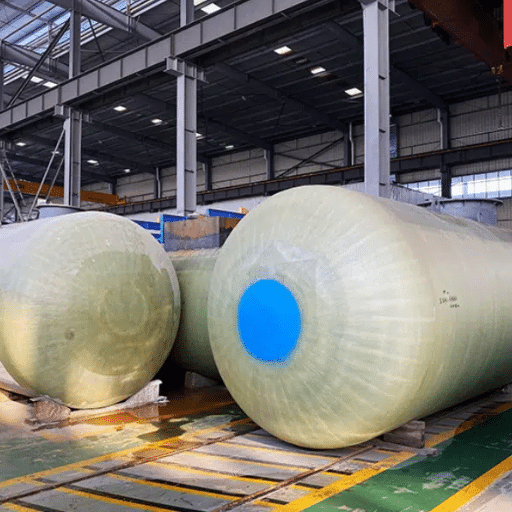
A 20ft skid station is a fuel storage and dispensing unit built on a 20ft ISO container footprint. In practice, it holds 10,000 to 22,000 liters, not the 30,000 liters a lot of datasheets claim. Not because the shell is too small. Because the 33.2 m³ inside a 20ft frame has to hold both the tank and its containment, and the whole package has to stay under a 30,480 kg weight plate.
Everything else here is downstream of those two numbers. Tank size, containment wording, certificate scope, and the document list all trace back to a volume and a mass.
If you’re specifying one of these units, you’ve noticed the market is vague in a specific way. Vendors publish capacities without tare weights, cite “110% containment” without a bund volume, and list four standards in one cell so you assume all four cover the whole machine. None of it is quite a lie. It’s unverifiable, and unverifiable is expensive when you sign the purchase order.
This guide works the other way round. It gives you the arithmetic to check any datasheet in five minutes, maps each certificate to the component it covers, and lists the documents to demand before you release a deposit, each with a pass/fail number attached.
Want to see how this works on a built unit?
Key Takeaways
- A standard 20ft shell holds 33.2 m³ and the frame carries 30,480 kg gross; with a typical 6,800 kg tare, the plate supports about 29,850 liters nominal, or 28,360 usable at 95% fill.
- A true 110% external bund inside the same shell caps the primary tank at roughly 15,800 liters. “110% interstitial” is a different, much smaller claim, and the two get muddled constantly.
- No single certificate covers a complete skid station. Tank, dispenser, electrical system, metering and container frame each certify separately.
- UL 142 gives no fire rating at all. Gasoline dispensing in an IFC-following jurisdiction generally calls for a UL 2085 protected tank.
- Demand twelve documents across RFQ, order, factory test and delivery, and attach a pass/fail number to each one.
What a 20ft skid station is, and what the footprint really allows
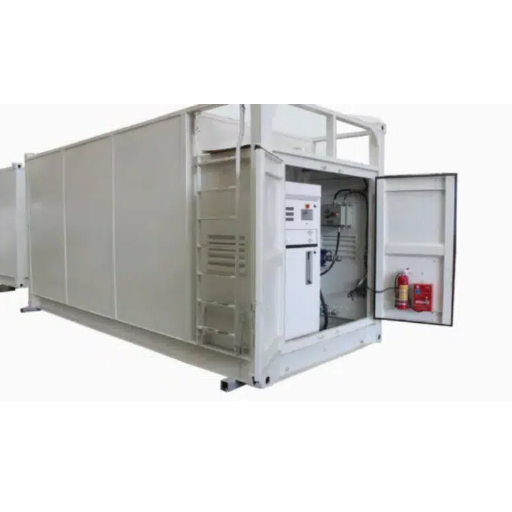
The term covers three constructions that look alike in a photograph and certify nothing alike. Getting the category right at the RFQ stage saves an argument later.
Skid, container frame, or self-bunded container
An open skid is a steel frame carrying a tank, a dispenser, and a control panel. It is not enclosed, so it travels as breakbulk, and it usually needs a canopy on site. It is the cheapest of the three and the easiest to service, because every component is reachable.
A container-framed unit (often sold as a 20ft container fuel station) puts the same package inside an ISO frame with an enclosure. It lifts with a standard spreader, stacks in a container yard, and carries a CSC safety approval plate. That plate is a transport credential, not a fire rating, and the distinction matters later.
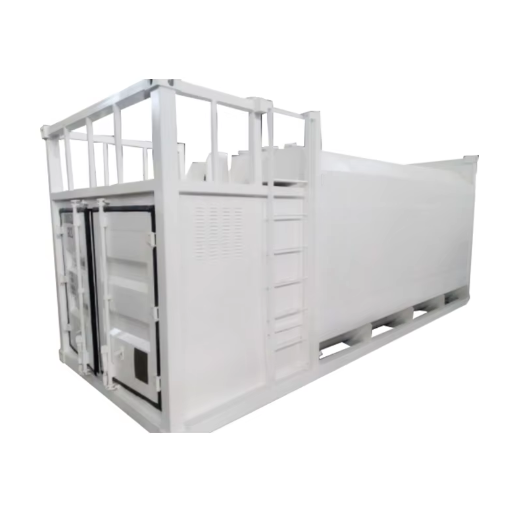
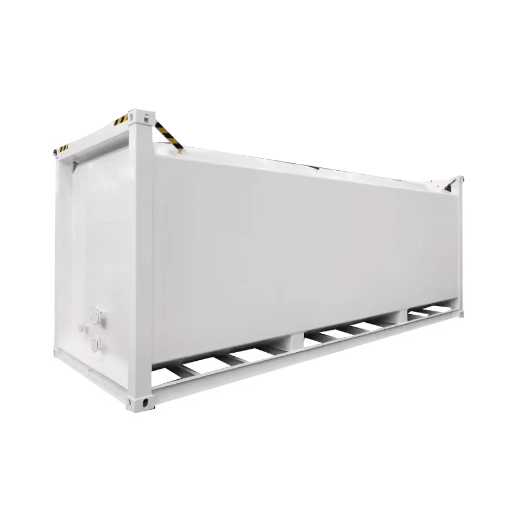
A self-bunded container makes the outer shell the secondary containment. This is the type that most often claims 110%, and it is where the volume arithmetic hurts most, because the bund eats the space the tank wanted.
The construction type decides which transport documents you need, which containment claim is possible, and whether the unit needs a foundation or just a compacted hardstand.
The envelope: 33.2 m³ and 30,480 kg
The first limit is internal volume: 33.2 m³ for a standard 20ft dry van, 37.5 m³ for the high cube, about 30 cm taller. Those figures come from and hold across manufacturers within a few percent.
| Parameter | Standard 20ft | 20ft High Cube |
|---|---|---|
| External | 6.0 × 2.43 × 2.6 m | 6.0 × 2.43 × 2.9 m |
| Internal volume | 33.2 m³ | 37.5 m³ |
| Max gross (plate line 4) | 30,480 kg | 30,480 kg |
The second is weight. 30,480 kg is the maximum gross weight on the safety approval plate of a standard 20ft container. A skid station is far heavier than a dry van, so its own plate governs. But the number is the same order of magnitude, and it’s the one you’ll see quoted.
A skid station in a 20ft frame typically tares 6,000 to 8,000 kg once the tank, dispenser, pump set, piping, and panel are installed. That range is wide enough to change the answer, which is why a weight limit has to be quoted with the tare attached. Take 6,800 kg as a working figure. That leaves about 23,680 kg of payload.
Fuel weighs more than most buyers expect. Diesel runs about 0.835 kg per liter, within a 0.820 to 0.845 range depending on grade and temperature. Gasoline is lighter at roughly 0.745 kg per liter. A 20,000-liter diesel fill is 16.7 tonnes of product sitting on top of the steel.
20ft skid station capacity: the three numbers on every datasheet
Every capacity claim you’ll read is one of three different measurements using the same word. Until you separate them, no two 20ft skid station capacity figures are comparable.
Nominal capacity
Nominal capacity is the geometric volume of the tank shell, sometimes including the dished ends, sometimes not. It says nothing about what the weight plate allows or what the dispensing system will let you draw. When a datasheet says “30,000 L”, this is almost always what it means.
Usable capacity at 95% fill
Usable capacity is smaller because tanks are not filled to the top. You need ullage, the vapor space above the liquid, so product has room to expand, and the overfill protection has room to work. A high-level alarm typically trips near 90% and automatic shut-off near 95%. Above that, you rely on the mechanical overfill valve alone, which is not a comfortable place for a fuel system to sit.
Usable capacity is therefore about 95% of nominal, and a well-written datasheet states both instead of making you work it out.
How much actually fits under the weight plate
This is the 20ft skid station capacity check almost nobody publishes, and it decides whether your unit is legal on the road. Working from a 6,800 kg tare and a 30,480 kg plate:
| Nominal capacity | Fuel mass at 0.835 kg/L | Gross mass | Margin vs 30,480 kg plate |
|---|---|---|---|
| 10,000 L | 8,350 kg | 15,150 kg | 15,330 kg spare |
| 15,000 L | 12,525 kg | 19,325 kg | 11,155 kg spare |
| 20,000 L | 16,700 kg | 23,500 kg | 6,980 kg spare |
| 25,000 L | 20,875 kg | 27,675 kg | 2,805 kg spare |
| 28,000 L | 23,380 kg | 30,180 kg | 300 kg spare |
| 30,000 L | 25,050 kg | 31,850 kg | 1,370 kg over |
A 30,000-liter tank carried full comes out 1,370 kg over the plate. At 95% fill, it holds 28,500 liters, weighing 23,798 kg, and the gross lands at 30,598 kg. Still 118 kg over, and 402 kg over if density sits at the top of the range.
So the mass ceiling is narrow. The 23,680 kg payload buys about 28,360 liters of diesel at 95% fill, roughly 29,850 liters nominal. A 30,000-liter tank is over the line by well under one percent, not by a mile.
On mass alone, that is marginal. On containment, it is not close.
None of this means a 30,000-liter claim is dishonest. A purpose-built frame can be plated higher; ISO tank containers routinely run at 34,000 to 36,000 kg maximum gross. It means the datasheet has to tell you which plate the unit carries. And “30,000 L nominal” and “30,480 kg CSC rated” can’t both be true on the same full tank.
Here’s how that plays out. Picture a procurement manager we’ll call Daniel, sourcing a unit for a remote depot with 26,000 liters of monthly throughput. He approves a datasheet claiming 30,000 liters against a 30,480 kg plate. Six months later, the unit arrives with a plate that supports the tank at 90% fill, and the depot’s reserve margin quietly disappears.
Nothing on the datasheet was false. It was two numbers that had never been multiplied together. The fix is one line: 30,000 liters shell volume, 28,500 at 95% fill, and a plate that carries 28,360 of them. That sentence takes five minutes to verify.
For the demand-side method behind choosing a size at all, see our .
Containment arithmetic: what “110%” really costs you
If “110% secondary containment” means an external bund holding 110% of the primary tank volume, the total enclosed volume you need is 2.1 times the tank: the tank, plus 1.1 times its volume in bund space. Run that against the envelope:
| Envelope | Max primary tank with a true 110% external bund |
|---|---|
| 20ft standard (33.2 m³) | about 15,800 L |
| 20ft high cube (37.5 m³) | about 17,900 L |
| 40ft high cube (76.1 m³) | about 36,200 L |
A standard 20ft skid station shell cannot hold a 30,000-liter tank plus a 110% external bund. It cannot hold a 20,000-liter tank that way either. It tops out near 15,800 liters. That matches what vendors with published ratings actually sell: containerized units in the 20ft class are commonly rated between 10,000 and 22,000 liters, and the higher figures almost always depend on the bund being part of the tank rather than around it.
So the phrase has two possible meanings, and they are not close to each other.
- External bund at 110%: a separate containment volume sized at 1.1 times the tank. Costs you roughly half the shell.
- Interstitial space: the gap in a double-wall tank, monitored for leaks. A small percentage of primary volume, enough to detect a failure, not enough to hold a full release. If that is the design, is what makes it work, and its sensing method belongs in the datasheet.
Both are legitimate engineering. Only one is what most buyers assume when they read “110%” on a spec sheet. Ask for the bund volume in cubic meters and the ambiguity disappears in one line.
One more correction for your RFQ: “110%” is not an SPCC requirement. The federal rule at requires containment of “the entire capacity of the largest single container and sufficient freeboard to contain precipitation,” and §112.8(c)(11) applies the same idea to mobile and portable containers. The 110% and 10% figures come from hazardous-waste rules (40 CFR 264.175), not SPCC.
Specify the volume and the freeboard, and you buy a compliant unit that is easier to prove.
20ft skid station specification: the datasheet, field by field
This is the part to print. Each row is a question, why the answer matters, and the point where you stop and ask again.
| What to ask for | Why it matters | Reject if |
|---|---|---|
| Tank material grade and plate thickness | Sets corrosion life and pressure capability; thickness drives mass | Grade unstated, or thickness given as a range with no minimum |
| Compartment split and per-compartment volume | Determines product flexibility and what the bund must hold | Volumes given as a total only |
| Bund volume in m³, external or interstitial | Resolves the 110% ambiguity; sets the real capacity ceiling | The answer is a percentage with no volume behind it |
| Interstitial monitoring method and alarm setpoint | Detects primary-wall failure before product reaches the bund | “Monitored” with no sensing method named |
| Tare weight, measured | Without it, gross weight and plate compliance cannot be checked | Tare absent, or “approx” with no tolerance |
| Maximum gross weight on the plate | The figure that governs road legality and lift planning | One gross figure, no plate reference |
| Flow rate at a stated discharge pressure | A bare L/min figure is meaningless without the pressure | Flow quoted without pressure or per-nozzle breakdown |
| Meter type and accuracy class | Accuracy must map to a recognized class, not a marketing number | Accuracy quoted with no standard or class named |
| Nozzle count, hose length, breakaway specification | Drives throughput and determines drive-away protection | Breakaway not specified at all |
| Pump curve (head vs flow) | Tells you whether the unit delivers at your lift height | A single duty point instead of a curve |
| Hazardous-area classification and Ex marking | Every electrical item in the zone must match the marking | Zone stated, but component Ex codes are not |
| Earthing points and resistance target | Static and fault protection; a standard FAT check | Earthing not mentioned |
| Tank gauging type and alarm routing | Overfill protection, inventory control and remote monitoring | Gauging described as “digital” with no protocol |
| Anchor point locations and design loads | Foundation design and wind/seismic restraint depend on them | Drawings show anchors but publish no loads |
| Ambient and product temperature range | Changes viscosity, flow rate, and material selection | Only a generic operating range given |
| Bill of materials, manufacturer and model per item | The only way to compare quotes, or order spares in year five | Brands are “equal or approved” with no named basis |
The five fields most datasheets omit
Tare weight, the pump curve, anchor and foundation loads, the ambient temperature range, and a bill of materials with named brands. Each is cheap to produce and expensive to discover late. A skid-mounted fuel station datasheet missing all five is a brochure.
Tare is the serious one. Without it, the unit cannot be checked against its own plate, quoted for freight, or lifted without weighing it on site.
Reading the field table
Ask for the material certificate before you ask for the price. A tank plate certificate names the heat number, the grade, and the mechanical properties, and it is the difference between a documented vessel and a promise.
Two rows catch more buyers than the rest. Flow rate has to come with a pressure, because 80 L/min at 2 bar and 80 L/min at 4 bar are not the same machine. Accuracy has to come with a class, which is why “±0.2%” appears in the red flags rather than in the specification.
Which standards apply, and which certificate covers what
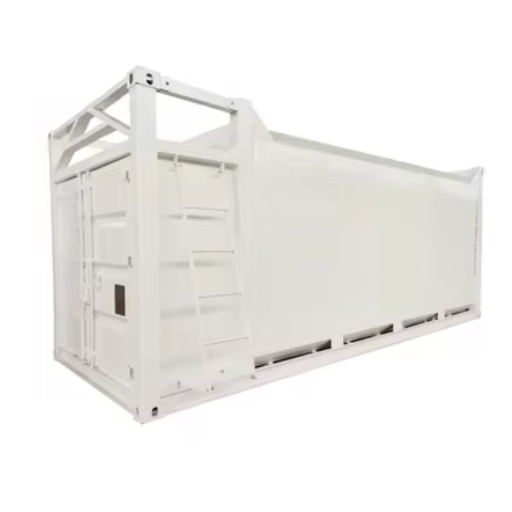
A complete skid station isn’t certified as a unit by any single body. There are certified components, assembled and installed to a standard. The assembly is what your authority having jurisdiction will inspect, which is why a 20ft skid station specification is a table of parts rather than one certificate number.
| Subsystem | Typical standard | Covers | Does not cover |
|---|---|---|---|
| Steel aboveground tank | UL 142 | Construction of steel tanks for flammable and combustible liquids | No fire rating. None |
| Fire-resistant tank | UL 2080 | 2-hour, 2000 °F hydrocarbon pool fire resistance | Dispenser and piping |
| Protected tank | UL 2085 | 2-hour fire test plus integral secondary containment, hose stream, projectile and vehicle impact | Dispenser and piping |
| Container frame | CSC plate, ISO 668 / ISO 1496-1 | Structural and handling requirements for international freight | Anything to do with fuel |
| Metering | OIML R 117 | Accuracy classes and maximum permissible errors | Tank, piping, electrical |
| Electrical in hazardous areas | ATEX 2014/34/EU, IECEx | Equipment for explosive atmospheres | The tank, the piping, the installation work |
| Dispensing safety, US | NFPA 30A, NFPA 30 | Motor fuel dispensing; flammable liquid code | Local fire code and AHJ conditions |
| Station design, China | GB 50156, SH/T 3134-2023 | Filling station design; skid-mounted temporary refueling | Other jurisdictions |
Tank standards: UL 142, UL 2080 and UL 2085
UL 142 covers how a steel aboveground tank is built. It does not test the tank against fire. That single fact changes the specification for any unit dispensing gasoline.
UL 2080 adds a 2-hour hydrocarbon pool fire test at 2000 °F, with average steel temperature held to 800 °F and no single point above 1000 °F. UL 2085 goes further: 2-hour fire resistance, integral secondary containment, plus hose stream, projectile and vehicle impact tests, with the interstice held to 260 °F average and 400 °F at any thermocouple. .
For gasoline dispensing in a jurisdiction following the International Fire Code, IFC 2306.2.3 generally points to a protected tank for above-grade Class I liquid storage at a dispensing site. That listing is what buys the reduced separation distances. A UL 142 tank is legal, but it carries much larger setbacks, which on a tight site can decide whether a layout works at all.
Diesel is a Class II liquid. The fire test requirements are less onerous, and an UL 142 tank is far more commonly accepted. Which is why “does this unit dispense gasoline” belongs at the top of the RFQ.
Container standards: CSC and the ISO 1496 trap
If the unit is container-framed, the transport credential is the CSC safety approval plate and its current ACEP examination date. That plate is what a port or haulier looks at.
You will also see datasheets citing “ISO 1496-3 compliance.” ISO 1496-3 is titled Series 1 freight containers, Specification and testing, Part 3: Tank containers for liquids, gases and pressurized dry bulk. It applies to tank containers, where the tank shell is the structural element of the container. A container-framed fuel station is not that, unless the tank genuinely carries the frame loads.
Picture a project engineer we’ll call Marta, comparing three quotations for one site. Two cited ISO 1496-3 for a container-framed unit. The third cited ISO 668 and ISO 1496-1 for the frame, plus a CSC plate for transport. Only that supplier could explain the choice, so that is the one she shortlisted.
To describe the frame, cite ISO 668 and ISO 1496-1. To evidence transport approval, cite the CSC plate.
Metering and electrical scope
OIML R 117 governs measuring systems for liquids other than water, which is exactly what a fuel dispenser is. Class 0.5 is the normal assignment for vehicle fuel dispensers, and its maximum permissible error is looser than the 0.2% figure vendors like to quote. Class 0.3 exists, but it belongs to pipeline measuring systems and custody transfer, not forecourt dispensing. A datasheet claiming 0.3-class performance on a forecourt dispenser is either mislabelled or quoting a laboratory result rather than a field specification.
.
ATEX 2014/34/EU is the European route; IECEx is the international scheme. Both certify equipment, not the tank and not the installation. A unit can carry perfectly certified components and still be non-compliant because the wiring between them was not installed to the standard. Ask for the certificate scope, not just the certificate, and see our for where each scheme stops.
The submittal register: twelve documents, staged
Every competitor publishes a buyer’s checklist. Almost none publishes the register with the stage each item is due, and that is the part of skid station procurement that protects you. This 20ft skid station register comes from public tender documents: Indian metering-skid tenders, US federal guide specifications, and municipal procurement records.
At RFQ stage
1. Completed datasheet naming a single make and model per component. Not a family, not “or equivalent.” Tenders are blunt about this: multiple makes against one line item are rejected, because the comparison becomes impossible.
2. General arrangement (GA) drawing. A dimensional drawing showing the unit, its anchor points, lifting points, and maintenance clearances. Without it, you cannot design a foundation or plan a lift.
3. Piping and instrumentation diagram (P&ID). Every pipe, valve, instrument, and control loop in the system. One supplier selection guide calls it the most important document in a skid package, and that is right. A supplier who cannot produce a P&ID at the quotation stage is assembling rather than engineering.
4. Deviation and exception sheet. A signed statement of every point where the offered unit departs from your specification, or an explicit “no deviation” declaration. Silence is not compliance, and an empty deviation sheet is a contractual statement you can hold them to.
At purchase-order stage
5. Inspection and test plan (ITP) with hold and witness points. The ITP lists each inspection, who performs it, what standard applies, and whether the buyer must attend. Hold points stop work until cleared; witness points let you watch without stopping the job. An ITP without hold points is a schedule, not a quality document.
6. Material test certificates, keyed to heat numbers and purchase order lines. For the vendor’s goods and for their sub-vendors. A certificate for the tank plate that cannot be traced to the plate in your tank is decoration.
7. Welding procedure specification (WPS) and weld map. The WPS states how each joint is welded; the weld map shows which joint went to which procedure and who welded it. Together, they let a third party audit the tank years later.
8. Explosion-proof and metrology certificates, with scope. ATEX or IECEx for the electrical equipment, a metrological verification certificate for the dispenser. Both should arrive with the bid, not after award; tenders require hazardous-area test reports at proposal stage, from a recognized laboratory.
At factory acceptance test stage
9. FAT procedure in advance, and a FAT report afterwards. The procedure goes to the buyer first so the buyer can add checks. The report records what was measured and what it read. If the supplier cannot send a procedure in advance, there is no witness test, only a demonstration.
10. Calibration and pressure test records. Meter calibration across the flow range, leak and pressure test results, and pressure relief valve set and reseat pressures. These decide whether the unit works on day one.
At delivery
11. Operation and maintenance manual, spare-parts list, as-built drawings. The manual should be in the operating site’s language, with the parts list keyed to the bill of materials.
12. Reference list with owner contacts. Not a logo wall. A list of comparable units with a contact the buyer can call. Municipal procurement documents ask for exactly this, and it is the most effective filter in the process.
Any supplier who has shipped units before can produce all twelve. The absence of one is information about the supplier, not about your project.
Acceptance criteria you can paste into a purchase order
Pass/fail numbers beat adjectives. These thresholds come from published tender criteria and an industry factory-test baseline, and they belong in the technical annex of a 20ft skid station purchase order rather than a covering email.
| Criterion | Suggested acceptance value | How it is checked |
|---|---|---|
| Metering error across flow range | Within the declared OIML class, at minimum, transition and maximum flow | Calibration against a certified measure |
| Leak detection sensitivity | 0.1 L/h or better, where interstitial monitoring is supplied | Simulated leak, response time recorded |
| Insulation resistance | 1 MΩ minimum at 500 V DC | Megger test, per circuit |
| Earthing resistance | 4 Ω or less | Earth resistance test at each point |
| Tank hydrostatic test | 1.5 × design pressure, held and inspected, no leakage | Pressure record and visual inspection |
| Containment volume, external bund | Not less than the full capacity of the largest compartment, plus design freeboard | Volumetric calculation against as-built drawing |
| Pressure relief valve | Set and reseat pressures recorded, tight at 90% of set | Bench test certificate |
| Overfill protection | Alarm at 90%, automatic shut-off at 95%, both proven | Functional test at FAT, recorded |
| Dimensional check | Overall dimensions within GA drawing tolerance | Tape and laser at final inspection |
Two are worth arguing about if a supplier pushes back.
Containment volume is not negotiable, because it is a calculation, not a test. If the as-built drawing gives you a 40 m³ bund and the tank is 25 m³, you have 160%, and that is fine. If the drawing gives you 40 m³ and the tank is 38 m³, you do not have containment, whatever the datasheet says.
Overfill setpoints are worth proving at FAT, because proving them on site means filling a tank to its alarm point in a live installation. That is a longer and more expensive test.
Site interface: what the supplier does not deliver
A skid station arrives as a machine. It still needs a site, and the boundary is where most 20ft skid station projects lose a week.
Foundation and loading. The supplier publishes anchor loads; someone else designs the slab. A fully laden 20ft unit puts 25 to 31 tonnes onto a small footprint, a point load most hardstands were not built for.
Anchoring, earthing and drainage. Uplift matters as much as weight, so the hold-down design comes from the anchor schedule. Earthing must be tested to the value in your acceptance criteria, and drainage destination is a permit question that often arrives late.
Fire authority approval. The AHJ decides whether your tank construction is acceptable, what separation distances apply, and whether containment is adequate, against local code rather than the supplier’s datasheet. Engage them early, with drawings, before the unit is built.
Our covers the transport side, including permits that depend on the fuel left in the tank at the port.
Red flags in a 20ft skid station datasheet
Six tells, roughly in order of how much money they cost you. None is exotic.
A capacity above the mass limit, with no stated plate. If the datasheet claims 30,000 liters and publishes neither tare nor gross, you cannot check it, and that is usually why it is missing.
“110% containment” with no bund volume. Either it is external, and the capacity claim is wrong, or it is interstitial, and the wording is wrong. Ask for cubic meters.
“UL certified” with no file number. UL listings are searchable and carry a file number. A claim without one is not a claim.
ATEX applies to the tank, or a metering accuracy tighter than the declared class. “OIML R 117, ±0.2%” is internally inconsistent, since Class 0.5 permits a wider error. ATEX covers equipment for explosive atmospheres, so if the certificate is offered as evidence that the tank is safe, the supplier is using the wrong document.
ISO 1496-3 is cited for a container-framed station. That part of the standard is for tank containers. The CSC plate is the credential you need.
No fire-rated listing on a gasoline unit. If it dispenses gasoline and no UL 2080 or UL 2085 listing appears anywhere, ask in writing before award.
A seventh tell sits outside the datasheet: a reference list with no contactable owners. Logos are marketing. A reference list is procurement evidence, and the difference shows up when you call one. Our cover capability, audit rights, and after-sales support in more depth.
Frequently asked questions
How many liters does a 20ft skid station hold?
Most legitimate 20ft units hold 10,000 to 22,000 liters. The upper end depends on whether the bund is integral to the tank or wrapped around it. A 30,000-liter figure needs a higher-rated frame and a containment definition that does not require an external bund.
Can a 20ft skid station be shipped full?
No. Units ship empty, or with a minimal residual heel, and the tank is purged and certified gas-free for transport. A full unit would exceed the gross weight limit and be classified as dangerous goods cargo.
What does a 20ft skid station weigh empty and full?
Tare typically runs 6,000 to 8,000 kg. A 20,000-liter diesel fill adds 16,700 kg, so a full unit lands around 23,500 kg against a 30,480 kg plate. Use the tare on the actual unit’s plate, not the brochure.
Is a 20ft skid station the same as a tank container?
No. A tank container is a pressure vessel built to ISO 1496-3, where the tank carries the frame loads and the cargo is the fuel. A skid station is a dispensing facility with a tank, dispenser, and controls inside a frame. They look similar and are certified completely differently.
Does a 20ft skid station need planning permission?
Usually, and the answer is local. Fuel storage and dispensing typically triggers fire authority review and often zoning or environmental review too. Ask your AHJ and fire marshal before you order, using the GA drawing and the P&ID.
What is the difference between nominal and usable capacity?
Nominal is the geometric volume of the tank shell. Usable is what you can actually put in it, roughly 95% of nominal once ullage and overfill protection are accounted for. A 30,000-liter nominal tank holds about 28,500 liters in service, and the weight plate may cap it lower still.
Next step
If you take one thing from this 20ft skid station guide, take the five-minute check: get the tare, get the plate, get the bund volume in cubic meters, and do the arithmetic. A datasheet that survives those three questions is worth reading in full. One that does not has just saved you a deposit.
When you are ready to specify, with your required capacity, product, and dispensing arrangement. Send the site conditions at the same time, because foundation loads and clearance requirements change the answer. Our engineering team will come back with a datasheet that states tare, plate rating, and bund volume, plus the submittal package described above.
That is the standard we would want if we were buying.
Capacity and containment figures in this guide are calculations on published ISO 668 dimensions and a stated CSC plate weight, not measurements of a specific unit. Confirm the figures against the plate of the actual unit you are offered.