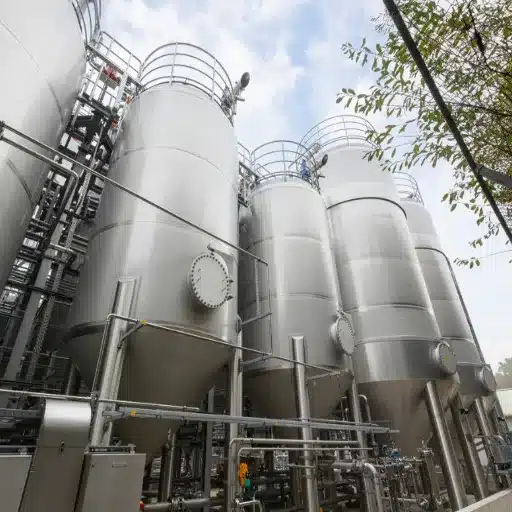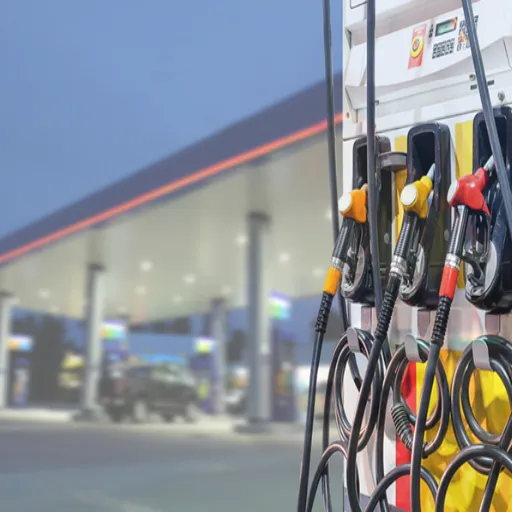
A skid station wins when the site is temporary, remote, or for private fleet use: a prepared pad, a power connection, and a permit in weeks. A buried underground tank wins when the site is permanent, high-volume retail: lower lifetime sustainment cost, the format fire codes were written around, and no surface footprint. The skid station vs. underground tank decision is made by permanence and use, not by unit price.
If you already know your site is a temporary or private one, skip ahead to the . If it’s permanent retail, read on, because the buried option will likely win.
Take a composite scenario. A fleet manager with a five-year mining supply contract chose a buried tank for their depot. It looked like the permanent, professional answer. Then the contract ended in year four, and the tank couldn’t leave with them.
Decommissioning, soil testing, and plugging ate the budget they’d planned for a second dispenser island. A skid station would have left on the same lowboy that delivered it.
You probably believe the buried option is the serious option, and the skid station is the compromise. This guide pressure-tests that belief.
By the end, you’ll know which deployment model fits your site, what each one costs to get running and to keep running for ten years, and which permit burdens you are signing up for before you order anything.
One clarification first. Three decisions get confused in procurement conversations. Deployment format, the subject here, is a packaged aboveground unit versus a buried permanent system. Skid packaging is containerized versus open-frame, which our covers.
Tank construction is steel, stainless, SF double-wall, single- or double-wall. Most projects need at least two of the three.
If you are still defining the equipment itself, start with our .
Key Takeaways
- Permanence and use decide the skid station vs underground tank question. Temporary, remote, and private sites favor the skid; permanent high-volume retail favors the buried tank.
- Capital cost favors the skid station, but ten-year sustainment often favors the UST. A 2019 U.S. federal facilities fact sheet states that aboveground sustainment costs run 41% higher than underground.
- Permit burdens differ in kind. A UST brings licensed installation, inspection sequences, and financial responsibility rules; a skid brings land-use, fire, and electrical reviews where “temporary” is a permit category, not an exemption.
- Leak risk sits mostly in the piping, not the tank. A U.S. federal fact sheet attributes 80 to 90% of UST releases to dispenser lines; a skid concentrates that piping into a short, accessible run.
- Residual value splits the two: a skid keeps salvage and relocation value, while a buried tank carries a demolition liability you pay at the end.
What Exactly Are You Comparing?
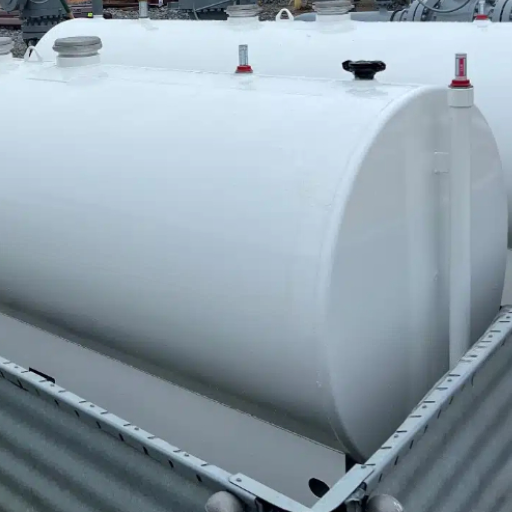
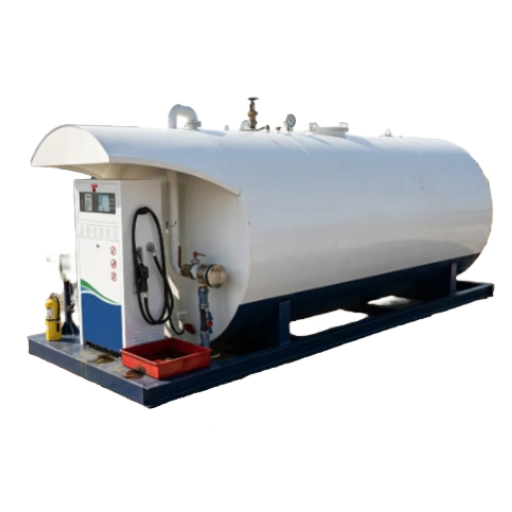
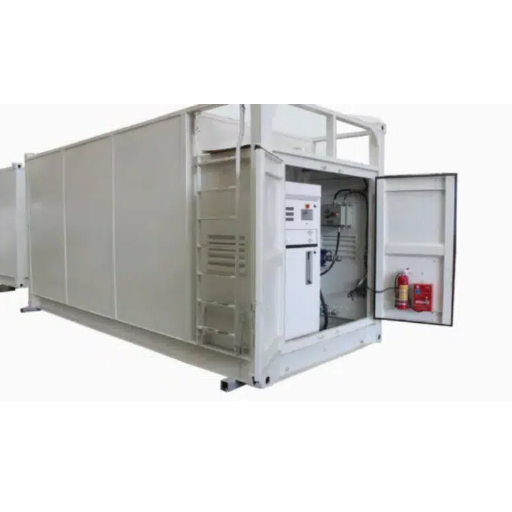
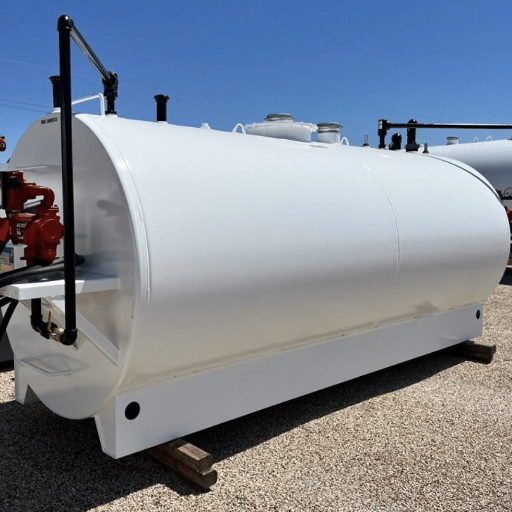
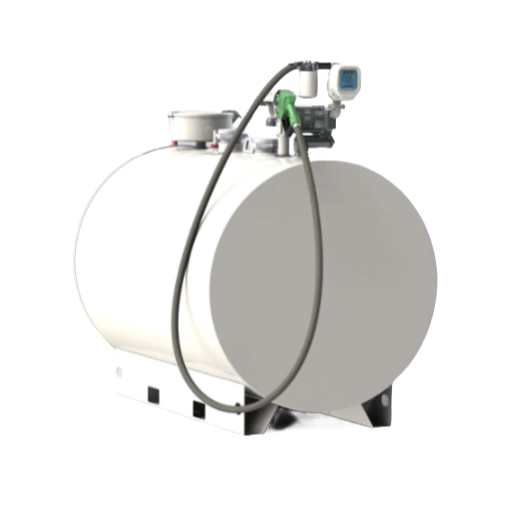
A skid station is a prefabricated aboveground fuel storage and dispensing unit built on a steel frame. Buyers also call it a mobile fuel station. Tank, dispenser, piping, monitoring, and safety systems are assembled at the factory and delivered as one load.
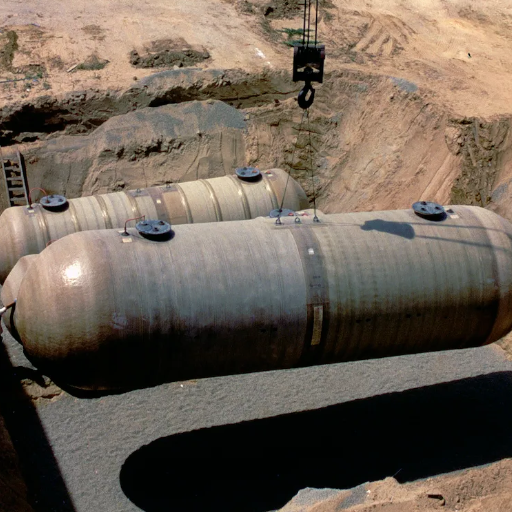
An underground tank setup is a buried tank connected by permanent underground piping to dispensers on a forecourt, usually under a canopy. Leak detection catches releases, corrosion protection guards the shell, and the civil works are designed around the tank.
The industry shorthand is AST vs UST, aboveground storage tank versus underground storage tank, though the skid station is more than a tank: it’s a packaged station. Some buyers search “skid mounted vs underground tank” and mean this same comparison. The comparison is about where the fuel lives and how the project gets built, not about fuel type, tank material, or wall count.
One nearby question is not this one. A separate guide covers , where the axis is placement inside a blast-resistant frame. If your fuel is gasoline and your authority is strict about aboveground dispensing, read both.
Skid Station vs Underground Tank: Side by Side
| Criterion | Skid station (AST) | Underground tank system (UST) |
|---|---|---|
| Capital cost | Lower equipment and site-work cost for small sites | Higher: excavation, backfill, anti-flotation, corrosion protection, paving |
| Installation time | Days to weeks of site work after delivery | Weeks to months: excavation, inspection holds, restoration |
| Permit track | Land use, fire, electrical; often lighter for private use | UST installation licensing, inspection sequence, operator training, financial responsibility |
| Footprint | Needs surface area and separation distances | Frees the surface; tank sits under pavement |
| Leak detection | Visual inspection plus sensors; interstitial monitoring on double-wall units | ATG or interstitial monitoring, cathodic protection, no visual access |
| Relocatability | Drained, lifted, and moved; retains salvage value | Fixed; exit path is decommissioning, not resale |
| Fire-code acceptance | Accepted for private fleet and industrial use; retail restricted in many jurisdictions | The format retail fire codes assume; widely accepted for public fueling |
| Typical life with maintenance | Frame and cladding weather; tank life depends on service | 20 to 30 years typical with corrosion protection and testing |
| Best fit | Temporary, remote, mining, construction, private fleet | Permanent, high-volume, urban, public retail |
The table’s last row is the thesis of this article. Read it as an aboveground vs. underground fuel tank decision between two deployment models, not a spec sheet. If your site is permanent and public, the buried system answers requirements the skid cannot. If your site is temporary or private, a buried tank is a fixed asset chained to a project that may move.
Want the comparison run against your own plot and throughput instead of a generic table? and we’ll price both formats side by side.
Capital Cost and Installation Speed: Where the Skid Wins
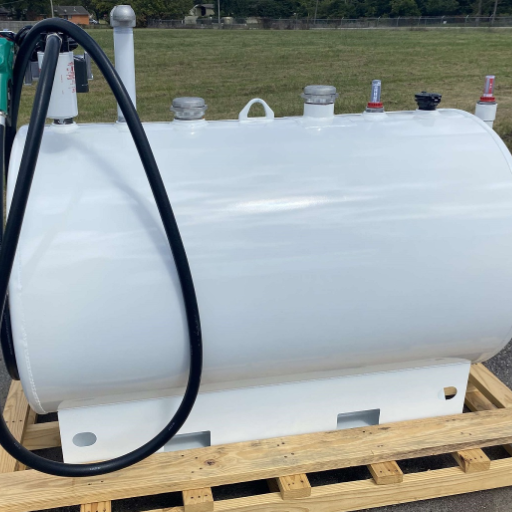
What a skid station actually costs to get running
The delivered unit is the visible cost. Around it sit site preparation, a load-bearing pad, power connection, grounding, bollards, and the commissioning inspection. For small and mid-size sites, the skid station vs. underground tank gap opens here: no excavation crew, no dewatering, no paving restoration, and far less weather exposure in the schedule.
Published cost anchors are scarce and mostly seller-stated, so treat vendor figures with care. The National Renewable Energy Laboratory’s propane infrastructure review priced 1,000-gallon skid-mounted propane units at roughly $45,000 to $60,000 new in its data year. That figure is propane-specific and dated, but it shows the order of magnitude: a packaged unit plus a pad, not a construction project.
What a UST project costs beyond the tank
The tank is rarely the largest line item. The underground tank cost picture includes excavation, dewatering where the water table interferes, bedding and controlled backfill, anti-flotation hold-down for empty tanks, secondary containment, cathodic protection, leak detection instrumentation, oily-water separators, and paving restoration. Our detailed breakdown of covers the tank-side numbers; the civil works around it are what widen the gap between the two formats.
Installation speed follows the same logic. A skid arrives commissioned to a prepared pad. A UST installation runs an inspection sequence: trenching, tank setting, piping pressure tests, backfill in lifts, and sign-offs before anything is paved over. Each hold point is a calendar item.
If your project needs both models priced on the same plot, we can do that. We supply skid-mounted stations and storage tanks, so the comparison for your project is a quotation exercise, not a sales argument.
Permits and Approvals: Skid Station vs a Buried Tank
Both formats need approval. The approvals are not the same animals.
A UST project carries the regulatory weight of underground storage. Expect licensed installation contractors, inspection sign-offs at defined stages, operator training, leak-detection compliance, and in many jurisdictions, financial responsibility rules such as insurance or trust funds. Our maps track these in detail.
Under the U.S. federal UST program (40 CFR 280), the rules cover installation, release detection, corrosion protection, spill and overfill prevention, and operator obligations. Every one of those is documented and inspected.
A skid station faces land-use review, fire authority review, and electrical inspection, with the specifics set by fuel type, throughput, and whether the site serves the public. The fire review for a mobile fuel station almost always starts from , which set separation, tank limits, and dispensing rules for both fixed and mobile fueling. Then local amendments tighten or loosen them.
The traps are different. A supplier’s certificate isn’t a permit: equipment listings and transport plates prove a component is well made, not that a place and an activity are allowed.
Our article works through the four approval tracks and the document packs that get an application accepted. One finding from it belongs here. The word “temporary” is a permit category with a clock attached, usually 90 days, 180 days, one year, or 24 months, not an exemption.
The practical point for this comparison: the skid’s permit is often lighter, but it isn’t automatically faster, because planning and fire reviews depend on the land and the use, not the equipment’s delivery date.
The second composite scenario makes this concrete. A retail developer in a mid-sized city approved a compact aboveground unit for a forecourt rebuild, expecting a three-month opening. The fire authority then required greater separation distances than the site allowed for gasoline dispensing aboveground.
The redesign to a buried tank added an excavation package and four months. The skid unit, once drained, was sold to a fleet operator at a loss. The equipment was fine. Nobody had checked the land-use question first.
Before you order anything, confirm which format your authority having jurisdiction will accept for your use category. That single answer can end the comparison.
Leak Detection: Aboveground vs Underground Fuel Tank Risk
Burial is where the environmental argument gets emotional, and both sides overstate it.
The buried tank can’t be seen. It is protected by design layers instead: double-wall construction, interstitial or automatic tank gauging, cathodic protection for steel, spill and overfill prevention, and a documented inspection regime. When those systems work, a release is detected in the monitored space before it reaches soil. Our guide to explains how the double-wall gap becomes an early-warning system.
The skid’s tank can be walked around and inspected with a clipboard. That is a genuine advantage in remote operations where instrument calibration is hard to schedule. Underground leak detection, by contrast, depends on sensors and gauging, and a problem is often less immediate to spot without them.
The exposure side of the skid ledger is physical. Aboveground units are vulnerable to weather, vandalism, and impact from large vehicles on site, and spill containment has to be managed and cleaned ().
Here is the honest point both marketing approaches skip. In a 2019 U.S. federal facilities fact sheet on AST versus UST, the author states that the tank is the source of a release in less than 10% of reported releases from an underground tank system. Eighty to ninety percent of leaks come from the lines joining the tanks to the dispensers, according to USEPA and state authorities ().
Read that against the skid comparison carefully. The statistic is about UST systems, where buried piping is long and hard to see. A skid station concentrates most of its piping inside a short, accessible run. That’s a real design advantage, and it isn’t the one most skid brochures claim.
The deployment decision still changes how you monitor and who inspects. Choose on detection method and site risk, not on fear. A well-monitored UST and a well-bunded skid are closer in real-world environmental performance than either side’s brochure admits.
Lifecycle Cost: The Ten-Year Skid Station vs UST View
Purchase price answers year zero. Fueling infrastructure is a 20-year decision, and the ten-year view often reverses the capex ranking.
For the skid station vs underground tank comparison, the strongest public data point runs against the skid format. The U.S. federal facilities retail fuel tank fact sheet states that “USTs have the lowest sustainment costs” and that “sustainment costs for ASTs are 41% higher than USTs.” It also notes that all major retail fueling companies and convenience chains use USTs ().
Sustainment covers inspection, testing, maintenance, and eventual removal. It doesn’t include the fuel itself.
Treat the number with its scope attached. It’s a U.S. federal facilities document, and sustainment on a military or government installation includes inspection regimes a private industrial pad may not carry. The direction of the finding is useful. The exact percentage is site-specific.
The skid side of the ledger carries its own long-term items: weathering of frame and cladding, coating renewal, instrument calibration in exposed conditions, and eventual replacement of a unit designed to be moved rather than embedded.
What the skid returns is option value. A mobile fuel station vs underground tank comparison becomes a resale question here: the skid can be drained, transported, and recommissioned at a new site, and it retains salvage value when the operation ends.
The buried tank’s exit path is the mirror image. When a UST reaches the end of its service, removal and decommissioning mean defueling, cleaning, excavation, closure testing, and often soil management under permit. Our details that process and its cost drivers.
You won’t sell a buried tank to the next tenant. You will pay to take it out. That is the skid station vs. UST difference in one line.
A third composite scenario covers the exit path. A mid-size logistics operator faced a lease renewal with two skid units that had served a distribution yard for six years. When the landlord sold the property, the units were drained and relocated to the new yard over one weekend.
The tenant across the road had invested in a buried tank for the same period. Their decommissioning obligation survived the sale of the property and had to be negotiated before closing. One exit was logistics. The other was litigation-adjacent paperwork.
Skid Station vs Underground Tank: The Six Conditions That Decide It
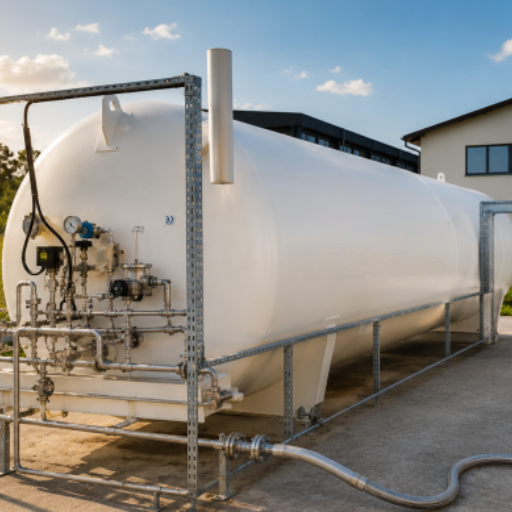
Run your site through this list. The first condition that matches decides.
| Your situation | Choose | Why it decides |
|---|---|---|
| Permanent public retail with steady volume | Underground tank | Retail fire codes, forecourt aesthetics, and surface space almost always require burial |
| Urban forecourt with no room to spare | Underground tank | The tank belongs under the pavement; separation distances may prohibit aboveground dispensing entirely |
| Private fleet, mining, construction, or agricultural refueling | Skid station | Own-use sites get the lighter permit path and value the fast build |
| Remote site with no excavation contractor nearby | Skid station | A unit that arrives commissioned beats a civil works schedule you can’t staff |
| Fire authority mandates burial for your use category | Underground tank | Non-negotiable, and it overrides every cost argument |
| Relocation or expansion expected within five years | Skid station | The second unit bolts on; the second tank requires a second excavation |
If two conditions collide, for example, permanent retail on a cramped urban plot, permanence wins, and you are building the UST. If a private fleet site is also a long-term owned depot, run the lifecycle numbers before assuming the skid is cheaper forever. A permanent depot may earn the buried tank’s lower operating cost back over a decade.
FAQ: Skid Station vs Underground Tank
Can a skid station replace an underground tank at a retail gas station?
Sometimes. A skid station can serve retail fueling where the fire authority accepts aboveground storage for the use category, but many jurisdictions restrict or prohibit aboveground gasoline dispensing at public retail sites. Confirm the answer with your authority having jurisdiction before purchasing.
Is a skid station cheaper than an underground tank?
Usually cheaper to build, often more expensive to own. Skid stations win on capital cost and site work. A 2019 U.S. federal facilities fact sheet states that underground tanks have the lowest sustainment costs, with aboveground costs 41% higher.
Do skid stations and underground tanks need different permits?
Yes, in kind. A UST brings underground storage rules: licensed installation, inspection stages, leak detection compliance, and operator obligations. A skid brings land-use, fire, and electrical reviews, with public retail the heaviest category for both.
Which lasts longer, a skid station or an underground tank?
A well-protected underground tank typically serves 20 to 30 years in fixed service. A skid station’s frame and tank can serve a similar period, but the unit is designed to be relocated, refreshed, or replaced rather than embedded for decades.
Can you move an underground fuel tank after installation?
No. A buried tank’s exit path is removal and decommissioning under permit, not relocation. That is the core option-value difference in this comparison.
Is an aboveground tank allowed for public retail fueling?
It depends on the jurisdiction and the fuel. Gasoline retail is the most restricted case; private fleet and industrial own-use sites are commonly permitted where retail is not. Our covers how to check.
Conclusion
The skid station vs underground tank choice isn’t a debate about which is better in the abstract. It is a question about your site’s permanence, your use category, and who pays at the end of the asset’s life.
Three takeaways decide it. Permanence and use set the format: temporary, remote, and private sites take the skid; permanent retail takes the buried tank. Capex favors the skid while ten-year sustainment often favors the UST, so price the lifecycle, not the purchase order. And the exit paths differ completely: one unit leaves on a truck, the other leaves with a decommissioning permit.
If your project sits on the fence, the cheapest step is an early conversation with people who supply both formats. and we will price a skid-mounted station and an underground tank system against your plot, your throughput, and your local approval path.
And when you are ready to specify the chosen format down to the datasheet field, our and our carry the technical detail you need.