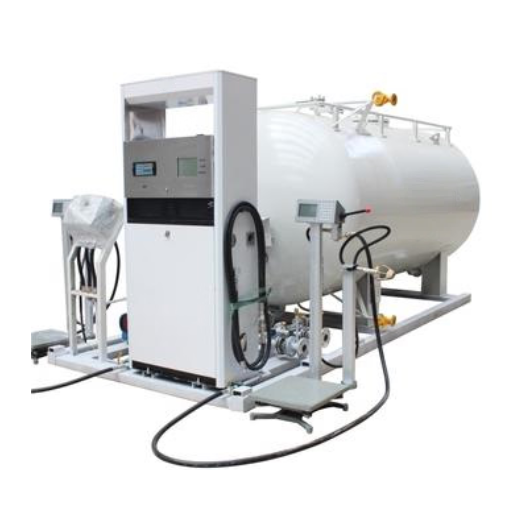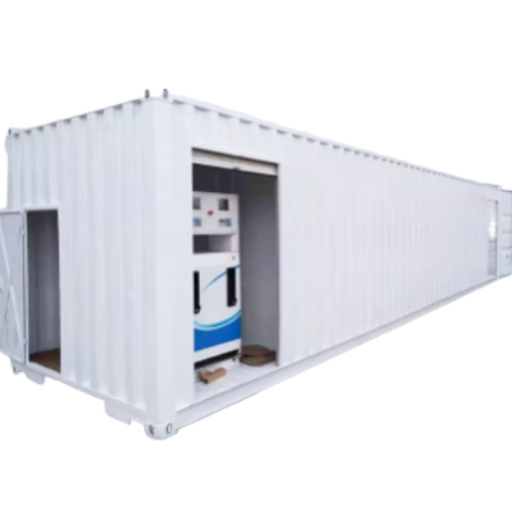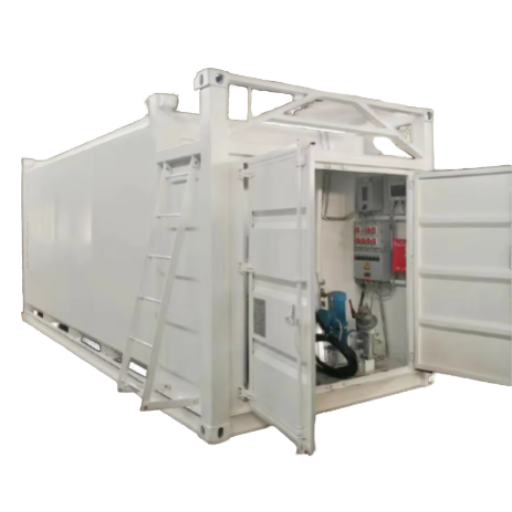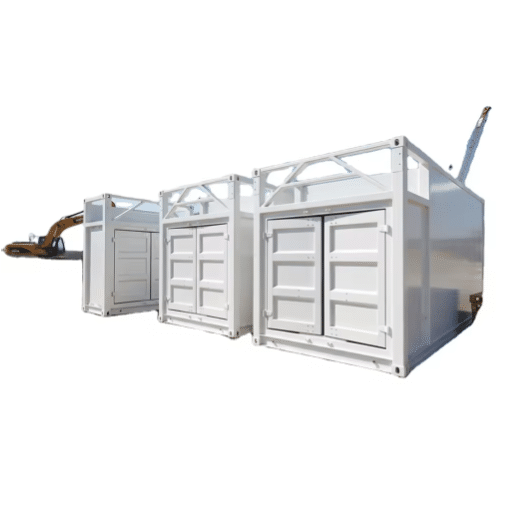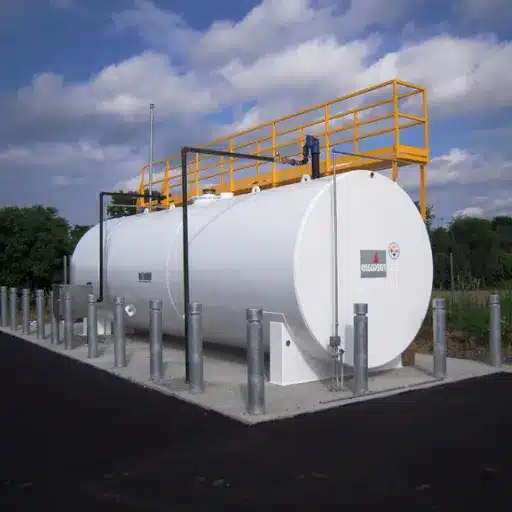
A generator fuel skid is a bulk diesel tank on a transportable frame that supplies a standby generator for days rather than hours. A 20ft unit holds roughly 10,000 to 26,000 liters, depending on configuration. At a planning figure of 0.21 to 0.27 liters per kWh, that covers a 500 kW generator for about six to seven days at full load.
Most standby power failures aren’t starter failures. They’re fuel failures: a tank sized on the wrong assumption, a day tank that never refilled, diesel that sat long enough to stop being diesel.
The electrical side gets attention to the kilowatt. The fuel side gets a line item and a brochure. This guide gives it the same treatment: runtime arithmetic, the day-tank decision, a fuel-quality program, and the line between generator standards and tank rules.
If you’re still choosing the footprint itself, the 20ft skid station specification and procurement guide covers capacity, submittals, and supplier qualification.
Consider a composite scenario. Priya, a facilities engineer at a 220-bed hospital, accepted a 10,000-liter sub-base tank sized for “about a day.” The authority having jurisdiction wanted a documented 96-hour plan. At 188 liters per hour at full load, 96 hours needs about 18,000 liters usable, which the sub-base tank couldn’t hold indoors. A generator fuel skid outside, feeding a day tank in the plant room, closed the gap.
Key Takeaways
- A 20ft skid delivers roughly 10,000 to 26,000 liters nominal, about 95% usable after the fill ceiling.
- A 500 kW generator burns roughly 105 to 135 liters per hour at full load, so 19,000 usable liters is about six to seven days of autonomy.
- NFPA 110 sizes fuel by class hours, not by tank volume. The 2025 edition requires 133% of the low-fuel-sensor quantity for classes up to 24 hours and 100% above that.
- The 660-gallon indoor and rooftop limit for integral tanks is what pushes multi-day fuel supply outside, into a bulk skid.
- Fuel quality, not capacity, is the usual failure point. Polishing, water removal and lab testing belong in the specification.
What a Generator Fuel Skid Is, and What It Is Not
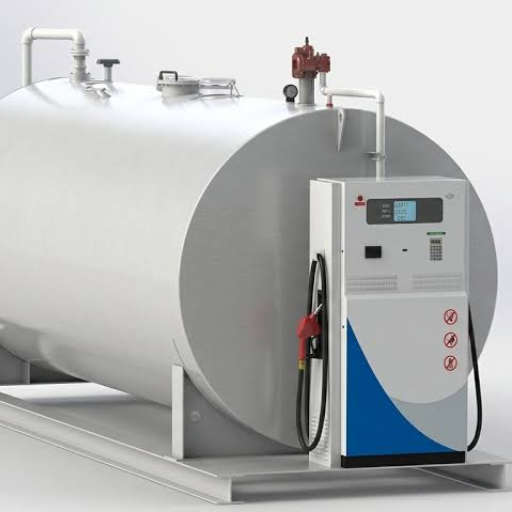
The phrase carries three meanings in the market. For some suppliers, a generator fuel skid is a sub-base tank under the generator frame, the diesel generator fuel tank that ships with a small genset. For others, it’s a day tank. For a third group, it’s a containerized bulk station with pump, dispenser, and controls.
This article means the third: a bulk fuel storage tank for stationary standby generators, packaged in a frame that can be lifted and sited outdoors.
| Format | Typical size | Job | What decides it |
|---|---|---|---|
| Sub-base or belly tank | Up to about 660 gallons (2,500 liters) indoors | Integral fuel under the generator; short autonomy | Indoor and rooftop limits in NFPA 110 |
| Day tank | About 15 to 1,200 gallons (55 to 4,500 liters) | Buffer between bulk storage and engine; breaks suction head | Engine fuel pump limits and return-line elevation |
| 20ft bulk skid | Roughly 10,000 to 26,000 liters nominal | Multi-day autonomy and a central refill point | Site space, fire separation, spill rules, tanker access |
A generator-powered refueling skid, where a diesel set runs the dispenser, is a different product. It isn’t covered here.
If your fleet also refuels vehicles, the diesel skid configurations guide covers that side; containment overlaps, sizing doesn’t.
Sizing a Generator Fuel Skid: Consumption, Class Hours and Usable Volume
Sizing a generator fuel skid starts with arithmetic, not a tank catalog. Take usable liters (nominal volume × about 95%, allowing for the heel below the suction point), divide by consumption at the design load (roughly 0.21 to 0.27 L/kWh), then by 24 for days. Use 0.25 for planning, then replace it with the generator datasheet curve.
The table uses a 20,000-liter nominal tank, about 19,000 liters usable. Treat it as an illustration and check it against the actual curve.
| Generator rating | Consumption at full load | Hours on 19,000 L usable | Days |
|---|---|---|---|
| 100 kW | 21 to 27 L/h | about 700 to 900 | about 29 to 38 |
| 250 kW | 53 to 68 L/h | about 280 to 360 | about 12 to 15 |
| 500 kW | 105 to 135 L/h | about 140 to 180 | about 6 to 7.5 |
| 1,000 kW | 210 to 270 L/h | about 70 to 90 | about 3 to 3.8 |
A generator fuel skid clears the common 12-hour floor and most 24 to 72-hour designs at 100 to 500 kW. Above about 1 MW, it buys days, not weeks, and the refill contract becomes part of autonomy.
Now the code layer. NFPA 110 separates three ideas that are often blended:
- Level is the consequence of failure. Level 1 covers systems where failure could cause loss of life or serious injury.
- Type is transfer time. Type 10 requires the load to be accepted within 10 seconds.
- Class is runtime in hours at rated load. Class 96 means 96 hours.
Class drives tank size. In the 2025 edition, §5.5.3.1 requires at least 133% of the low-fuel-sensor quantity for classes of 24 hours or less; §5.5.3.2 requires 100% above that. Earlier editions used 133% in both cases. Confirm the edition your authority adopted before you lock the tank size.
For data centers, the Uptime Institute Tier Standard sets a 12-hour floor for on-site fuel at base capacity N. Twelve hours is a floor, not a target. Hospitals often work to a 96-hour fuel plan; the Joint Commission treats it as a documented plan, not necessarily 96 hours stored on site.
Tanker deliveries have minimums, access limits, and lead times, so autonomy is partly a supplier question. Fire separation, tanker turning radius, and the fill connection also constrain the layout.
For the generic method, see the fuel tank sizing calculation. For skid capacity options, the capacity selection method covers the trade-offs.
Direct Feed or Day Tank: How Fuel Reaches the Engine
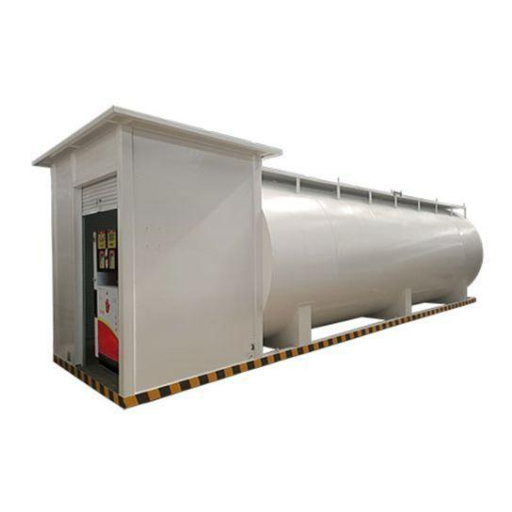
A bulk skid rarely feeds the engine directly, so most designs add a day tank for generator service. The question is whether the engine fuel pump can draw from the tank within its suction-head limit, and whether pipe run and elevation stay within the manufacturer’s allowance. If yes, a direct line can work. If not, the design needs a day tank and a transfer pump.
NFPA 110 sets the boundary. Section 7.9.2 requires the main tank to be close enough for the pump’s suction head, or a transfer pump and day tank. Section 7.9.4 places day tanks below the engine fuel return elevation, with trap-free return lines to the main tank. Gravity feed isn’t permitted; fuel reaches the engine by pump.
Section 7.9.5 sits beside these, limiting integral, sub-base, and belly tanks to 660 gallons indoors or on a rooftop. That’s why multi-day supply moves outdoors and the day tank becomes the indoor interface.
A practical design sequence:
- Confirm the engine’s maximum suction lift and the elevation from tank to engine.
- If the run is long or the tank sits low, specify a day tank sized for 8 to 12 hours.
- Size the transfer pump to refill inside that window; a 1,000-liter tank at 100 liters per minute takes about 10 minutes.
- Specify high-level and low-level alarms, an overfill cut-off, and a low-level trip ahead of the engine’s own low-fuel switch.
- Check valve automation against the adopted edition. Some restrict automatically actuated valves in supply and return lines.
The generator fuel supply also sits inside the transfer sequence. A Type 10 system must accept load within 10 seconds, and a low day tank, a pump that lost prime, or a closed manual valve turns a start into a failure. Instrument it like switchgear.
For a detailed comparison, please read our article on skid station vs. underground tank.
Fuel Quality: The Failure Mode a Generator Fuel Skid Must Prevent
Standby generators run rarely. That’s the point, and the problem. Fuel sits for months, water enters through vents, microbial growth forms at the water interface, and sediment collects on the tank floor.
One fuel-services vendor estimates that up to 80% of standby-set failures trace back to contaminated diesel. Treat that as a vendor estimate, not an audited statistic.
NFPA 110 gives the design hook. Section 7.9.1.3 requires tanks sized so fuel is consumed within its storage life, or a documented remediation and replacement plan.
ULSD is commonly cited as stable for 6 to 12 months under good housekeeping. Biodiesel blends are shorter, around 6 months. A tank that holds three years of consumption isn’t a fuel store. It’s a contamination experiment.
The specification should include the housekeeping features, not just the volume:
- A tank floor sloped at about 1:50 to a water-draw or sump drain.
- A breather with a hydrophobic or desiccant filter.
- Overfill protection with automatic shut-off at 90 to 95%.
- A mid-level sampling port.
- Secondary containment at 110% of the largest tank.
- Fill-line filtration around 10 microns.
A fuel polishing system is the second layer. A common staged sequence runs 30 microns, then 10, then 2, with a water coalescer. On low-turnover sites, circulate a few hours each week rather than waiting for an annual service. Whether the loop is integral, a bolt-on, or a service contract is a specification decision, not an afterthought.
Testing belongs on a calendar:
| Interval | Action |
|---|---|
| Weekly | Check level, drain sump water, inspect the breather |
| Monthly | Run the polishing loop, check filter differential pressure |
| Quarterly | Lab test for water, sediment, microbial count, cetane, and density |
| Annually | Internal inspection, ultrasonic thickness, sensor calibration |
| Every 3 to 5 years | Full clean and fuel replacement on low-turnover sites |
Cold climates add a program. Cloud point and cold filter plugging point decide when diesel gels, and winter blends change the storage picture. Low-temperature sites may need insulation or tank heating.
Consider a second composite scenario. Marcus runs a colocation site where the generators are exercised monthly, and the fuel is never polished.
Eighteen months after commissioning, a load bank test ends early when the filters plug. The lab report shows water and microbial growth. The cleanup and retest cost more than three years of a polishing contract. The generators were fine. The fuel wasn’t.
The Code Map for a 20ft Generator Fuel Supply
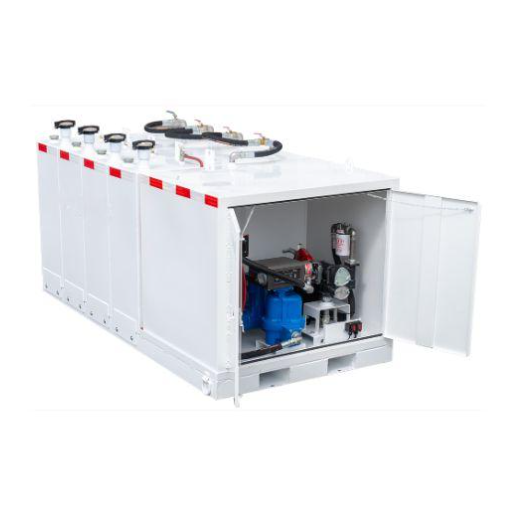
No single standard covers a generator fuel skid. The power code, the flammable liquids code, and the environmental rules all apply.
| Instrument | What it governs here |
|---|---|
| NFPA 110 | Emergency and standby power: Level, Type, Class, fuel system details, 660-gallon limit, storage life |
| NFPA 30 and 30A | Flammable and combustible liquids: storage, separation, containment, dispensing |
| NFPA 37 | Stationary combustion engines and their fuel supply |
| EPA SPCC, 40 CFR 112 | Oil storage above 1,320 gallons aggregate aboveground capacity: plan, containment, inspections |
| International Fire Code and local fire code | Tank permits, fire separation, indoor limits, site approval |
| UL 142 and UL 2085 | Aboveground tank listings; 2085 adds fire and impact rating |
| EN 12285, EN 13616, ATEX | European tank, overfill and hazardous-area regime for export projects |
Two cautions. NFPA is the North American reference; projects in Europe, Africa and Asia often work to EN 12285 and a local fire code. The engineering questions are the same; the authority holding the pen isn’t.
Second, a standard isn’t a certificate. “NFPA 110 compliant” describes a design that follows the code, not a listed product. Ask for the listing, its certificate number and scope, and confirm which edition the authority adopted.
The SPCC rule catches sites by surprise. Its 1,320-gallon trigger is aggregate aboveground capacity, counting containers of 55 gallons or more. A 20ft skid plus a drum store can cross it.
Permitting runs in parallel with the engineering. The permit requirements for a skid station article sets out the approval tracks and the document packs authorities ask for.
What Changes for Data Centers, Hospitals and Telecom Sites
The engineering is shared. The operating assumptions aren’t.
| Facility | Typical autonomy target | Redundancy lens | What changes in the fuel system |
|---|---|---|---|
| Data center | 12-hour Tier floor; 24 to 72 hours common | Tier III concurrent maintainability; N+1 generators | Dual tanks or partitioned supply, polishing, remote monitoring, priority refuelling contracts |
| Hospital | 96-hour plan; 96 hours stored in some jurisdictions | NFPA 110 Level 1, NFPA 99, CMS preparedness | Dedicated fuel that can’t be shared, day tanks, documented supplier plan |
| Telecom site | 24 to 72 hours typical, often unmanned | Local code; remote operation | Level and alarm telemetry, theft and access control, smaller tank or day tank, refill logistics |
For data centers, it’s a capacity system. Tier III concurrent maintainability means a tank can leave service without losing supply, so two tanks or a partitioned tank, each sized for the full requirement.
For hospitals, it’s a life-safety system. Level 1 fuel supplies can’t be shared, and a 96-hour plan needs a supplier commitment, not just tank volume.
For telecom sites, it’s logistics. Sites are remote and often unmanned, so monitoring and access control matter as much as capacity.
Across all three, tank cleaning, fuel replacement, and emergency deliveries show up in the ten-year cost of ownership model, and they’re larger than most buyers expect.
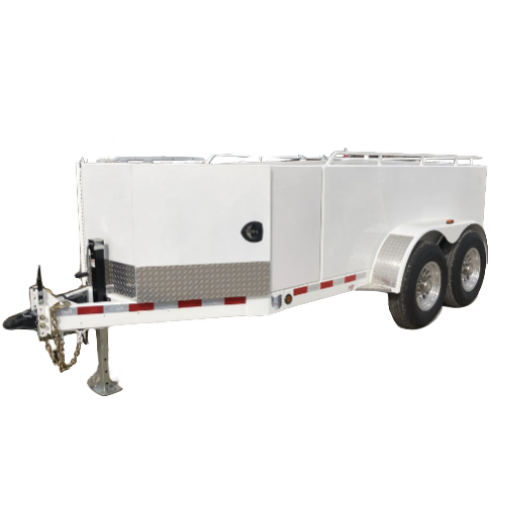
For a detailed comparison, please read our article on skid station vs fuel trailer vs fuel truck.
Specifying and Commissioning the Fuel System
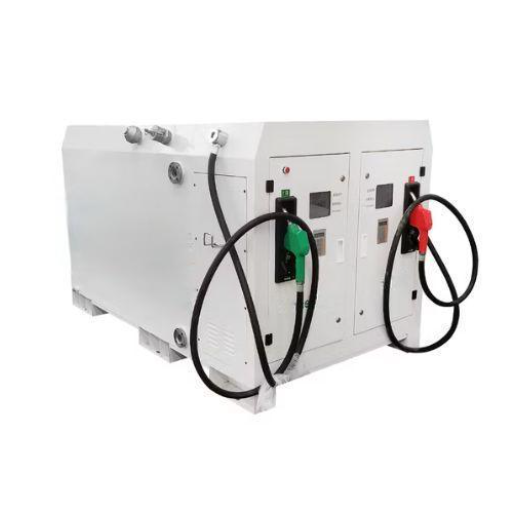
The datasheet should answer these before price is discussed:
- Nominal and usable volume, with the fill ceiling stated.
- Secondary containment volume and the largest-tank basis.
- Tank material, coating, and wall thickness.
- Transfer pump curve, or dispenser flow rate if the skid also fills vehicles.
- Day-tank interface: pump, controls, alarms, overfill cut-off.
- Filtration and polishing: stages, coalescer, sampling points.
- Certification evidence: listing body, certificate number, scope.
Ask for the generator fuel skid submittal set early: general arrangement drawing, P&ID, containment calculations, electrical drawing, control narrative, listing certificates, and the O&M manual. A supplier who can’t produce these before fabrication is a risk, not a bargain.
Commissioning often skips the fuel step:
- Inspect and clean the tank before first fill; new tanks can hold debris, water, or residue.
- Take delivery and settled-tank samples, and file the lab reports as the quality baseline.
- Confirm overfill, low-level, and high-level alarms at the actual set points.
- Prove the transfer pump and day-tank refill sequence under load.
- Run the load test on the fuel you’ll actually store, then top off to the design level.
Five mistakes recur: a gravity feed as a shortcut, an undersized vent, no water-draw point on the tank floor, no low-level alarm ahead of the engine switch, and no tanker access plan. Each is cheap on paper and expensive after delivery.
For a deeper understanding, please read our guide on skid station remote monitoring and automation.
Frequently Asked Questions
How many days of fuel does a 20ft skid hold for a generator?
It depends on generator size and load. With about 19,000 liters usable, a 20ft skid covers a 500 kW generator for roughly six to seven days at full load, a 250 kW unit for 12 to 15 days, and a 1,000 kW unit for three to four days.
Is a day tank required with a bulk generator fuel skid?
Not always. A day tank is required when the engine pump can’t draw from the main tank within its suction-head limit, or when elevation and pipe run exceed the manufacturer’s allowance. NFPA 110 §7.9.2 sets the condition; §7.9.4 sets the elevation and return rules.
How much fuel does a diesel generator use per hour?
Most consume about 0.21 to 0.27 liters per kWh at rated load: roughly 21 to 27 liters per hour at 100 kW, 105 to 135 at 500 kW, and 210 to 270 at 1,000 kW. Light loads burn less but risk wet stacking, so test at 50% or above.
Can a 20ft skid connect to an existing generator and transfer switch?
Yes, if the generator fuel skid matches the engine’s supply requirements. Confirm the suction-head limit, the day-tank interface, the alarm wiring, and the low-level signal that reaches the transfer switch before the engine’s own switch trips.
How often should standby generator fuel be polished or tested?
A practical schedule for any fuel polishing system is weekly water draining, monthly polishing on low-turnover sites, quarterly lab testing, and annual inspection with ultrasonic thickness checks. Full cleaning every three to five years suits low-turnover sites.
Does a 20ft generator fuel skid need a permit or an SPCC plan?
Usually yes. Aboveground storage typically needs a fire permit and site approval, and the SPCC rule applies above 1,320 gallons aggregate. Confirm the approval track with the jurisdiction before ordering.
Conclusion
A generator fuel skid is a small fuel terminal, and it deserves to be designed like one. Size it from class hours and consumption at load, decide the day-tank interface from suction head and elevation, and put the fuel-quality program in the specification, not the maintenance calendar.
The arithmetic isn’t complicated. It’s just rarely done. About 19,000 usable liters gives a 500 kW generator a week at full load, which changes the conversation from “how big is the tank” to “how many days does the site need, and who refuels it.”
If you have a generator schedule, a load profile, and an autonomy target, talk to our team about sizing a fuel supply around it. Review the 20ft skid station configurations for capacity and containment options, and bring the runtime target early. The tank, the day tank, and the refill plan all follow from it.