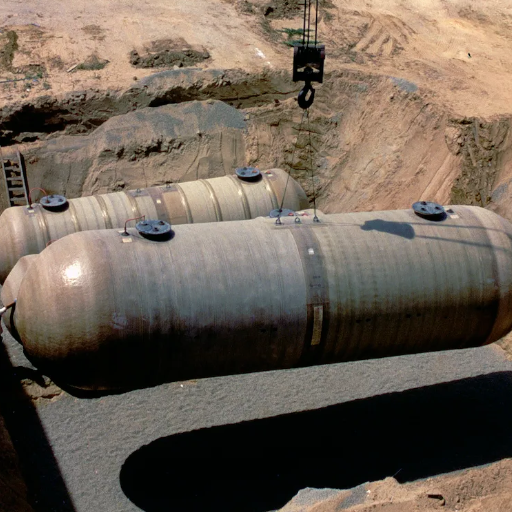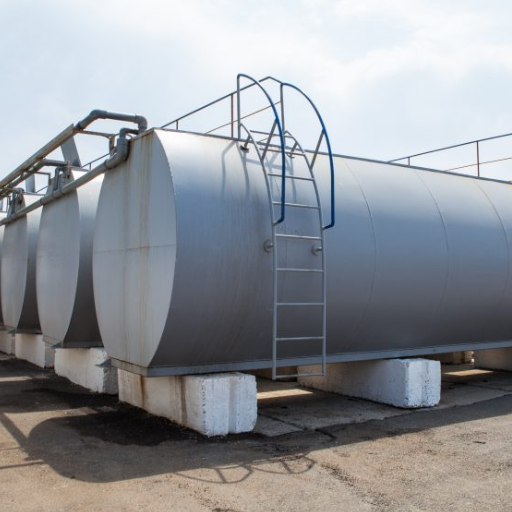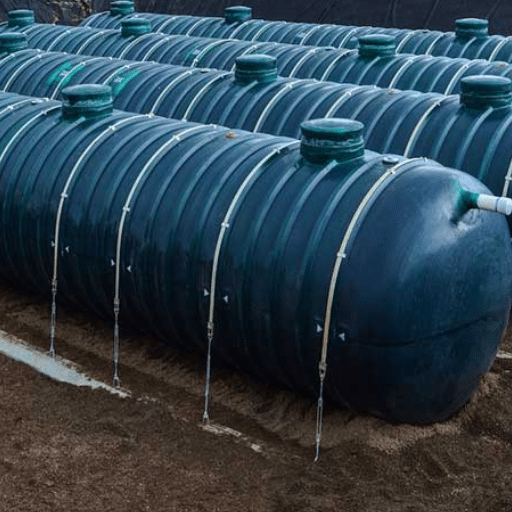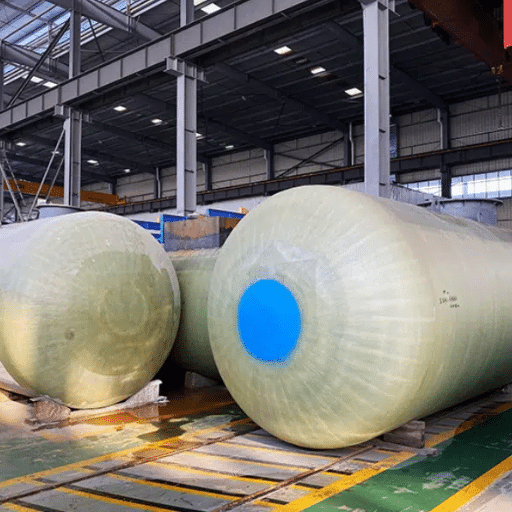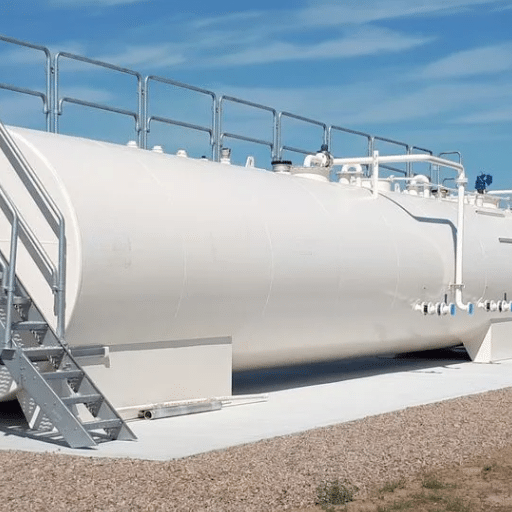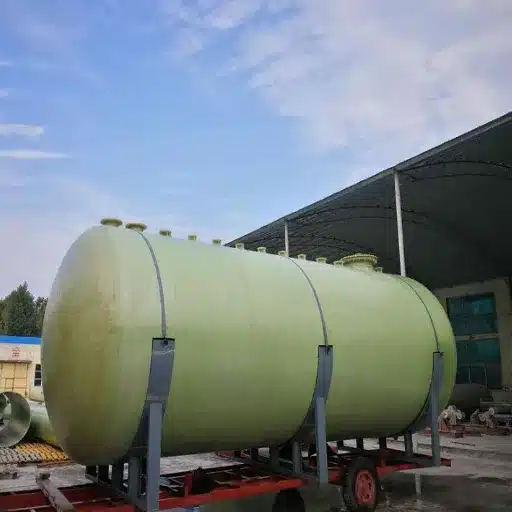
An ATEX-compliant tank does not carry a certificate for the vessel. The mark certifies the parts of the package that can ignite an explosive atmosphere — the transfer pump, the level probe, the overfill sensor, the junction boxes. The steel shell is certified to its own vessel standard instead, and a buyer who asks for “the tank’s ATEX certificate” will wait for a document that was never supposed to exist.
That distinction explains most of the confusion in this market. A datasheet can say “ATEX certified” in good faith and still tell you almost nothing about what was assessed, by whom, or against which category.
This article covers why the vessel falls outside ATEX, what a complete mark contains, how categories map to zones and Notified Bodies, and how to verify a claim before you pay. If you need the full procurement procedure, how to specify an SF double-wall tank covers the submittal package and the rejection process.
For the document set behind a project, see our guide to explosion-proof tank certification.
Key Takeaways
- The tank vessel is not an ATEX product. The mark belongs to the package’s ancillaries, each on its own nameplate.
- A complete nameplate carries more than the
Exstring: manufacturer, type, serial number, year of construction, and the Notified Body number where applicable.- Category 1 and electrical or engine-driven Category 2 equipment involve a Notified Body. Non-electrical Category 2 equipment follows a different route and often shows no body number at all.
- Non-electrical ancillaries such as flame arresters and mechanical gauges are marked
Ex h, notEx dorEx e.
Why ATEX-Compliant Tanks Usually Have No Vessel Mark
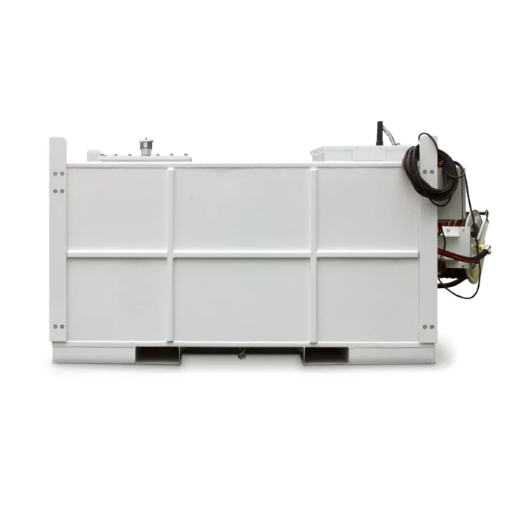
Start with the legal definition. Directive 2014/34/EU covers two things: equipment that can cause an explosion through its own potential ignition sources — a pump motor, a junction box, a heater — and protective systems, which do not cause an explosion but act to stop one, such as a suppression system or a flame arrester.
A passive steel storage tank is neither. It stores liquid. It generates no spark, arc, or hot surface, and it performs no protective function. So it falls outside the directive, and no Notified Body will issue an ATEX certificate for the shell.
Pressure changes the paperwork, but not in the direction buyers expect. A vessel with a maximum allowable pressure above 0.5 bar falls under the Pressure Equipment Directive 2014/68/EU — a separate regime with its own CE marking and conformity assessment. An atmospheric fuel tank, the normal gas-station case, may fall outside both directives. Its vessel standard is UL 142, UL 2080, UL 2085, UL 58, UL 1746, EN 12285, or API 650/620, depending on design and market.
So what does a supplier mean by “ATEX-compliant tank”? Usually this: the transfer pump, level probe, overfill sensor, flame arrester, and any electrical accessory in the classified zone are ATEX-certified, and the vessel meets its own structural standard. That is a legitimate and useful claim. It is just not a vessel certificate. A supplier who produces one document covering the whole assembly is either misreading the scope or overstating it.
For the vessel side of the specification, our guide to underground fuel tank standards walks through the UL and international requirements that apply to the shell.
What the ATEX Mark Requires, Element by Element
A complete mark looks like this:
CE 0123 ⬡ II 2 G Ex db IIC T4 Gb
Read left to right, it tells you who certified the product, what atmosphere it suits, how it is protected, and how hot it can get.
| Element | Meaning | What to check |
|---|---|---|
| CE | Conformity mark for Ex equipment | Should not appear on an Ex component with a U suffix |
| 0123 | Four-digit Notified Body number | Only present when a Notified Body supervised production control |
| ⬡ Ex | Hexagon Ex symbol | Present on every ATEX product |
| II | Equipment group: I = mining, II = surface industry | Tank ancillaries are almost always Group II |
| 2 | Category: 1, 2, or 3 | Must be at least as high as the zone requires |
| G | Atmosphere: G = gas, D = dust, GD = both | Fuel vapour is G; dust applications are D |
| Ex db | Protection type: flameproof enclosure, level B | Must suit the equipment and the zone |
| IIC | Gas group: IIA propane, IIB ethylene, IIC hydrogen | IIC covers the widest range |
| T4 | Temperature class: 135 °C maximum surface temperature | Must sit below the fuel’s ignition temperature |
| Gb | Equipment Protection Level (EPL) | Ga for Zone 0, Gb for Zone 1, Gc for Zone 2 |
The first half comes from the ATEX directive. The second comes from EN IEC 60079-0, which defines protection types, gas groups, temperature classes, and EPLs.
The rest of the nameplate
The Ex string is the part everyone reads. The fields around it tie a physical unit to its paperwork, and Annex II of the directive requires them.
| Field | What it tells you | What a mismatch reveals |
|---|---|---|
| Manufacturer name and address | Who is legally responsible | A trading name with no address means no accountable manufacturer |
| Type or series designation | Which product family this is | Must match the certificate exactly |
| Serial or batch number | Which unit this is | The only way to match nameplate to certificate and test record |
| Year of construction | Age and applicable standard edition | Certificates are issued against a standard revision; an old unit may predate it |
| CE mark, at least 5 mm high | Conformity for equipment | Absent on components by design, not by omission |
| Notified Body number | Who supervised production control | Present only when a body was involved at that stage |
X suffix |
Specific conditions of use | The certificate lists them, and the installer must follow them |
A nameplate with an impressive Ex string and no serial number cannot be verified. At goods-in, the question is not “does this look explosion-proof” but “is this the unit the certificate describes.”
What the EPL adds
The Equipment Protection Level states how much protection a product provides. Gas levels run Ga, Gb, and Gc; dust levels run Da, Db, and Dc; mining levels run Ma and Mb.
EPL maps directly to zones. Ga suits Zone 0, where an explosive atmosphere is present continuously or for long periods. Gb suits Zone 1, where it is likely during normal operation. Gc suits Zone 2, where it is unlikely and short-lived. A higher EPL can be used in a lower-hazard zone; the reverse is not permitted.
A Category 2 pump marked Gb can therefore be installed in Zone 2, but a Category 3 pump marked Gc cannot go into Zone 1 — even if the datasheet calls it “ATEX approved.” Zone classification is covered in our guide to hazardous area classification for gas stations.
Non-electrical ancillaries use Ex h
Not everything in a classified zone has a circuit. Flame arresters, mechanical float gauges, valves, and hatches are non-electrical equipment. They are still assessed under the directive, but they carry a different marking.
Non-electrical equipment is marked withEx h, defined by EN ISO 80079-36 and EN ISO 80079-37. A typical mark readsII 2 G Ex h IIC T6 Gb, where the h covers the ignition protection built into the mechanical design.
Two consequences for buyers:
- A flame arrester without an
Ex hor component marking has not been assessed as equipment under ATEX, even if its performance is certified to ISO/IEC 80079-49:2024. - A datasheet listing only
Ex d,Ex e, andEx iis describing an electrical range. Any mechanical parts in the same package need their ownEx hevidence.
For a deeper look, see our guide to UL 1746 certification.
The suffixes that change the obligation
Two letters at the end of a mark carry outsized legal weight.
X means the equipment has specific conditions of use. The certificate lists them, and the installer must follow them — a restricted ambient range or a required cable gland type are common examples. Ignoring the X is a compliance failure, not a paperwork technicality.
U means the item is an Ex component, designed to be built into a finished product and not installed on its own. A component carries no CE mark and no EU Declaration of Conformity; the manufacturer issues a written attestation instead. Where a Notified Body supervised production, its number may still appear on the component without CE. A CE mark beside a U certificate is the red flag; a bare four-digit number is not.
A dust-rated example shows the same logic in a different atmosphere: II 2 D Ex tb IIIC T130°C Db. Only the atmosphere letter, protection type, dust group, and temperature value change.
For comprehensive information, please read our double-wall fuel tank specifications explained guide.
ATEX Categories, Zones, and the Notified Body Rule
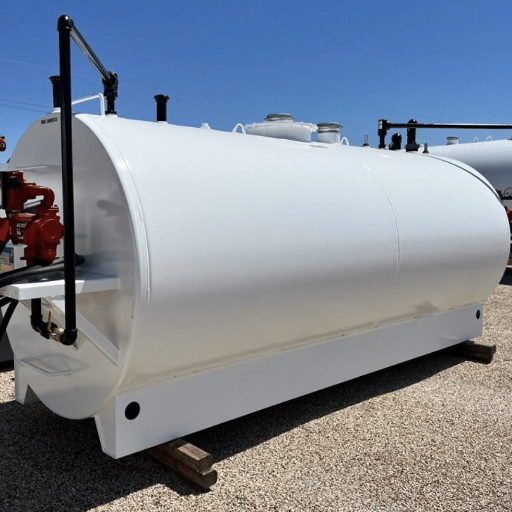
Category and zone express the same risk from two directions. The conformity route is not the same for every product in a category — which is where most supplier claims break down.
| Category | Zone | Conformity route | Notified Body number on product? |
|---|---|---|---|
| 1 | 0 / 20 | EU-type examination plus production quality assurance or product verification | Yes |
| 2 — electrical equipment and internal combustion engines | 1 / 21 | EU-type examination plus supervised product testing or product quality assurance | Yes |
| 2 — all other equipment (non-electrical) | 1 / 21 | Internal production control, with technical documentation lodged with a Notified Body | No |
| 3 | 2 / 22 | Internal production control, manufacturer self-certification | No |
The third row matters more on a tank package than on most equipment lists. Flame arresters, mechanical gauges, and valves are often non-electrical. A legitimate Category 2 mechanical component will usually show II 2 G Ex h … Gb no four-digit number, because the Notified Body only receives and retains the technical file. Treating that absence as a defect sends buyers into a dispute with a compliant supplier.
The common misconception runs the other way for Category 3. Plenty of online guides still say only Category 1 needs third-party involvement. That is wrong for electrical Category 2, which requires EU-type examination, and right for Category 3, which is the self-certification route. If a Zone 1 installation arrives with self-certified Category 3 equipment, it does not meet the zone requirement, regardless of how the datasheet describes it.
Confirm a body’s identity and scope in the EU’s NANDO database. If a number appears where the table says it should not, or is missing where it should be, ask before accepting the certificate.
For the sensor side of that equation, our guide to interstitial monitoring methods for double-wall tanks compares the available approaches.
ATEX 114 and ATEX 153 are different duties
Buyers regularly conflate two instruments that share the name.
ATEX 114 — Directive 2014/34/EU — governs products. It is the manufacturer’s obligation, and it is what the mark evidences.
ATEX 153 — Directive 1999/92/EC — governs workplaces. It obliges the site operator to classify hazardous areas, keep a classification drawing, and select equipment suitable for each zone. That drawing should exist before the equipment is specified and be updated when the layout changes.
A supplier can certify a pump against the correct category and still see it installed in the wrong zone. The mark proves the product; the drawing proves the installation.
What ATEX-Compliant Tanks Should Show on the Package
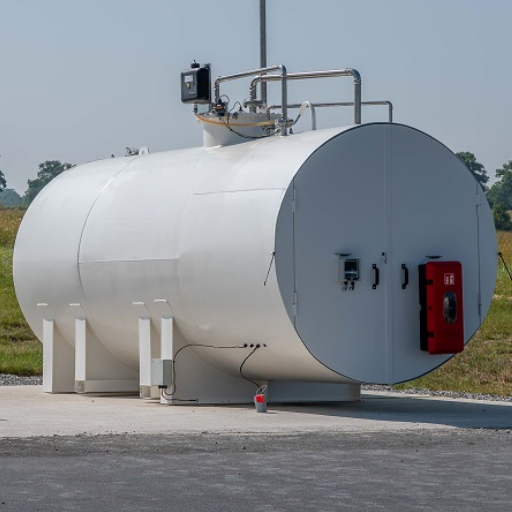
An ATEX-compliant tank package is an assembly, so the marks are distributed across it. Expect three layers of evidence, not one.
| Package element | Mark you should see | Supporting document |
|---|---|---|
| Vessel shell | UL nameplate (UL 142/2080/2085, UL 58/1746) or PED nameplate with CE where PED applies | UL listing record or PED Declaration of Conformity |
| Transfer pump | Full ATEX mark, including category, EPL, and Notified Body number where required | EU-type examination certificate |
| Level probe or ATG sensor | ATEX mark, usually Ex ia for intrinsic safety | Certificate and, where applicable, the associated apparatus schedule |
| Overfill prevention sensor | ATEX mark assessed to EN 13616-1:2025 | Certificate and function test record |
| Flame arrester | Protective system or Ex component marking, per its certificate | EU-type examination or component certificate, plus ISO/IEC 80079-49:2024 test evidence |
| Mechanical gauges, valves, hatches | Ex h Marking where assessed as non-electrical equipment |
Declaration of Conformity or component attestation |
| Junction boxes and heaters | ATEX mark matching the zone | Certificate per item |
| Whole package | No single ATEX mark | EU Declaration of Conformity naming every directive and standard applied |
The last row is the one buyers miss. No “package certificate” replaces the individual documents. The Declaration of Conformity is the assembly-level document, and it should name the directives, the harmonised standards, and the Notified Body for each applicable item. When you compare ATEX-compliant tanks from different suppliers, ask for the certificate per component rather than one document for the assembly.
Our guide to overfill prevention devices explains the sensor side of that table in more detail.
What changed in 2026
Two updates matter when you review documentation this year.
The Commission published the sixth edition of the ATEX Guidelines in January 2026. The directive did not change, but the guidance now permits digital EU Declarations of Conformity, provided the product or nameplate carries an internet address or machine-readable code, and the declaration stays accessible for the product’s lifetime. Safety instructions must still be available on paper on request.
Directive (EU) 2024/2749 also amended 2014/34/EU with emergency conformity and market-surveillance procedures from 30 May 2026. It changes no day-to-day marking, but explains the 2026 date in the consolidated text.
How to Verify ATEX Marking Requirements Before You Buy
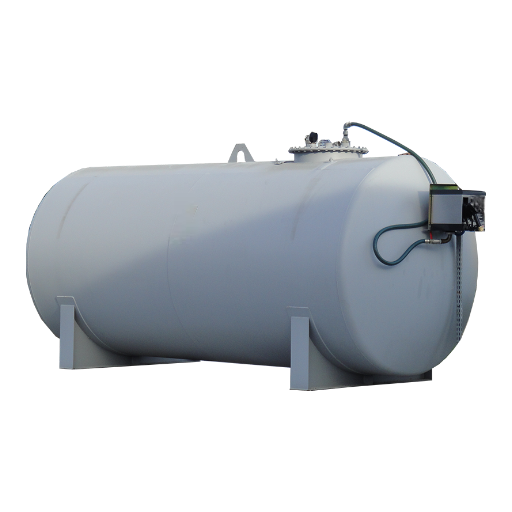
Verification is a ten-minute exercise if you know where to look. Run it before you approve the final payment, not after the equipment lands.
- Match the category to the zone. Zone 1 needs Category 2 or better. A Category 3 mark is a mismatch, whatever the datasheet says.
- Check the EPL against the zone. Gb for Zone 1, Gc for Zone 2. If the EPL is lower than the zone requires, stop.
- Check the conformity route. Category 1 and electrical Category 2 products should show a Notified Body number after CE. Non-electrical Category 2 equipment may legitimately show none — confirm the route in the certificate.
- Check the certificate itself. IECEx certificates can be checked in the public IECEx database. ATEX certificates should name a body that exists for that scope.
- Compare the numbers across documents. The certificate and serial numbers on the nameplate, manual, and datasheet should match exactly. A mismatch is the classic tell for a copied or altered certificate.
- Look for CE on a U-suffix component. It should not be there. A bare Notified Body number may be, and that is correct.
- Read the X conditions. If the mark ends in X, the certificate lists conditions of use. Confirm your installation meets them.
Misdeclared equipment is not a theoretical risk. EU Safety Gate statistics list 19 alerts in the “explosive atmospheres equipment” category between 2020 and 2026, including three in 2025: a portable explosion-proof fan, an explosion-proof LED luminaire, and an explosion-proof floodlight. The findings are consistent — missing or incorrect marking, unmarked cable entries, enclosures not secured against internal ignition transmission. None of those defects is visible on a datasheet.
The mark is not decoration. It is a compact legal statement, and every element can be checked.
To learn more information, please click to view our guide to industrial fuel storage tanks.
FAQ
Does ATEX certification cover the tank itself?
No. ATEX applies to equipment with its own ignition sources and to protective systems. A passive tank shell is neither, so it is certified to its vessel standard instead, such as UL 142, UL 2085, or EN 12285. The ATEX marks on that package belong to the pump, probe, sensor, and other ancillaries.
What is the difference between ATEX Category 1, 2, and 3?
Category 1 suits Zone 0 and requires a Notified Body plus production quality assurance. Category 2 suits Zone 1: electrical and engine-driven equipment requires EU-type examination, while non-electrical equipment follows internal production control with documentation lodged with a body. Category 3 suits Zone 2 and may be self-certified.
What does the four-digit number after CE mean?
It identifies the Notified Body that supervised production control. It appears only when a body was involved at that stage, which is why Category 3 and non-electrical Category 2 equipment usually show no number. Verify the body and its scope in the EU NANDO database.
Can an atmospheric fuel tank be ATEX-certified?
The vessel cannot, because it has no ignition source of its own and performs no protective function. The tank package can be supplied with ATEX-certified ancillaries, which is what suppliers usually mean by the phrase. Ask for the certificate for each ancillary rather than one document for the assembly.
Is an ATEX mark accepted in the United States?
Generally no. US authorities having jurisdiction typically require an NRTL listing, such as UL, ETL, or CSA, for hazardous-location equipment. ATEX and IECEx marks are not substitutes. Our guide to ATEX vs IECEx vs UL certification explains the crosswalk.
Conclusion: Getting the Mark Right on Your Next Tank Package
ATEX-compliant tanks are documented as a chain of small, specific claims, not a single certificate. The vessel has its own standard. Each ancillary has its own ATEX certificate. The assembly has a Declaration of Conformity.
Four points are worth carrying into your next specification:
- ATEX-compliant tanks carry marks on their ancillaries, not on the steel shell.
- Category, EPL, and zone must agree — and the conformity route differs between electrical and non-electrical equipment.
- The nameplate fields and certificate numbers are checkable facts, not marketing copy.
- A CE mark on a U-suffix component is a defect; a Notified Body number alone on one is not.
If you are specifying a tank for a hazardous area, our team can review the destination market, the zone classification, and the certificate set before you order. We supply explosion-proof fuel storage tanks with documentation matched to your project.
Contact our engineering team with your zone drawing and destination country. We will tell you which marks the package should carry, and which claims to question.