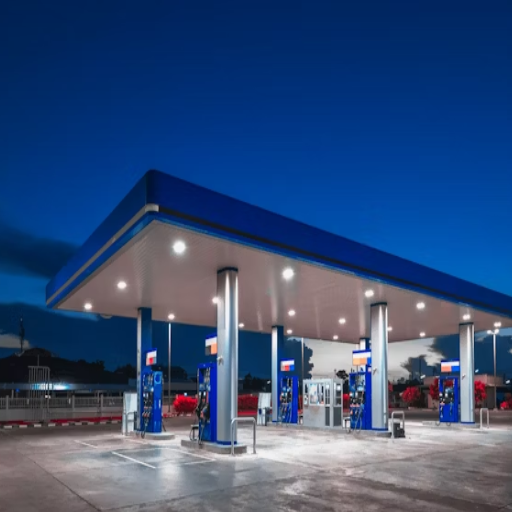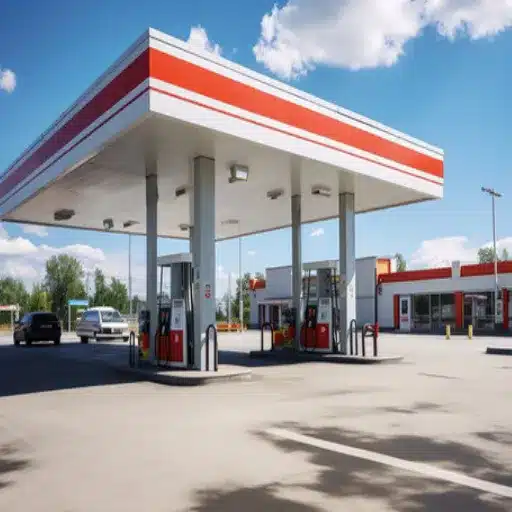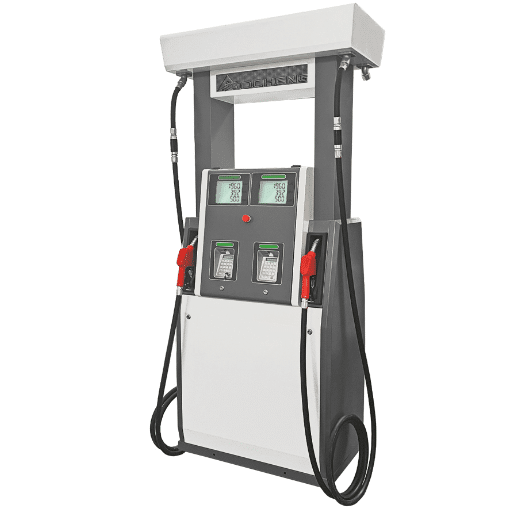
A retail tank specification doesn’t survive its first industrial submittal review.
The tank may have the same cylindrical shell and hold the same diesel. But the listing, the containment rule, the inspection cycle, and the documents that prove compliance all change once the site stops selling fuel to the public.
Most buyers start with shape and capacity because that is how retail tanks are sold. That sequence is backwards for industrial fuel storage tanks. The listing class comes first, and it decides almost everything that follows.
This guide gives you the five-link chain a specifier needs: application, listing class, containment and monitoring, inspection regime, and the submittal set. You can use it as a basis-of-design checklist rather than a catalogue.
If you need the full procurement procedure, how to specify an SF double-wall tank covers the submittal package and the rejection process.
If you already have a draft specification and want it checked against your application, our engineers can review it before it goes to bid. Request a specification review.
What Is an Industrial Fuel Storage Tank?
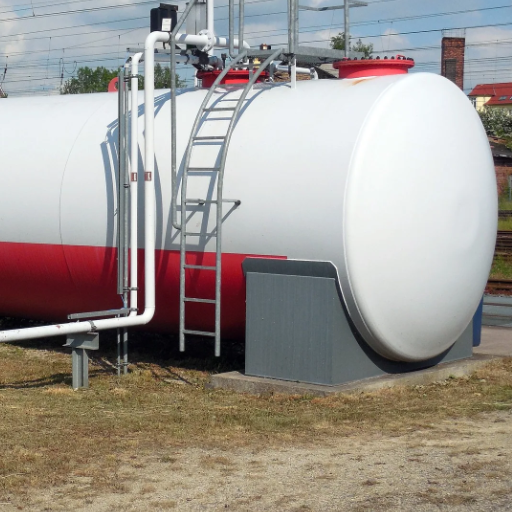
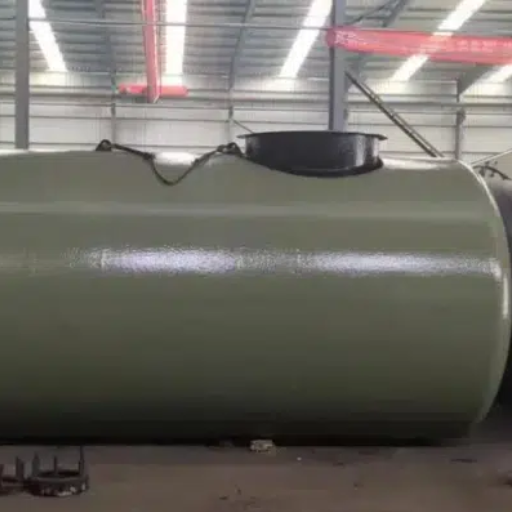
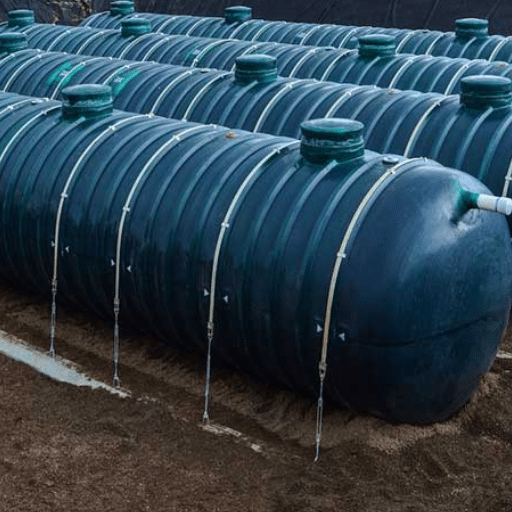
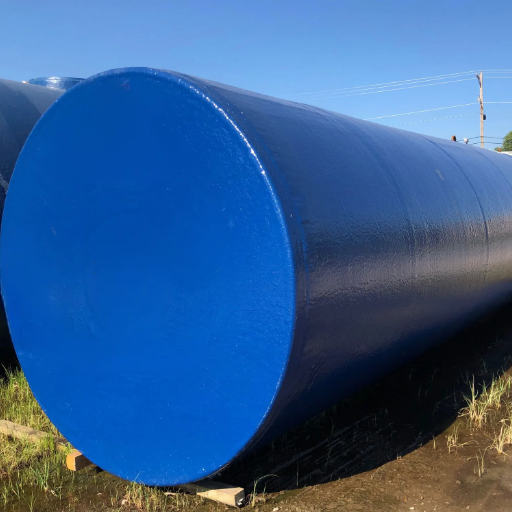
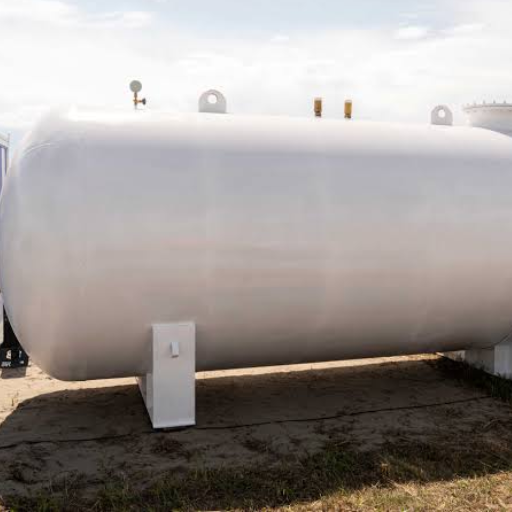
An industrial fuel storage tank is a fixed vessel that stores fuel for non-retail use, such as standby power, fleet refuelling, bulk distribution, process feed, aviation, or marine service. It is specified by listing class and inspection regime, not by forecourt dispenser compatibility.
Aboveground fuel storage tanks (ASTs) dominate this category, though industrial sites still use underground tanks for some products. The distinction that matters is the rule set, not the burial depth.
That definition matters because the retail and industrial paths diverge at the standard, not at the tank’s shape.
| Question | Retail station UST | Industrial fuel storage tank |
|---|---|---|
| Typical location | Underground | Aboveground or underground |
| Product | Gasoline and diesel for public sale | Diesel, fuel oil, jet fuel, gasoline, multi-product |
| Primary listing | UL 58, UL 1316, UL 1746 | UL 142, UL 2085, STI F921, API 650, API 620, ASME VIII |
| Containment logic | Interstitial monitoring under 40 CFR 280 | Secondary containment or diking under 40 CFR 112 and the fire code |
| Inspection regime | State UST program and tank gauging | STI SP001 or API 653 |
| Approval path | UST permit | SPCC plan, fire code review, building permit |
One terminology warning before we go further. The site uses “explosion-proof tank” as commercial shorthand. UL 142, UL 2085, STI F921, and API 650 are listings for flammable and combustible liquid storage. None of them is an explosion-proof certification in the electrical sense. If the electrical classification is part of your scope, the explosion-proof tank certification standards guide covers that separate question.
For a detailed comparison, please read our article on steel-fiberglass vs fiberglass-fiberglass tanks.
A representative scenario: the wrong sector
Consider a representative scenario. Daniel Reyes is a facilities engineer commissioning a 750 kW standby generator for an urban data centre. The site needs 48 hours of run time at full load.
Daniel’s draft specification copied a retail station package: double-wall UL 142 tank, interstitial monitoring, spill bucket. It looked complete. The submittal came back rejected because the local fire code required a protected tank within the setback available on the site.
The fix was a UL 2085 tank with a two-hour fire rating and impact protection. That changed the foundation, the anchorage, and the lead time. The project lost several weeks, not because anyone chose the wrong tank size, but because the team chose the listing class last.
For comprehensive information, please read our double-wall fuel tank specifications explained guide.
Industrial Fuel Storage Tank Specifications Start With the Listing Class
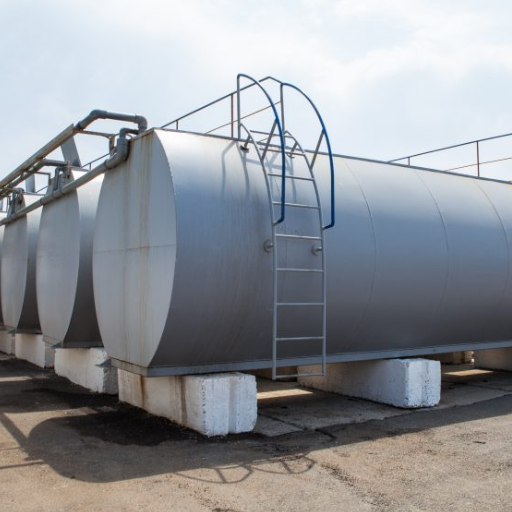
Ask a supplier whether they can build a horizontal tank, and the answer is usually yes. Ask which listing the application requires, and the conversation becomes useful. If the shape question is still open, vertical versus horizontal tanks covers the footprint and capacity trade-off.
The listing class sets the fire protection, the containment method, the fabrication route, and the inspection standard. Shape and capacity are downstream choices.
The UL 142 vs UL 2085 decision is the one that changes cost and lead time most often. Site layout interacts with it, which is why the aboveground versus underground placement guide is worth reading alongside this section.
| Standard | What it covers | Build route | Typical industrial role | Fire rating | Seismic design | Inspection |
|---|---|---|---|---|---|---|
| UL 142 | Atmospheric steel tanks for flammable and combustible liquids, specific gravity up to 1.0 | Shop-fabricated | Small and medium ASTs, generator base and day tanks | No | Not covered | STI SP001 |
| UL 2085 | Protected aboveground tank with insulation, secondary containment, and impact resistance | Shop-fabricated | Sites where the fire code requires a protected tank | Two-hour fire test plus impact test | Not a seismic standard | STI SP001 |
| STI F921 | Double-wall steel tank with a testable interstitial space; primary tank built to UL 142 | Shop-fabricated | Secondary containment with leak monitoring | No | Not covered | STI SP001 |
| API 650 | Welded steel tanks from atmospheric pressure to about 2.5 psig | Usually field-erected; shop fabrication permitted under Annex J | Bulk plants, terminals, tank farms | No, unless fire protection is added | Annex E | API 653 |
| API 620 | Welded low-pressure tanks up to about 15 psig | Usually field-erected | Low-pressure and cryogenic service | No | Design provisions apply | API 653 |
| ASME Section VIII | Pressure vessels | Shop-fabricated | LPG and propane bullets and spheres | No | Code design | API 510 or NBIC |
The table is a starting point, not a substitute for the adopted code. Local amendments change which row applies, especially for fire protection.
What UL 142 does not prove
UL 142 is the workhorse of shop-built industrial storage. It is also the most misunderstood listing in the set.
UL 142 doesn’t provide a fire rating or vehicle impact resistance. Its scope explicitly doesn’t cover seismic, hurricane, tornado, or flood design. And it doesn’t apply to tanks built to API 12F or API 12D; earlier editions also excluded API 650.
The commonly quoted 50,000-gallon ceiling is practical market practice, not a scope clause you can rely on in every edition. Treat it as a signal that larger tanks usually move to API 650, then confirm the limit with the fabricator and the current standard.
For a site in a high-seismic region, that gap is decisive. A UL 142 tank can be anchored and engineered locally, but the standard itself gives you no seismic design method. API 650 Annex E does.
For a deeper look, see our guide to UL 1746 certification.
STI F921 versus UL 2085 in one sentence
STI F921 gives you a testable interstice; UL 2085 gives you a fire rating and impact protection. They answer different questions, and one doesn’t imply the other.
F921 tanks are built with a primary tank to UL 142 inside a steel secondary tank, forming an annular space that can be monitored for leakage. That is a containment and leak-detection standard. It carries no fire-resistance rating.
UL 2085 is a protected tank standard. It adds insulation, secondary containment, and impact resistance, and it is verified by a two-hour fire test and a vehicle impact test. If the fire code asks for a protected tank, F921 alone will not satisfy it.
The retail standards that stop applying
UL 58 covers underground steel tanks. UL 1316 covers underground fiberglass tanks. UL 1746 covers external corrosion protection for underground steel tanks. All three belong to the retail and UST world.
The federal rule changes too. Retail USTs sit under 40 CFR 280. Industrial aboveground storage usually sits under the SPCC rule in 40 CFR 112.
If a bid cites UL 58 on an aboveground industrial project, the supplier has either misunderstood the scope or copied a retail datasheet. Either way, the submittal needs a second look.
A representative scenario: when “UL listed” hid the wrong listing
Consider a second representative scenario. Priya Nair, a procurement lead for a mining operator, received three bids for a mid-sized diesel facility. Two said, “UL listed.” One added “F921.”
The wording sounded equivalent. It wasn’t. The site’s fire code required a protected tank because of the distance to a processing building. F921 gave the project secondary containment and monitoring, but no fire rating.
The re-bid added roughly a fifth to the tank package and several weeks to the schedule. The lesson was not that F921 is a bad tank. It was that “listed” is a category, not a specification.
Need to compare the listing options against a real project? See the tank range and request the listing documents.
Matching the Listing Class to the Application
Once the listing class is clear, the application narrows the choice for industrial fuel storage tanks. The table below is the decision many specifications leave out.
| Application | Default listing | Alternative | Inspection |
|---|---|---|---|
| Standby generator base or day tank | UL 142 double wall | UL 2085 where a protected tank is required | STI SP001 |
| Fleet, cardlock, or remote site | UL 142 or STI F921 double wall, often skid-mounted | UL 2085 in regulated urban sites | STI SP001 |
| Bulk plant or terminal | API 650 | API 620 for low-pressure service | API 653 |
| Aviation, marine, or process feed | UL 142 or API 650 with compatible lining | Stainless steel shop-fabricated tank | STI SP001 or API 653 |
| LPG or propane | ASME Section VIII | API 2510 where adopted | API 510 or NBIC |
LPG and propane are the exception in this table. They are industrial gas storage tanks under pressure, so ASME Section VIII governs the vessel and API 2510 may govern the installation.
Standby generation
Generator fuel storage is sized by run time, not by a round number. A fire pump may need 8 hours. A data centre may specify 48 or 72 hours at full load.
The tank still has to fit the site. When the required setback is tight, the fire code may push the project from UL 142 to UL 2085 even though the volume has not changed. That is why the listing decision belongs in the basis of design, before the civil package is frozen.
Fleet, cardlock, and remote sites
Fleet sites usually want a double-wall tank with monitoring and a contained fill point. A skid-mounted UL 142 or F921 unit can be factory-assembled and shipped, which shortens site work.
Remote sites add a different constraint: the delivery you can actually get. A tank that can’t be refilled on schedule is a liability, no matter how well it is listed. Use the fuel tank sizing calculation to test the refill assumption before you fix the capacity.
Bulk plants and terminals
Bulk fuel storage tanks at a terminal are API 650 territory. The tanks are usually field-erected, the capacities are larger, and the inspection standard is API 653.
Layout and bunding become the dominant design questions. The tank farm layout guide covers plot arrangement, access, and aggregate containment. For the fabrication decision, see shop-fabricated versus field-erected tanks.
Aviation, marine, and process feed
Product compatibility starts to matter more than tank shape. Aviation fuel such as jet fuel, marine distillates, and process feeds may require stainless steel, a lining, or a coating system that the base standard does not specify.
The listing still applies, but the wetted materials become a separate specification line. Do not let a UL 142 or API 650 reference imply that the lining is suitable for the product.
The Thresholds That Change the Specification
Most projects involving industrial fuel storage tanks do not fail because the engineer missed a standard. They fail because a threshold moved the project into a different rule set after the budget was set.
The SPCC threshold
The Spill Prevention, Control, and Countermeasure (SPCC) rule under 40 CFR 112 applies to non-transportation-related facilities with total aboveground oil storage capacity greater than 1,320 gallons, or underground capacity greater than 42,000 gallons, where a discharge could reasonably reach navigable waters.
Containers of 55 gallons or more count toward the total. USTs regulated under 40 CFR 280 are generally excluded from that count.
Once the rule applies, the facility needs an SPCC plan, secondary containment, inspection procedures, and overfill protection. The plan may need professional engineer certification unless the site qualifies for the self-certified tier.
The qualified facility threshold
EPA’s qualified facility provisions allow smaller facilities to self-certify. The common thresholds are 10,000 gallons or less of total aboveground storage, with no single container above 5,000 gallons for the simplest tier.
Those numbers are a planning signal, not a substitute for reading the current rule. A tank package that crosses 10,000 gallons can move from a template plan to a certified plan, and that changes the schedule.
The fire code threshold
The fire code, not the environmental rule, usually decides between UL 142 and UL 2085. Distance to a building or property line, exposure to a public way, and local amendments all matter.
A protected tank can reduce the required separation. That is why a UL 2085 tank sometimes costs more but unlocks a site that cannot otherwise fit a tank. The aboveground storage tank spacing requirements guide covers the separation logic.
The seismic threshold
UL 142 has no seismic design provisions. If the project sits in a region with a meaningful seismic design category, the structural engineer needs a design basis that the listing does not provide.
API 650 Annex E is the usual route for a field-erected tank. For a smaller shop-built tank, the anchorage and shell may still be engineered, but that work is outside the UL 142 scope.
The delivery threshold
Nameplate capacity is not usable capacity. A tank that fills to 95% and delivers in 8,000-gallon loads behaves differently from one sized on an annual average.
The refill ceiling, the number of products, and the delivery vehicle size can push a project from one tank to two, or from shop-built to field-erected. Run the numbers before the listing class is locked.
Containment, Venting, and Monitoring for Industrial Fuel Storage Tanks
Containment is where the retail and industrial paths diverge most visibly.
At a retail site, interstitial monitoring and tank gauging do most of the work. At an industrial site, the SPCC rule and the fire code usually require a defined containment volume around the tank or a double-wall tank with a monitored interstice.
Secondary containment
The federal SPCC requirement is to contain the capacity of the largest container in the group. That is the rule in 40 CFR 112.8(c)(2).
The familiar 110% figure is common practice and appears in many state and local requirements. It is not the literal federal number in every case. Specify both the rule and the local requirement, and state which one governs.
For a double-wall tank, the interstice is the secondary containment. For a single-wall tank, the containment is the dike, berm, or vault around it.
Monitoring
A monitorable interstice is the point of F921. The space can be checked by vacuum, pressure, or liquid level, depending on the design.
A UL 2085 tank adds a thermal barrier and impact protection, but it still needs a monitoring method for the interstice. Do not assume the fire rating replaces leak detection.
Venting and overfill
Normal venting is sized for fill and withdrawal. Emergency venting is sized for fire exposure, usually under NFPA 30 and API 2000. Flame arrestors, bonding, and grounding belong in the same specification line, especially where the tank feeds a dispenser or a day tank.
At terminals, overfill prevention often follows API RP 2350. At smaller industrial sites, the specification may call for a high-level alarm and an automatic shutoff instead. The right answer depends on the receiving facility and the delivery method.
To understand the compatibility of fuel tanks with different fuels, please read our article on SF tank fuel compatibility.
Inspection Regime Follows the Build Route
For industrial fuel storage tanks, the inspection standard is not a separate choice. It follows from how the tank was built.
| Build route | Inspection standard | Who performs it | Typical interval |
|---|---|---|---|
| Shop-fabricated UL 142, F921, or UL 2085 | STI SP001 | Owner for routine checks; certified inspector for formal inspections | 5 to 20 years, depending on category and capacity |
| Field-erected API 650 or API 620 | API 653 | API 653 authorized inspector | External about every 5 years; internal about 10 years, subject to condition |
| ASME Section VIII pressure vessel | API 510 or NBIC | Authorized inspector | Per jurisdiction and risk-based plan |
The STI SP001 intervals are more granular than the single number many specifications quote. Category 1 tanks with spill control and continuous release detection can reach a 20-year formal external cycle at the larger sizes. Category 2 and 3 tanks fall to shorter cycles. Small tanks may need no formal external inspection at all.
API 653 is different. External inspection is commonly on a five-year cycle. Internal inspection is initially around ten years, then extended or shortened by the measured corrosion rate.
For an industrial fuel storage tank, confirm the current edition and your jurisdiction’s adoption before you write an interval into a contract. The inspection burden is part of the purchase, so it belongs in the specification, not in the operations manual after delivery.
Procurement: The Submittal Set That Proves the Spec
A specification for industrial fuel storage tanks is only as good as the documents that prove the tank matches it. This is the part competitors rarely explain.
The submittal checklist
Ask for these items before you approve a tank package:
- UL listing category and the nameplate data, not just a certificate PDF
- Mill test certificates or material test reports (MTRs) for the shell and heads
- Welding procedure specifications and procedure qualification records
- Non-destructive testing reports for the specified welds
- Hydrostatic or tightness test record
- Coating system, surface preparation, and dry film thickness readings
- Dimensional drawings with nozzle schedules and orientation
- Inspection and test plan with hold and witness points
- Warranty terms and the inspection standard the warranty assumes
The list is not unusual. The failure mode is accepting a package that answers only the first item.
Four specification errors that survive to installation
- Specifying UL 142 where the fire code requires a protected tank.
- Treating STI F921 as a fire rating.
- Using UL 142 in a seismic design category without an engineered basis.
- Sizing containment to the tank’s nominal capacity instead of the largest container or the usable capacity.
Each error is cheap to fix on paper and expensive to fix after the foundation is poured. If the project has already moved past procurement, the aboveground fuel tank installation guide covers permits, foundations, and commissioning.
How to reject a bid that only says “UL listed”
Ask two questions. Which listing category applies, and what does the nameplate say?
A supplier who can answer both is working from a controlled design. A supplier who sends a certificate for a different product family has not.
Frequently Asked Questions
Is UL 142 the same as UL 2085?
No. UL 142 is the baseline for atmospheric steel aboveground tanks. UL 2085 is a protected tank standard that adds insulation, secondary containment, and impact resistance, verified by a two-hour fire test and a vehicle impact test. UL 142 does not provide a fire rating.
Does an industrial diesel storage tank need secondary containment?
Usually yes, once the SPCC rule applies or the fire code requires it. The federal SPCC rule requires containment for the largest container in the group. Double-wall tanks satisfy this with the interstice; single-wall tanks need a dike, berm, or vault.
What size fuel tank requires an SPCC plan?
The SPCC rule generally applies above 1,320 gallons of total aboveground oil storage, or above 42,000 gallons underground, where a discharge could reach navigable waters. Containers of 55 gallons or more count toward the total. Confirm the current rule and your state’s adoption.
Can a UL 142 tank be installed in a seismic zone?
It can be installed, but UL 142 does not provide seismic design provisions. The anchorage and shell need an engineered basis outside the listing. In higher seismic categories, a field-erected API 650 tank with Annex E design is often the cleaner route.
What is the difference between STI SP001 and API 653?
STI SP001 applies to shop-fabricated tanks and small field-erected tanks. API 653 applies to field-erected tanks built to API 650 or API 620. The build route decides the inspection standard, so the choice belongs in the specification.
Is STI F921 fire-rated?
No. F921 is a double-wall containment and monitoring standard. It provides a testable interstitial space, not a fire-resistance rating. A fire rating comes from a protected tank standard such as UL 2085 or from a separately tested fire-resistant design.
API 650 vs UL 142: which should you specify?
UL 142 is the default for a shop-fabricated tank at atmospheric pressure, commonly up to about 50,000 gallons. API 650 is the better route for a large field-erected tank, a site that needs seismic design, or a specification that calls for calculated shell thickness rather than tabular minimums. Capacity, fabrication route, and seismic category usually settle it.
Conclusion
Industrial fuel storage tanks are not scaled-up retail tanks. They follow a different listing set, a different containment rule, and a different inspection cycle.
The sequence that works is the one this guide follows: start with the application, choose the listing class, and check the thresholds that change the rule set. Then match containment and monitoring to the class, write the inspection regime into the specification, and require the submittals that prove it.
Get that order right, and the tank becomes a controlled procurement. Get it wrong, and the project pays for the correction in foundation work, lead time, and re-bids.
If you are preparing a basis-of-design document for industrial fuel storage tanks, send us the application and the draft specification. Our engineering team can check the listing class, the containment assumption, and the submittal list before the package goes to tender. Send us the draft specification for review.